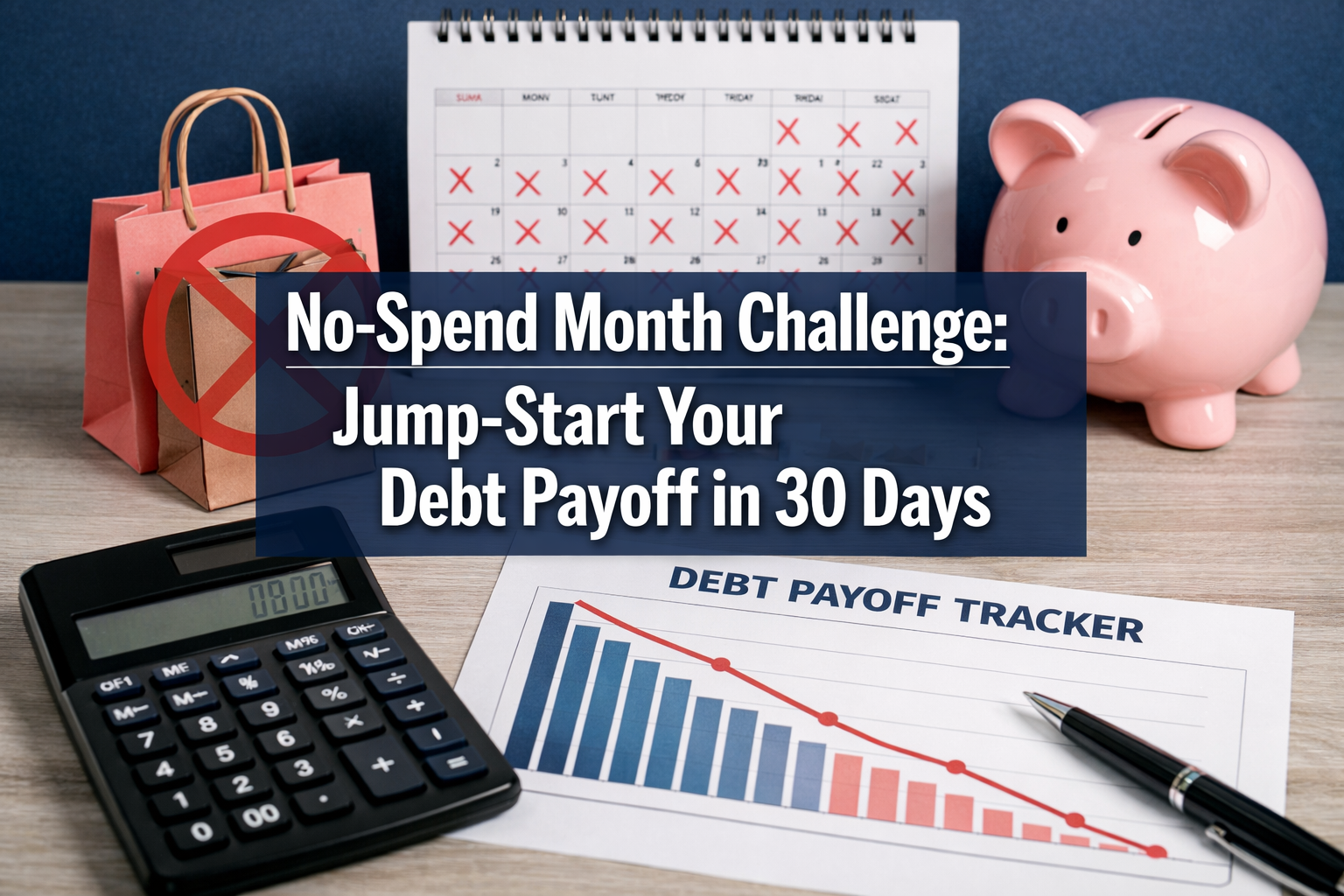
I was drowning in $14,783 of credit card debt when I stumbled across the No-Spend Month Challenge on a personal finance forum. The concept seemed extreme: commit to buying absolutely nothing beyond essentials for 30 consecutive days. But desperate times called for desperate measures, and I was tired of watching my debt balance barely budge despite making regular payments. That single month changed everything about how I viewed money, spending, and my path to becoming debt-free.
Key Takeaways
- A No-Spend Month Challenge eliminates all non-essential purchases for 30 days, focusing spending only on necessities like groceries, utilities, housing, and debt payments
- The average participant saves between $500-$1,500 during their first challenge, money that can be redirected toward debt payoff or emergency savings
- Success requires clear rules defining “essential” versus “non-essential” purchases before starting the challenge
- The psychological benefits often outweigh the financial gains, breaking impulse spending habits and revealing unconscious consumption patterns
- Most people find the first 10-14 days hardest as they confront spending triggers and develop new coping strategies
What Exactly Is a No-Spend Month Challenge?
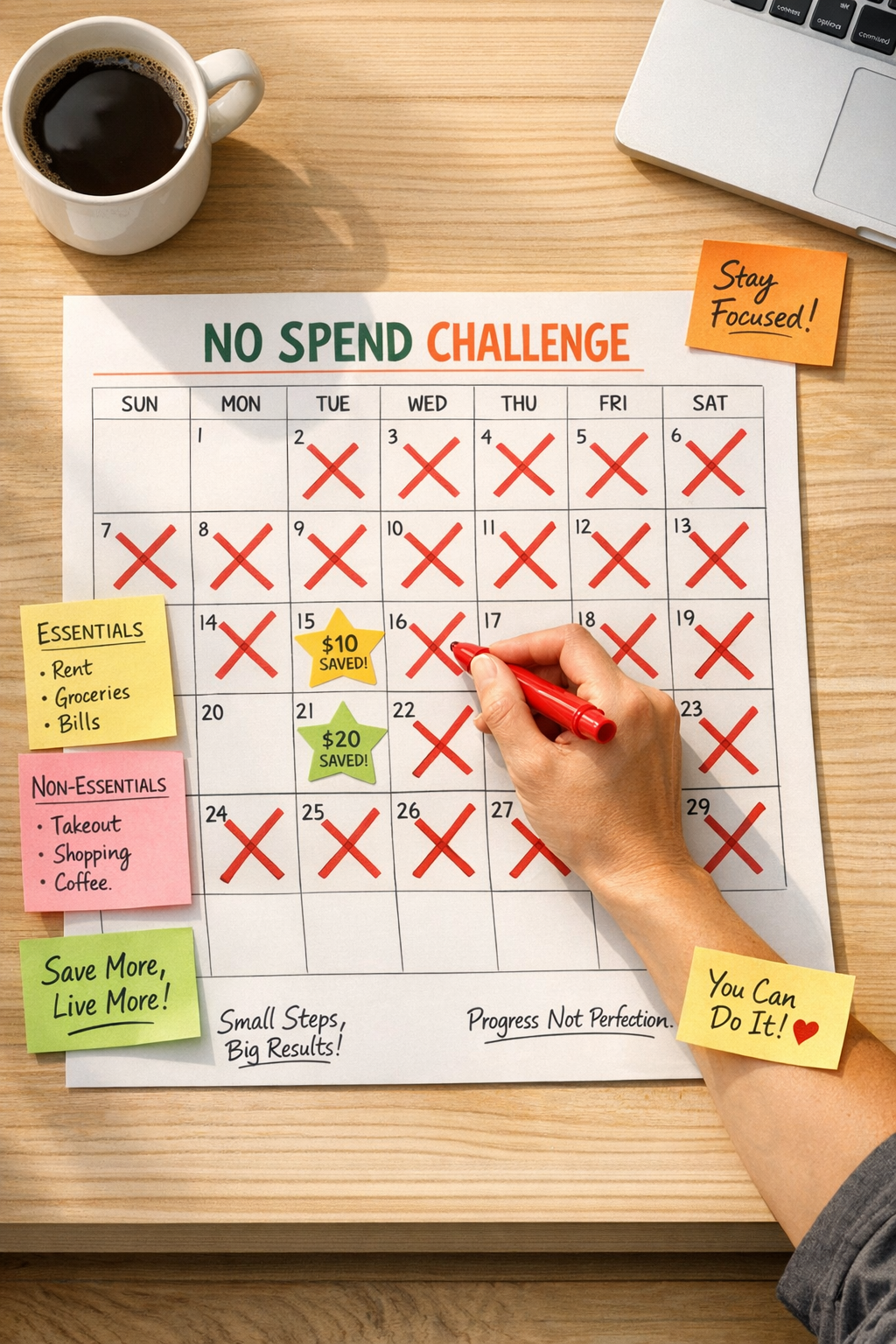
A No-Spend Month Challenge is a temporary spending freeze where you commit to purchasing only essential items for 30 consecutive days while cutting out all discretionary spending. The challenge focuses on distinguishing between needs and wants, helping you redirect money toward financial goals like debt payoff or savings[1][3].
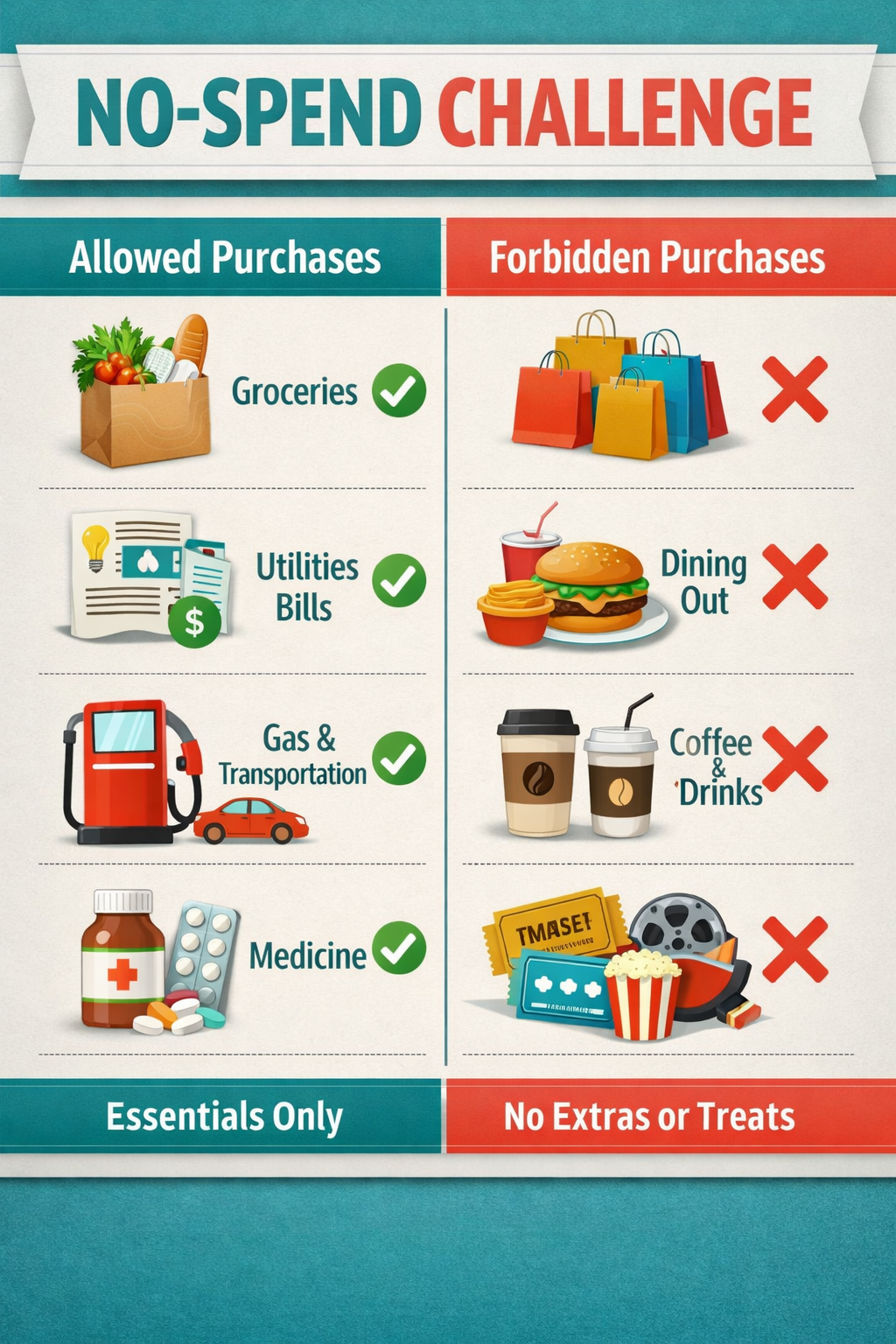
During the challenge, you continue paying for necessities such as:
- Housing costs (rent, mortgage, utilities)
- Groceries and basic household supplies
- Transportation (gas, public transit for work)
- Required medications and healthcare
- Existing debt payments
- Childcare or dependent care expenses
Everything else gets cut. That means no:
- Restaurant meals or takeout
- Coffee shop visits
- Entertainment purchases
- Clothing or accessories
- Hobby supplies
- Subscription boxes
- Impulse online shopping
The challenge originated in the mid-2010s and has remained a trending New Year’s resolution, particularly in January when many people overspend during the holidays[3]. In fact, 19% of Americans report spending more in December than any other month, making January an ideal time to reset spending habits[2].
Common mistake: Starting a no-spend challenge without defining your essential categories first leads to mid-month debates with yourself about whether something “counts.” Write your rules down before day one.
Why I Decided to Try the No-Spend Month Challenge
My debt situation had reached a breaking point. Despite earning a decent income, I was barely making progress on my credit card balances. Each month, I’d pay $400 toward my debt, only to watch new charges creep back onto my statements. The cycle felt endless.
When I tracked my spending for one week, I discovered the uncomfortable truth: I was hemorrhaging money on convenience purchases. $6 daily lattes, $15 lunch orders, weekend Target runs that somehow always cost $80, and streaming services I barely used. These “small” expenses added up to nearly $800 per month.
The No-Spend Month Challenge appealed to me for three reasons:
- It had a clear endpoint – 30 days felt doable, unlike vague commitments to “spend less”
- The rules were simple – essential or non-essential, no gray area
- The potential impact was significant – redirecting even half my discretionary spending could add $400 to my debt payment
I needed a financial reset, and this challenge promised exactly that. If you’re struggling with similar debt stress, you might find helpful strategies in this guide on dealing with debt stress and staying motivated.
How I Prepared for My No-Spend Month Challenge
Preparation made the difference between success and failure. I spent the week before my challenge creating systems to support my goal.
Setting Clear Rules
I wrote down my personal definition of “essential” purchases:
- Groceries: Yes, but only ingredients for home cooking
- Gas: Yes, for commuting to work only
- Utilities: Yes, all regular bills
- Medications: Yes, prescriptions and basic first aid
- Debt payments: Yes, minimum payments plus extra
- Pet food: Yes, for my dog’s regular food
- Everything else: No
Stocking Up Strategically
I did one final grocery shopping trip, buying:
- Pantry staples (rice, pasta, beans, canned goods)
- Frozen vegetables and proteins
- Coffee and tea for home brewing
- Toiletries I’d need during the month
- Pet supplies
Important: This isn’t about hoarding or overspending before the challenge. I spent my normal grocery budget but shopped more thoughtfully.
Creating Accountability
I told three close friends about my challenge and asked them to check in weekly. I also joined an online community doing 15 no-spend challenge tips together, which provided daily motivation and problem-solving support.
Planning Free Alternatives
I brainstormed no-cost activities to replace my usual entertainment spending:
- Library books and movies instead of buying or streaming
- Home workouts instead of boutique fitness classes
- Hiking and parks instead of shopping as a weekend activity
- Game nights with friends (everyone brings snacks from home)
- YouTube tutorials for hobbies instead of buying new supplies
Choose this approach if: You tend to spend money out of boredom or as entertainment. Having alternatives ready prevents the “I have nothing to do” trap that leads to spending.
Week-by-Week Breakdown of My No-Spend Month Challenge
Week 1: The Honeymoon Phase
The first week felt surprisingly easy. The novelty of the challenge kept me motivated, and I felt empowered every time I said “no” to a purchase. I saved $187 compared to my typical first week of the month.
Biggest challenge: Breaking my daily coffee shop habit. I experienced actual withdrawal headaches for three days before adjusting to home-brewed coffee.
Win: I discovered I genuinely enjoyed cooking dinner every night. Meal planning became a creative outlet rather than a chore.
Week 2: The Struggle Bus
Days 8-14 were brutal. The novelty wore off, and I felt deprived. I found myself browsing online stores “just to look” and adding items to wishlists. Social invitations to restaurants felt like personal attacks.
Biggest challenge: A friend’s birthday dinner at a restaurant. I attended but ate beforehand and ordered only water, which felt awkward but necessary.
Win: I found a free yoga class in the park and met new people who also prioritized budget-friendly activities.
Week 3: Finding My Rhythm
Something shifted in week three. I stopped thinking about what I couldn’t buy and started appreciating what I already had. My cravings for takeout diminished as I got better at cooking. I saved $312 this week alone.
Biggest challenge: My phone case cracked. I debated whether a replacement counted as “essential” and ultimately decided to wait until after the challenge.
Win: I rediscovered clothes in my closet I’d forgotten about, creating “new” outfits without spending a dime.
Week 4: The Home Stretch
The final week felt victorious. I knew I could finish, and I started planning how to maintain some of these habits beyond the challenge. I felt genuinely proud of my discipline.
Biggest challenge: End-of-month sales emails tempting me to “reward” myself for completing the challenge.
Win: Calculating my total savings and realizing I could make a $1,247 debt payment instead of my usual $400.
The Financial Results: How Much I Actually Saved
Here’s the breakdown of my savings during the No-Spend Month Challenge:
| Category | Typical Monthly Spending | Challenge Month Spending | Savings |
|---|---|---|---|
| Restaurants/Takeout | $285 | $0 | $285 |
| Coffee Shops | $156 | $0 | $156 |
| Entertainment | $120 | $0 | $120 |
| Clothing/Accessories | $180 | $0 | $180 |
| Target/Impulse Shopping | $240 | $0 | $240 |
| Subscription Services | $47 | $0* | $47 |
| Miscellaneous | $95 | $0 | $95 |
| Total | $1,123 | $0 | $1,123 |
*I canceled three subscriptions I wasn’t using
Adding this $1,123 to my regular $400 debt payment meant I could pay $1,523 toward my credit card debt in one month. That was nearly four months of typical progress compressed into 30 days.
The compound effect was even more powerful. By paying down principal aggressively, I reduced my interest charges for subsequent months, accelerating my entire debt payoff timeline.
The Unexpected Benefits Beyond Saving Money
The financial savings were incredible, but the psychological shifts surprised me even more.
Breaking Autopilot Spending
I realized how much of my spending happened unconsciously. I’d buy lunch without considering alternatives, order things online while watching TV, or shop when stressed. The challenge forced me to pause before every purchase and ask, “Is this essential?”
This awareness continued long after the challenge ended. I still catch myself reaching for my wallet out of habit rather than genuine need.
Discovering What Actually Matters
Without the distraction of shopping and spending, I had more mental space to focus on relationships, hobbies, and personal goals. I spent more quality time with friends (doing free activities), read more books, and actually used the art supplies I’d bought months earlier.
The lesson: I’d been using shopping as entertainment and emotional regulation. Finding healthier alternatives improved my overall well-being.
Increased Gratitude
Using what I already owned made me appreciate it more. I took better care of my belongings, used items completely before replacing them, and felt genuinely grateful for my possessions rather than constantly wanting more.
Creativity Boost
Constraints breed creativity. I became inventive with meals using pantry ingredients, found free entertainment options I never knew existed, and discovered I could solve problems without buying new things.
These mindset shifts are what experts call the “hidden curriculum” of no-spend challenges—the behavioral changes that create lasting financial improvement beyond the 30 days[1].
Common Challenges and How I Overcame Them
Social Pressure and FOMO
The problem: Friends invited me to restaurants, concerts, and activities that cost money. I felt left out and worried about damaging relationships.
My solution: I was honest about my challenge and suggested free alternatives. Real friends supported my goals and enjoyed picnics, hiking, and game nights. I also attended some events but participated differently (like the birthday dinner where I didn’t order food).
Choose this approach if: You have supportive friends who will understand your financial goals. If your social circle only connects through spending money, this challenge might reveal relationships that need reevaluation.
Unexpected Expenses
The problem: My car needed an oil change (maintenance), and my daughter needed poster board for a school project.
My solution: I had defined “essential” to include necessary maintenance and children’s school requirements. These purchases were allowed. The key was distinguishing between unexpected essentials (car maintenance) and unexpected wants (impulse purchases).
Common mistake: Being so rigid that you create bigger problems. A $35 oil change is essential; skipping it to save money during your challenge could lead to a $2,000 engine repair later.
Emotional Spending Triggers
The problem: I usually shopped when stressed, bored, or celebrating. Without that outlet, I had to face uncomfortable emotions.
My solution: I created a list of free coping strategies:
- Stress: Walking, journaling, calling a friend
- Boredom: Reading, organizing a space, trying a new recipe
- Celebration: Special meal at home, movie night, sharing good news with loved ones
I also started tracking my emotions when I felt the urge to spend, which revealed patterns I’d never noticed.
The “Just This Once” Temptation
The problem: Rationalizing exceptions: “It’s on sale,” “I deserve it,” “It’s practically essential.”
My solution: I wrote down every temptation in a “Buy After Challenge” list. If I still wanted it in 30 days, I could consider it. Spoiler: I wanted less than 20% of those items when the challenge ended.
For more strategies on managing these challenges, check out these proven ways to pay down debt faster.
How the No-Spend Month Challenge Changed My Debt Payoff Journey
That single month created momentum that carried me through the next year of debt repayment.
Immediate Impact
The $1,123 I saved went directly to my highest-interest credit card, reducing my balance from $14,783 to $13,660. More importantly, it proved I could find money in my budget I didn’t think existed.
Long-Term Behavior Changes
I didn’t maintain a strict no-spend approach forever, but I kept several habits:
- Meal planning and cooking at home (saving $150-200 monthly)
- The 48-hour rule for non-essential purchases (reducing impulse buying by 70%)
- Monthly subscription audits (keeping only what I actively use)
- Free-first entertainment (checking library and free events before spending)
These changes freed up an extra $400-500 monthly for debt payments without feeling deprived.
Psychological Shift
The challenge proved I had more control over my finances than I believed. That confidence helped me tackle other financial goals, from building an emergency fund to negotiating a raise.
Within 18 months of that first No-Spend Month Challenge, I paid off all $14,783 of credit card debt. The challenge didn’t do it alone, but it jump-started the journey and taught me the skills I needed to succeed.
If you’re ready to create your own debt-free story, this step-by-step plan to become debt-free in 12 months provides a comprehensive roadmap.
Should You Try a No-Spend Month Challenge in 2026?
A No-Spend Month Challenge works best for people who struggle with discretionary spending rather than those facing income insufficiency. If you earn enough to cover your basics but can’t figure out where your money goes, this challenge will reveal the answer quickly.
You’re a Good Candidate If:
- You frequently make impulse purchases
- Your credit card balance stays high despite regular payments
- You can’t identify where your money goes each month
- You have discretionary spending you could temporarily eliminate
- You need a financial reset or motivation boost
- You want to break specific spending habits (daily coffee, online shopping, etc.)
This Challenge Might Not Work If:
- You’re already spending only on essentials due to income constraints
- You have irregular income that requires flexible spending
- You’re dealing with a financial emergency requiring immediate purchases
- You have medical or family situations requiring unpredictable expenses
Choose a modified version if: A full no-spend month feels too extreme. Try a “low-spend month” where you set a small discretionary budget ($50-100) or focus on eliminating one category (like restaurants or clothing) rather than everything.
Tips for Success: What I Wish I’d Known Before Starting

1. Define Your Rules in Writing
Create a physical or digital document listing exactly what counts as essential for your situation. Include edge cases you can anticipate. When temptation strikes, you’ll have a clear reference point.
2. Time It Strategically
Avoid starting during months with birthdays, holidays, or special events. January works well for many people because it follows the high-spending holiday season. Some prefer September after summer vacation expenses.
3. Tell Someone
Accountability partners make success more likely. Whether it’s a friend, family member, or online community, sharing your goal creates external motivation when internal willpower wanes.
4. Track Your Savings Visually
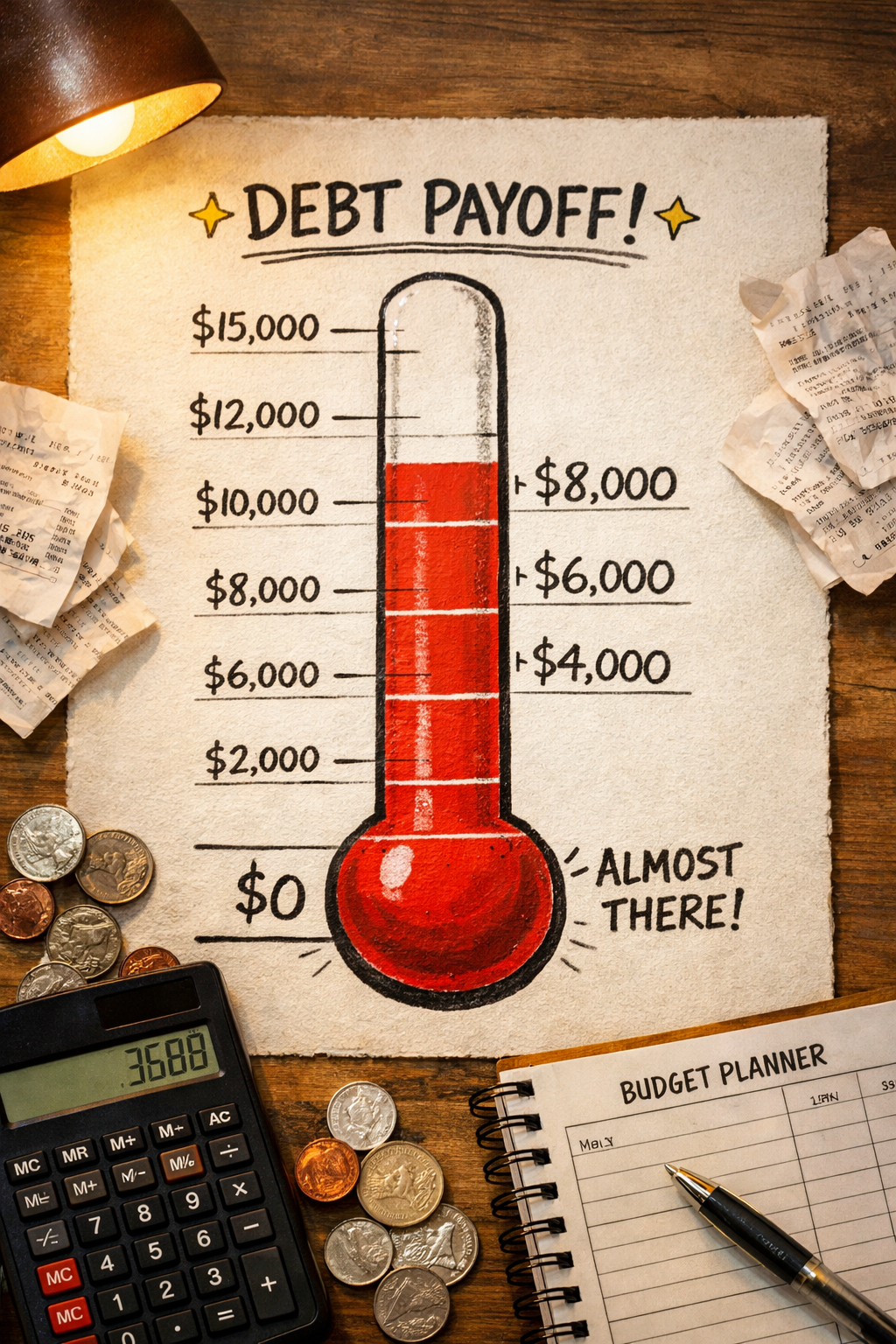
I created a simple chart showing money saved each week. Watching the number grow provided motivation during tough moments. Some people use apps, others prefer a paper tracker on the refrigerator.
5. Plan for Weak Moments
Identify your personal spending triggers before the challenge starts. If you shop when bored, plan alternative activities. If you spend when stressed, develop new coping mechanisms.
6. Delete Shopping Apps
Remove temptation by deleting retail apps from your phone and unsubscribing from promotional emails. You can reinstall them after the challenge if desired.
7. Use What You Have
Shop your pantry, closet, and existing possessions before the challenge. Knowing what you already own prevents the feeling of deprivation.
8. Celebrate Non-Monetary Wins
Acknowledge progress beyond dollars saved. Did you cook a new recipe? Resist a strong temptation? Enjoy a free activity? These victories matter.
For additional strategies, explore these frugal living tips that save hundreds monthly.
What Happens After the No-Spend Month Challenge Ends?
The end of the challenge isn’t the finish line—it’s the beginning of sustainable change.
Evaluate Your Experience
I spent time reflecting on these questions:
- What was easier than expected? What was harder?
- Which spending categories did I miss most? Which didn’t I miss at all?
- What habits do I want to keep permanently?
- What did I learn about my relationship with money?
Reintroduce Spending Mindfully
Don’t celebrate the end of your challenge with a shopping spree that undoes your progress. Instead, reintroduce discretionary spending slowly and intentionally.
I created a “spending reentry plan”:
- Week 1 after challenge: Continue most restrictions, add back only one missed category
- Week 2: Evaluate if that spending added value; add one more category if desired
- Week 3-4: Settle into a sustainable spending pattern that keeps beneficial habits
Maintain Key Habits
I identified three habits from my challenge to keep permanently:
- Home-brewed coffee (saving $150 monthly)
- Meal planning (saving $200 monthly)
- The 48-hour rule for purchases over $25 (reducing impulse buying)
These alone freed up $350-400 monthly for debt payments without feeling restrictive.
Consider Regular Challenges
Many people make no-spend challenges a regular practice. Options include:
- Annual reset: One month per year (often January)
- Quarterly tune-up: One week every quarter
- Category rotation: Different spending category each month
- Weekend challenges: No-spend weekends throughout the year
I now do a No-Spend January annually to reset after holiday spending and a one-week challenge each quarter to stay accountable.
Frequently Asked Questions About the No-Spend Month Challenge
What if I have an emergency during the challenge?
True emergencies (medical issues, car repairs needed for work, urgent home repairs) always take priority over any financial challenge. The goal is financial improvement, not creating bigger problems by ignoring genuine needs. Define “emergency” narrowly and honestly.
Can I still pay for things I already committed to, like subscriptions?
Most people continue existing subscriptions during their first challenge but cancel ones they’re not using. For future challenges, cancel unnecessary subscriptions before starting. Existing commitments like gym memberships can continue, but you might discover you don’t actually use them.
What about gifts for other people?
This depends on your personal rules. Some people allow essential gifts (a child’s birthday) but get creative with homemade or free options. Others plan challenges to avoid gift-giving months. There’s no universal rule—decide what works for your situation and values.
How do I handle social situations without spending money?
Be honest with friends about your challenge. Suggest free alternatives like hiking, game nights, or potluck dinners. Attend some events without purchasing (bring your own coffee, eat beforehand). Real friends will support your financial goals.
What if I fail partway through?
If you make an unplanned purchase, you have two options: start over or continue with the remaining days. I recommend continuing—27 no-spend days still beats zero. Learn from what triggered the purchase and plan better for next time. Progress over perfection.
Should I do this challenge if I’m already on a tight budget?
If you’re already spending only on essentials due to income limitations, this challenge won’t help much. It works best for people who have discretionary spending they could temporarily eliminate. Consider focusing on increasing income instead.
Can I exercise during a no-spend month?
Absolutely. Focus on free exercise options like walking, running, home workouts using YouTube videos, or outdoor activities. If you already have a gym membership, continue using it. The challenge is about not spending money, not about limiting healthy activities.
What counts as “groceries” versus “eating out”?
Groceries are ingredients you cook at home. Prepared foods, restaurant meals, takeout, and delivery all count as eating out. Some people allow themselves one grocery store rotisserie chicken or similar convenience item weekly, but define your rules beforehand.
How do I avoid feeling deprived?
Focus on abundance rather than restriction. You’re not losing anything—you’re gaining financial freedom, discovering creativity, and learning about yourself. Plan enjoyable free activities, cook special meals at home, and celebrate non-monetary pleasures. Reframe the challenge as an experiment rather than punishment.
Should I tell people I’m doing this challenge?
This depends on your personality and relationships. Telling people creates accountability and helps them understand why you’re declining invitations. However, some people prefer privacy to avoid judgment or unwanted advice. Do what feels right for you.
What’s the best month to start a No-Spend Month Challenge?
January is popular because it follows high-spending holiday months and aligns with New Year’s resolutions. However, any month works. Avoid months with major events, birthdays, or holidays unless you’re ready for extra difficulty. Some people prefer less eventful months like February or September.
Can I do a no-spend challenge with a family?
Yes, but it requires communication and agreement on rules. Include age-appropriate children in planning, explaining the goal in terms they understand. Make it a team effort with shared rewards. Expect more challenges with multiple people’s needs and wants, but the teaching opportunity for children is valuable.
Key Takeaways: My No-Spend Month Challenge Experience
- The No-Spend Month Challenge saved me $1,123 in 30 days, which I immediately applied to credit card debt, accelerating my payoff timeline by nearly four months
- Preparation matters more than willpower—defining clear rules, stocking essentials, and planning free alternatives before starting determines success
- Weeks 2-3 are the hardest—the novelty wears off around day 8-14, but pushing through this period leads to genuine habit change and mindset shifts
- The psychological benefits exceeded the financial savings—I discovered unconscious spending patterns, broke autopilot purchasing habits, and developed a healthier relationship with money
- Social challenges require honest communication—telling friends about your challenge and suggesting free alternatives protects relationships while maintaining your goals
- Perfect execution isn’t required—if you slip up, continue with remaining days rather than abandoning the challenge entirely; progress beats perfection
- Sustainable habits matter more than the 30 days—identify 2-3 beneficial habits to maintain permanently, creating ongoing savings without feeling deprived
- The challenge works best for discretionary spending problems—if you already spend only on essentials due to income constraints, focus on increasing income instead
- Regular challenges create long-term accountability—many successful participants make this an annual reset or quarterly tune-up rather than a one-time event
- The confidence gained extends beyond spending—proving you can control your finances creates momentum for tackling other financial goals like building emergency funds or investing
Conclusion: Your Turn to Jump-Start Your Debt Payoff
The No-Spend Month Challenge transformed my relationship with money in ways I never anticipated. What started as a desperate attempt to make progress on debt became a masterclass in mindful spending, creative problem-solving, and self-discovery.
That $1,123 I saved in 30 days proved I had more control over my finances than I believed possible. The habits I developed—meal planning, the 48-hour rule, seeking free entertainment first—continue saving me $400-500 monthly years later. Most importantly, the challenge broke the psychological grip that unconscious spending had on my life.
You don’t need perfect circumstances to start. You don’t need a specific income level or debt amount. You just need 30 days, clear rules, and commitment to discovering what’s possible when you pause the spending treadmill.
Ready to start your own No-Spend Month Challenge? Here are your next steps:
- Choose your month—Pick a 30-day period without major events or obligations
- Define your essential categories—Write down exactly what counts as necessary spending for your situation
- Stock up strategically—Do one thoughtful shopping trip for groceries and essentials you’ll need
- Find an accountability partner—Tell someone about your challenge or join an online community
- Plan free alternatives—List no-cost activities for entertainment, stress relief, and socializing
- Track your progress—Create a simple system to monitor savings and celebrate wins
- Reflect and adjust—After 30 days, identify habits worth keeping permanently
The challenge isn’t about deprivation—it’s about discovering freedom. Freedom from unconscious spending, from debt, from the constant pressure to buy more. It’s about learning that you already have enough and that your financial goals are achievable with focus and intention.
Your debt payoff journey might feel overwhelming right now, just like mine did. But one month can change everything. One month can save you hundreds of dollars, break destructive habits, and prove you’re capable of more than you think.
The only question is: are you ready to start?
For more guidance on your debt-free journey, explore these simple habits that help you stay debt-free for life and learn how to save $1,000 in a month to build your emergency fund alongside debt repayment.
References
[1] No Spend Challenge – https://www.thepennyhoarder.com/save-money/no-spend-challenge/
[2] Watch – https://www.youtube.com/watch?v=w3RapINAiJU
[3] No Spend Challenge – https://www.finder.com/savings-accounts/no-spend-challenge


![How I Paid Off $50,000 in Debt: My Step-by-Step Debt Free Journey Last updated: March 31, 2026 Quick Answer: Paying off $50,000 in debt is absolutely possible, even on an average income. I did it by getting brutally honest about my numbers, choosing a payoff method that fit my personality, cutting expenses aggressively, and adding extra income streams. It took focus and sacrifice, but the process is straightforward: list every debt, build a small emergency fund, attack debt with every spare dollar, and protect your progress along the way. Key Takeaways Know your exact numbers first. You can't pay off what you haven't fully faced. List every balance, interest rate, and minimum payment. The debt snowball and debt avalanche are the two main payoff methods. Snowball wins on motivation; avalanche wins on math. A small $1,000 emergency fund before you start keeps unexpected expenses from derailing your plan. Cutting expenses alone usually isn't enough. Adding income — even a few hundred dollars a month — dramatically speeds up your debt free journey. 74% of Americans now define financial success as being debt-free, according to KeyBank's 2025 Financial Mobility Survey. You're not alone in this goal. [2] Automate your payments. Willpower runs out; automation doesn't. Celebrate small wins. Each paid-off account is real progress, not just a number. Debt stress is real. Building a support system or accountability partner makes a measurable difference in staying consistent. Once debt-free, redirect those payments immediately toward savings and investing so you never slide back. What Does a Debt Free Journey Actually Look Like? A debt free journey is the intentional, step-by-step process of eliminating all personal debt — credit cards, car loans, student loans, medical bills — until you owe nothing. It's not a single moment; it's a series of decisions made consistently over months or years. For me, it started with a number that made my stomach drop: $50,247.13. That was the total across four credit cards, a car loan, and leftover student loan debt. I had been making minimum payments for years, watching the balances barely move. When I finally sat down and added it all up, I realized I had been treading water. According to a 2026 survey by Southwest Voices, 33% of U.S. consumers define financial success as being debt-free, regardless of income or assets — a shift away from the old idea that wealth is measured by what you own. [1] That reframing helped me. I stopped feeling behind and started feeling motivated. Here's the honest truth: a debt free journey looks messy in the middle. There are months where you feel unstoppable and months where an unexpected car repair wipes out your progress. What matters is that you keep going. Step 1: Face the Full Picture (This Part Is Uncomfortable) Before you can make a plan, you need complete, accurate information about every debt you owe. Here's exactly what I tracked in a simple spreadsheet: Debt Balance Interest Rate Minimum Payment Credit Card A $8,400 24.99% APR $210 Credit Card B $6,100 19.99% APR $155 Credit Card C $3,200 22.49% APR $80 Car Loan $14,500 6.9% APR $320 Student Loan $18,047 5.5% APR $195 Total $50,247 — $960/month Looking at that table was hard. But it was also the most important thing I did, because it turned a vague, overwhelming cloud of "I have a lot of debt" into a concrete list I could actually work through. Common mistake: Many people underestimate their total debt because they avoid checking balances. Log in to every account, pull your free credit report at AnnualCreditReport.com, and write down every number. Step 2: Build a Small Emergency Fund First Before throwing every extra dollar at debt, save $1,000 as a starter emergency fund. This sounds counterintuitive when you're paying 24.99% interest, but here's why it works: without a cash cushion, the first flat tire or medical co-pay goes right back on a credit card, undoing your progress and crushing your motivation. A 2025 KeyBank survey found that 25% of Americans cannot come up with $2,000 for unexpected expenses, up from 19% the year before. [2] That statistic shows how common this vulnerability is — and why plugging it first protects your entire plan. Once you hit $1,000, stop saving and redirect everything to debt. You can build a full 3–6 month emergency fund after you're debt-free. Step 3: Choose Your Debt Payoff Strategy Two methods dominate personal finance, and both work. The right one depends on your personality. Debt Snowball (Dave Ramsey's method): Pay minimums on all debts. Throw every extra dollar at the smallest balance first. When it's gone, roll that payment to the next smallest. Best for: people who need quick wins to stay motivated. Debt Avalanche: Pay minimums on all debts. Throw every extra dollar at the highest interest rate first. Best for: people who are motivated by math and want to pay the least interest overall. I used the snowball method because I needed to feel progress. Paying off that $3,200 credit card in four months gave me a surge of confidence that kept me going for the next two years. If you want a detailed breakdown of both approaches, check out this guide on 7 proven ways to pay down debt faster. Edge case: If you have a debt with a balance transfer offer at 0% APR, consider moving high-interest credit card balances there first. Harvard FCU recommends balance transfer cards as a way to freeze interest accrual and focus entirely on paying down principal. [5] Just watch for transfer fees (typically 3–5%) and make sure you can pay the balance before the promotional period ends. Step 4: Cut Expenses Without Losing Your Mind Cutting expenses is where most people start — and where many people quit, because they try to cut everything at once and feel deprived. My approach: cut in tiers. Tier 1 — Cut immediately (no lifestyle impact): Unused subscriptions and memberships Negotiated lower rates on phone, internet, and insurance Switched to generic/store-brand groceries Tier 2 — Reduce (some adjustment required): Eating out dropped from 4x/week to once a week Grocery budget planned with a weekly meal plan (I saved roughly $200/month here) Paused gym membership and worked out at home Tier 3 — Temporary sacrifices (hard but worth it): Skipped vacations for 18 months Sold my newer car and bought a paid-off used car, eliminating the $320/month payment A 2025 KeyBank survey found that 49% of consumers switched to less expensive brands or services and 41% reduced subscriptions or memberships in response to rising costs. [2] These aren't dramatic moves — they're practical ones that add up fast. For practical grocery savings, this budget meal planning guide shows how to feed a family on $50/week, which is a real game-changer when you're redirecting every dollar to debt. Step 5: Increase Your Income (This Is the Real Accelerator) Cutting expenses has a floor — you can only cut so much. Income has no ceiling. Adding even $300–$500 per month in extra income can cut months or years off your debt free journey. What I did to earn extra money: Sold stuff I didn't need. I made over $1,000 in 30 days selling furniture, clothes, and electronics. (This decluttering guide shows exactly how.) Freelanced on weekends. I offered writing and editing services through Upwork for about 8 hours per week. Used money-making apps. Small amounts — $50–$100/month — but every dollar went straight to debt. Every single dollar of extra income went directly to the target debt. Not to lifestyle upgrades. Not to "treating myself." Straight to the balance. If you're looking for ways to earn more without a second job, check out these 15 best money making apps that pay real cash or explore high income skills you can learn at home that can significantly boost your monthly income over time. How Do You Stay Motivated During a Long Debt Free Journey? Staying motivated over a multi-year debt payoff is genuinely the hardest part. The math is simple; the psychology is not. 38% of U.S. women report that money makes them feel anxious most of the time, compared to 24% of men, according to a 2026 Southwest Voices survey. [1] Debt stress is real, and ignoring it doesn't make it go away. What actually helped me stay on track: A visual debt payoff tracker. I colored in a bar graph on my fridge every time I paid off $1,000. Silly? Maybe. Effective? Absolutely. An accountability partner. My sister was on her own debt free journey. We checked in monthly. Celebrating milestones. When I paid off each account, I did something small and free to mark it — a picnic, a movie night at home. Reading stories like mine. Seeing that a debt-free family paid off $67K on one income made my $50K feel conquerable. If you're feeling overwhelmed, this resource on debt stress relief and staying motivated has practical strategies that go beyond "just believe in yourself." Decision rule: If you're losing motivation, don't restart from scratch. Switch strategies temporarily. If you've been doing the avalanche method, switch to snowball for one month to get a quick win. Then go back. What Was My Month-by-Month Debt Payoff Timeline? Here's an honest look at how the $50,247 came down over 26 months. I'm sharing this because most debt payoff stories skip the messy middle. Month Range Action Running Balance Months 1–2 Built $1,000 emergency fund $50,247 Months 3–6 Paid off Credit Card C ($3,200) $47,047 Months 7–11 Paid off Credit Card B ($6,100) $40,947 Months 12–16 Paid off Credit Card A ($8,400) $32,547 Month 17 Sold car, eliminated car loan $18,047 Months 18–26 Paid off student loan $0 Month 17 was the turning point. Selling the car felt terrifying, but it eliminated $14,500 in debt overnight and freed up $320/month. After that, the student loan felt manageable. Note on the car: I bought a $5,000 used Honda Civic with cash. It wasn't glamorous, but it ran fine and I drove it for two years while I finished paying off everything else. What Mistakes Almost Derailed My Debt Free Journey? Knowing what to avoid is just as important as knowing what to do. Mistake 1: Not having an emergency fund first.Early on, I skipped the $1,000 buffer and put everything at debt. Three months in, a $700 car repair went right back on a credit card. Demoralizing. Mistake 2: Setting an unrealistic budget.My first budget was so tight I lasted two weeks before blowing it. I had to build in a small "fun money" line — even $30/month — to make the budget sustainable. Mistake 3: Ignoring the emotional side.I white-knuckled it for the first six months without any support system. Burnout hit hard. Once I found an accountability partner and started tracking wins visually, consistency improved dramatically. Mistake 4: Lifestyle creep after early wins.After paying off the first credit card, I celebrated by spending more than I should have for a couple of months. I lost about six weeks of progress. Celebrate, but keep the momentum. To avoid common budgeting pitfalls, this list of 10 budgeting mistakes to avoid is worth reading before you build your plan. What Happens After You Become Debt-Free? Becoming debt-free is not the finish line — it's the starting line for building actual wealth. 38% of people say being debt-free is the most important financial milestone, according to the 2026 BHG Financial Consumer Debt & Finances Survey. [4] But once you're there, the same discipline that paid off debt becomes your wealth-building engine. Here's what I did the month I made my last payment: Built a full 3–6 month emergency fund using what used to be my debt payments. Started investing — maxed out my Roth IRA contribution for the year. Kept living on my "debt payoff budget" for six more months to build a real financial cushion. Raised my credit score — paying off revolving debt dramatically improved my utilization ratio. 74% of respondents in the BHG Financial survey feel optimistic about their financial future, with that number climbing to 80% among higher-income households. [4] I felt that shift personally. Once the debt was gone, financial decisions stopped feeling like damage control and started feeling like choices. For the next chapter, this guide on how to achieve financial freedom in 5 steps is exactly where I'd point anyone who just made their last debt payment. Frequently Asked Questions Q: How long does it realistically take to pay off $50,000 in debt?A: It depends on your income, expenses, and how aggressively you can pay. With focused effort — cutting expenses and adding income — most people can pay off $50,000 in 2–4 years. I did it in 26 months by combining both strategies. Q: Should I save money or pay off debt first?A: Build a small $1,000 emergency fund first, then attack debt aggressively. Without that buffer, unexpected expenses will send you back to credit cards and undo your progress. Q: What's the best method for paying off debt — snowball or avalanche?A: Both work. Snowball (smallest balance first) is better if you need motivational wins to stay consistent. Avalanche (highest interest first) saves more money mathematically. Choose the one you'll actually stick to. Q: Can I pay off debt on a low income?A: Yes, but it requires more focus on increasing income alongside cutting expenses. Even an extra $200–$300/month makes a significant difference over time. This guide on how to pay off credit card debt fast on a low income has specific strategies for tighter budgets. Q: Should I use a balance transfer card to pay off debt faster?A: A 0% APR balance transfer card can be a smart move for high-interest credit card debt, because it stops interest from accruing and lets you focus entirely on the principal. [5] Watch for transfer fees and make sure you have a plan to pay it off before the promotional period ends. Q: What if I have an emergency and go back into debt during my payoff journey?A: It happens. Don't quit. Rebuild your $1,000 buffer, then resume your payoff plan. One setback doesn't erase your progress. Q: Is a no-spend challenge worth trying during debt payoff?A: Absolutely. A no-spend month challenge can generate an extra $200–$500 in a single month, which goes directly to your target debt. It also resets spending habits in a lasting way. Q: How do I stay motivated when debt payoff feels like it's taking forever?A: Use a visual tracker, find an accountability partner, and celebrate each paid-off account. Also, recalculate your payoff date every few months — watching it move closer is genuinely motivating. Q: Will paying off debt hurt my credit score?A: Paying off installment loans (like a car or student loan) can cause a small, temporary dip because it reduces your credit mix. But paying off credit cards improves your utilization ratio, which typically raises your score. The net effect of becoming debt-free is almost always positive over time. Q: What's the first step if I'm completely overwhelmed and don't know where to start?A: Write down every debt you owe — balance, interest rate, minimum payment — in one place. That single act of clarity is the foundation of every successful debt free journey. Conclusion: Your Debt Free Journey Starts With One Decision Paying off $50,000 in debt wasn't about being perfect. It was about being consistent. I made mistakes, had setbacks, and had months where I wanted to give up. But I kept coming back to the plan. Here's your action plan for this week: List every debt with its balance, interest rate, and minimum payment. Set up a $1,000 starter emergency fund before you do anything else. Choose your payoff method (snowball or avalanche) and commit to it. Find one expense to cut and one way to earn extra money this month. Tell someone — an accountability partner changes everything. If you're ready to go deeper, the debt free in 12 months step-by-step plan is a great next resource, and these 10 simple habits that help you stay debt-free for life will help you protect everything you build. You don't need a perfect plan. You need a real one. Start today. References [1] Debt Free Flexible And Focused On Stability The Money Mindset Of Us Consumers In 2026 - https://www.southwestvoices.news/premium/stacker/stories/debt-free-flexible-and-focused-on-stability-the-money-mindset-of-us-consumers-in-2026,150595 [2] Is Debt Free The New Luxury Keybank Survey Explores 302606087 - https://www.prnewswire.com/news-releases/is-debt-free-the-new-luxury-keybank-survey-explores-302606087.html [4] Money Map Report - https://bhgfinancial.com/research/money-map-report [5] Gift Yourself Financial Peace How Be Debt Free In 2026 - https://harvardfcu.org/blog/gift-yourself-financial-peace-how-be-debt-free-in-2026/ Meta Title: How I Paid Off $50,000 in Debt: My Debt Free Journey Meta Description: I paid off $50,000 in debt in 26 months. Here's my honest, step-by-step debt free journey — what worked, what failed, and how you can do it too. Tags: debt free journey, paying off debt, debt snowball, debt avalanche, debt payoff plan, personal finance, budgeting tips, credit card debt, student loan payoff, financial freedom, debt stress, money motivation](https://msbudget.com/wp-content/uploads/2026/03/slot-0-1774952346462-500x330.png)