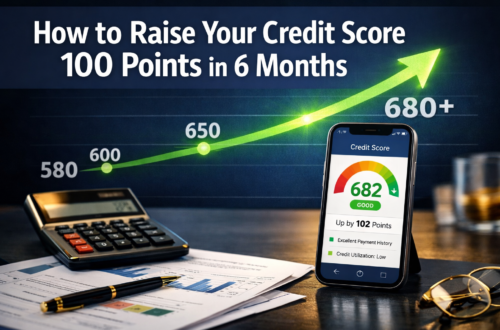

Living without debt is not about making one big financial decision. It comes from building small, consistent habits that protect your money over time. People who stay debt-free focus on daily practices like tracking spending, saving regularly, and making thoughtful choices about when to borrow money.
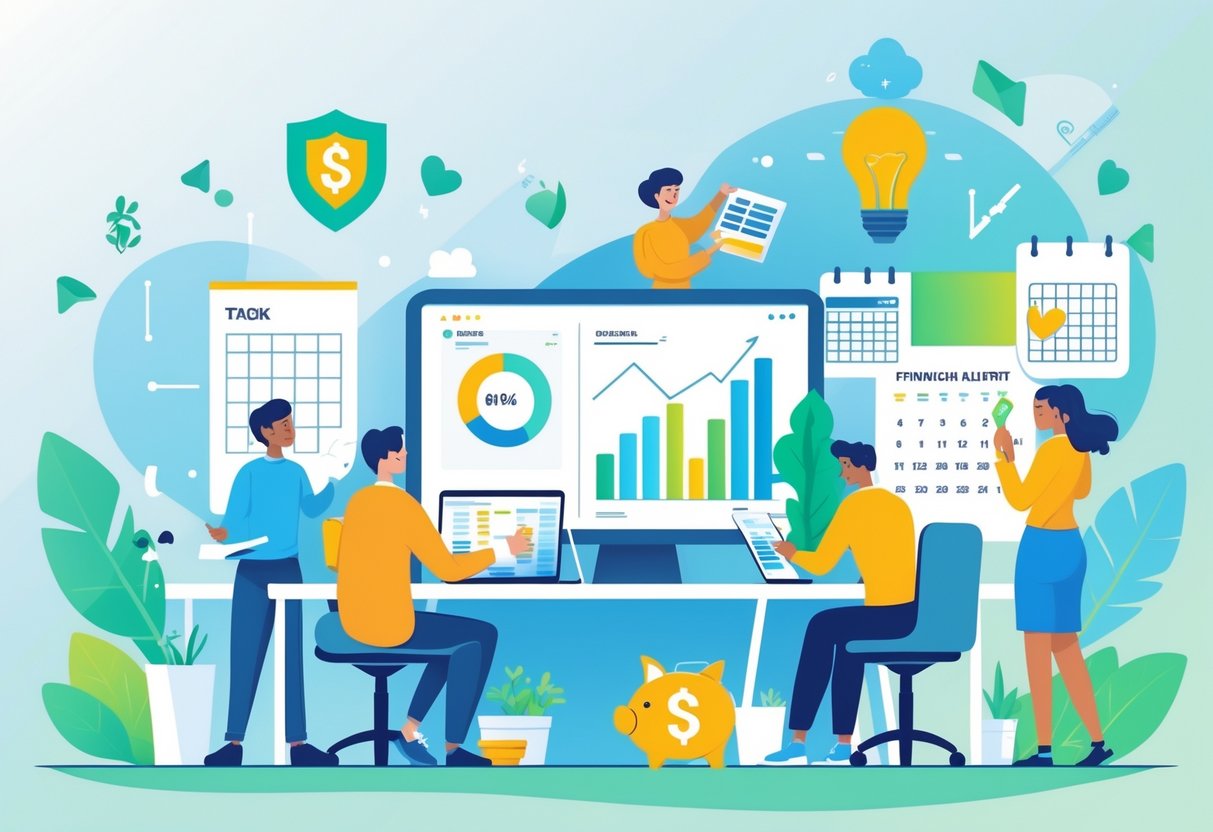
These habits work because they create a system that prevents debt from building up in the first place. They help people avoid common traps like overspending on credit cards or buying things they cannot afford. Anyone can learn these behaviors and use them to build a stronger financial future.
The path to staying debt-free requires patience and commitment, but the habits themselves are straightforward. From creating a realistic budget to avoiding impulse purchases, these practices help people take control of their finances. The following habits show exactly how to manage money in ways that keep debt from becoming a problem.
Key Takeaways
- Building a budget and tracking spending helps people stay aware of where their money goes each month
- Saving consistently and living below income levels creates a financial cushion that prevents reliance on credit
- Setting clear goals and using credit wisely keeps people motivated and protects them from high-interest debt
Create and Stick to a Realistic Budget
A budget serves as a financial roadmap that shows exactly where money goes each month. The right budgeting method, combined with regular updates, helps people avoid overspending and maintain control over their finances.
Why Budgeting Is the Foundation of Debt-Free Living
Budgeting gives people complete visibility into their spending habits. Without a clear budget, money disappears into untracked purchases and impulse buys that add up quickly.
A realistic budget assigns every dollar a specific purpose before the month begins. This practice prevents the common problem of wondering where the paycheck went. People who track their expenses are more aware of unnecessary spending and can redirect that money toward savings or debt prevention.
Building better budgeting habits helps individuals avoid the cycle of borrowing to cover expenses. When someone knows their income and expenses down to the dollar, they make informed decisions about purchases. This financial literacy creates a buffer against debt by ensuring spending never exceeds income.
Setting up automatic transfers for savings and bills removes the temptation to spend money earmarked for other purposes. This automation works alongside the budget to keep finances on track without requiring constant attention.
Choosing the Right Budgeting Method for You
Different budgeting methods work for different financial situations and personalities. The zero-based budget assigns every dollar of income to a specific category until income minus expenses equals zero. This method gives complete control because no money sits unallocated.
The 50/30/20 rule divides income into three categories: 50% for needs, 30% for wants, and 20% for savings and debt payments. This approach works well for people who prefer simple guidelines over detailed tracking.
Budgeting apps like EveryDollar, Mint, or YNAB streamline the process by connecting to bank accounts and categorizing transactions automatically. These tools make tracking easier and provide quick snapshots of spending patterns.
Some people prefer traditional methods like spreadsheets or paper notebooks. The best budgeting method is the one someone will actually use consistently. Testing different approaches helps identify what fits best with individual habits and financial goals.
Updating and Adjusting Your Budget Over Time
A budget needs regular maintenance to stay effective. Life changes constantly, and the budget should reflect current reality rather than outdated assumptions.
Monthly budget reviews catch unexpected expenses that aren’t really surprises when planned ahead. Birthdays, annual subscriptions, and seasonal costs should get included before they arrive. Checking the calendar prevents these events from derailing the budget.
Breaking monthly amounts into weekly targets makes large budget categories more manageable. A $400 grocery budget becomes $100 per week, making it easier to pace spending and avoid running out of money before month-end.
Budget cuts may become necessary when income drops or expenses increase. Identifying which spending categories can flex helps people adjust without stress. Some months require more grocery money while others need less, and the budget should accommodate these natural variations.
Accountability partners help people stay committed to their budgets. Regular check-ins with a spouse, friend, or family member create opportunities to discuss challenges and celebrate progress in personal finance management.
Track Your Spending Consistently

Knowing where money goes each month creates the foundation for staying debt free. People who monitor their expenses can spot problem areas and make adjustments before small spending issues become big financial problems.
Monitoring Every Expense
Tracking every purchase helps people understand their true spending habits. This means writing down or recording each transaction, from mortgage payments to coffee purchases.
Many people underestimate how much they spend on small daily items. A $5 coffee five times a week adds up to $1,300 per year. Recording these purchases reveals patterns that might otherwise go unnoticed.
The act of monitoring creates awareness. When someone knows they need to log each purchase, they think twice before buying. This simple step often reduces impulse purchases naturally.
Key expenses to track include:
- Fixed costs like rent and insurance
- Variable expenses like groceries and gas
- Subscriptions for streaming services or memberships
- Discretionary spending on entertainment and dining
Using Tools and Apps to Track Finances
A budgeting app simplifies the process of monitoring personal finance activities. These tools connect to bank accounts and credit cards to automatically categorize transactions.
Popular budgeting apps show spending by category in real time. Users can set limits for different areas and receive alerts when they approach those limits. Some apps even provide visual charts that make spending patterns easy to see.
Free options like spreadsheets work well for people who prefer manual tracking. Setting up a simple spreadsheet with categories takes less than 30 minutes. Others prefer pen and paper methods that create a physical connection to their spending.
The best tracking method is the one a person will actually use. Consistency matters more than the specific tool chosen.
Learning From Your Spending Patterns
Reviewing tracked expenses reveals where money goes each month. People often discover they spend more than expected in certain categories. This information allows them to make informed decisions about where to cut back.
Looking at three months of data shows clear trends. Someone might notice they spend twice as much on groceries during busy weeks when they order takeout more often. Another person might find forgotten subscriptions charging their account monthly.
These insights guide better choices. A person who sees they spend $200 monthly on impulse purchases can redirect that money toward savings. Someone who identifies unused subscriptions can cancel them immediately.
Regular review sessions, even just 15 minutes weekly, keep spending aligned with goals. This habit prevents the slow drift back into debt that catches many people off guard.
Live Below Your Means and Avoid Lifestyle Inflation

Spending less than you earn creates the foundation for staying debt-free, while resisting the urge to upgrade your lifestyle with every pay raise protects long-term financial stability. Understanding the difference between needs and wants, combined with specific strategies to control spending, helps prevent the cycle of overspending that keeps many people trapped in debt.
Building a Sustainable Spending Mindset
Living below your means starts with distinguishing needs from wants before making any purchase. Needs include housing, food, healthcare, and basic transportation. Wants often come from social pressure, advertising, or the desire for status symbols.
A person should ask themselves whether they would still want an item if nobody else knew about it. This simple question helps separate genuine personal satisfaction from external validation.
Defining what is “enough” prevents the endless chase for more that leads to financial stress. Beyond meeting basic needs and securing financial stability, additional spending often brings diminishing returns in happiness. Someone might find that a modest home provides the same comfort as a luxury house without the financial burden.
Financial discipline means making intentional choices aligned with long-term goals rather than short-term desires. When every spending decision connects to a deeper purpose—whether that’s family security, retirement freedom, or peace of mind—avoiding lifestyle creep becomes much easier.
Practical Ways to Prevent Overspending
Creating a detailed budget serves as the most effective tool for tracking where money goes each month. A budget reveals spending patterns and highlights areas where cuts can happen without sacrificing quality of life.
Key budgeting strategies include:
- Zero-based budgeting, where every dollar gets assigned a specific purpose
- The envelope system for controlling discretionary spending categories
- Pay-yourself-first approach that treats savings as a fixed expense
Automating savings removes the temptation to spend extra cash. Setting up direct deposits into savings accounts or investment funds ensures money gets saved before it can be spent on unnecessary items.
The waiting period strategy prevents impulse purchases that lead to regret. Before buying any non-essential item, a person should wait 24 hours to one month depending on the cost. This delay helps determine whether the purchase represents true value or just a fleeting desire.
How to Resist Lifestyle Creep
Lifestyle inflation happens when expenses rise automatically with income increases. About 20% of households earning over $150,000 still live paycheck to paycheck, often due to unchecked spending that matches or exceeds their earnings.
The percentage rule provides a structured approach to salary increases. When someone gets a raise, they can allocate 50% toward savings and investments, 25% toward personal experiences like education or travel, and only 25% toward lifestyle upgrades. This method maintains financial stability while allowing modest improvements.
Avoiding lifestyle inflation requires regular financial reviews. Life changes such as career shifts, marriage, or children impact spending priorities. Conducting check-ins twice per year helps identify where lifestyle creep might be occurring.
Social media often showcases expensive purchases and luxury lifestyles that create pressure to spend. Living debt-free means ignoring these influences and focusing on personal financial goals instead of comparing oneself to others. The freedom that comes from spending less than you earn outweighs any temporary satisfaction from status purchases.
Prioritize Saving and Build Financial Cushions
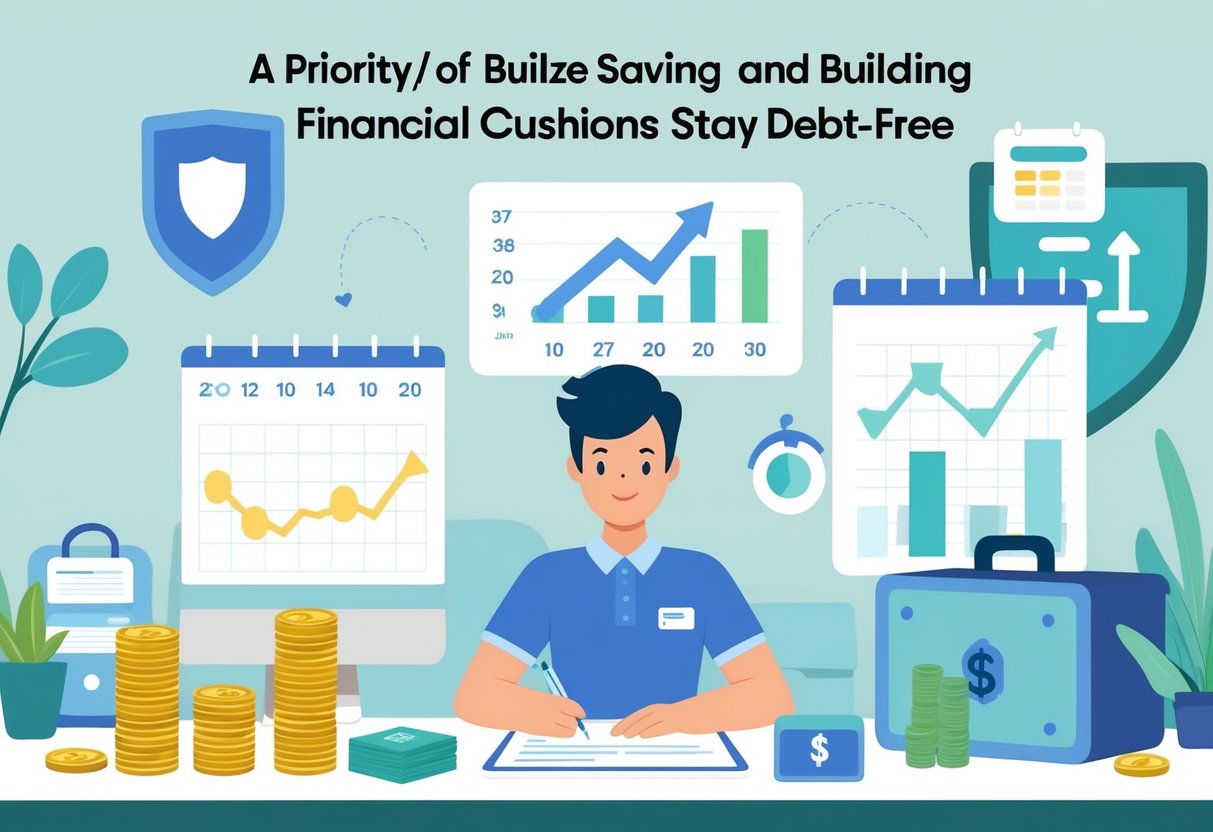
Building savings habits creates a buffer between a person and debt when life throws unexpected expenses their way. Setting aside money regularly and choosing the right accounts helps anyone stay financially secure without relying on credit cards or loans.
Establishing an Emergency Fund
An emergency fund acts as the first line of defense against debt. Most experts recommend setting aside 3-6 months of living expenses in this financial cushion to cover unexpected costs like medical bills or car repairs.
People who can’t save that much right away should start smaller. Even $1,000 to $2,000 provides enough protection to handle minor emergencies without turning to credit cards. The key is making consistent contributions, no matter how small.
Anyone building an emergency fund should keep the money separate from checking accounts. This separation reduces the temptation to spend it on non-emergencies. Once the initial goal is reached, people can redirect those same contributions toward other financial goals like retirement or debt payoff.
Automating Savings to Build Wealth
Automating savings removes the temptation to skip contributions or spend money elsewhere. When a set amount transfers automatically from each paycheck to a savings account, the money never sits in checking where it might get spent.
This strategy works because people adapt their spending to match what’s available. If $200 automatically goes to savings before reaching checking, that person learns to live on the remaining amount. They build wealth without feeling the sacrifice.
Many employers allow direct deposit splits between multiple accounts. Workers can send a percentage straight to savings while the rest goes to checking. People without this option can set up automatic transfers through their bank on payday.
Utilizing High-Yield Savings Accounts
High-yield savings accounts earn significantly more interest than traditional savings accounts. While regular accounts might pay 0.01% interest, high-yield options often pay 4% or more. This difference adds up quickly on larger balances.
These accounts help money grow faster without any additional effort or risk. A $10,000 emergency fund in a high-yield account earning 4% generates about $400 per year in interest. The same amount in a traditional account might earn just $1.
Most high-yield savings accounts are available through online banks. They typically have no monthly fees and no minimum balance requirements. The money remains easily accessible for emergencies while earning competitive returns that outpace inflation.
Be Strategic With Debt Repayment and Avoid High-Interest Debt
Paying off debt requires a clear plan and smart choices about which debts to tackle first. Understanding different repayment methods helps people save money on interest charges and stay motivated throughout the process.
Making a Debt Payoff Plan
A debt payoff plan starts with listing all debts, their balances, interest rates, and minimum payments. This gives a complete picture of what someone owes.
The next step involves calculating how much money can go toward debt each month beyond minimum payments. Even an extra $50 or $100 makes a real difference over time.
People should write down specific goals with deadlines. For example, paying off a $2,000 credit card in 12 months requires about $167 per month plus interest. Setting these targets keeps the process on track.
Tracking progress matters too. Many people use spreadsheets, apps, or simple notebooks to record payments and watch balances drop. Seeing the numbers decrease provides motivation to keep going.
Choosing Between the Avalanche and Snowball Methods
The debt avalanche method focuses on high-interest debt first. With this approach, someone pays minimum amounts on all debts but puts extra money toward the debt with the highest interest rate. Once that’s paid off, they move to the next highest rate.
The avalanche method saves the most money on interest charges. It works well for people who stay motivated by long-term savings.
The snowball method takes a different path. It targets the smallest debt first, regardless of interest rate. After paying off the smallest balance, the person moves to the next smallest debt.
This method provides quick wins that boost confidence. Seeing debts disappear faster can help people stick with their plan, even if they pay slightly more interest overall.
Paying More Than the Minimum Payments
Minimum payments mostly cover interest charges, barely touching the actual debt. A $5,000 credit card balance at 18% interest takes over 25 years to pay off with only minimum payments.
Adding even small amounts above the minimum dramatically shortens payoff time. An extra $25 per month can cut years off a debt repayment timeline.
People can find extra payment money by cutting one or two unnecessary expenses. Skipping a few restaurant meals or canceling an unused subscription frees up cash for debt payments.
Proven tactics that help pay off debt faster include applying windfalls like tax refunds or bonuses directly to debt. These lump sum payments reduce the principal quickly and lower future interest charges.
Use Credit Cards and BNPL Services Wisely
Credit cards and Buy Now, Pay Later services offer convenience but can quickly lead to overwhelming debt when misused. Keeping balances low, paying bills on time, and limiting BNPL purchases protects financial stability.
Benefits and Pitfalls of Credit Card Usage
Credit cards provide useful benefits when managed properly. They help build credit history, offer purchase protection, and provide rewards like cash back or travel points. Many cards also include fraud protection that shields users from unauthorized charges.
The pitfalls emerge when cardholders carry balances from month to month. The average credit card interest rate sits at 21.47% for existing accounts, which means debt grows rapidly. A $1,000 balance can balloon into thousands of dollars over time due to compounding interest.
Credit cards become problematic when people treat available credit as extra income. Spending beyond actual earnings creates a debt cycle that becomes harder to escape. The credit card debt trap forms when high rates combine with low minimum payments and daily compounding interest.
Managing Credit Card Balances Responsibly
Paying the full credit card balance each month eliminates interest charges completely. Credit card balances paid on or before the due date do not accrue any interest, essentially providing an interest-free short-term loan.
When carrying a balance is unavoidable, paying more than the minimum is essential. Minimum payments barely cover interest charges, leaving the principal amount largely untouched. This keeps borrowers in a perpetual cycle where payments never reduce the actual debt.
The credit utilization ratio should stay below 30% of the credit limit. Someone with a $5,000 limit should keep their balance under $1,500. People with FICO scores over 785 typically maintain a 6% utilization rate, using only a small fraction of available credit.
Key practices for responsible management:
- Set up automatic payments to avoid late fees
- Track spending throughout the month
- Avoid cash advances, which carry higher interest rates
- Review statements for errors or fraudulent charges
Limiting Buy Now, Pay Later (BNPL) Usage
BNPL services split purchases into installment payments without traditional credit checks. While these seem harmless, they create the same risks as credit card debt when overused. Multiple BNPL accounts make it easy to lose track of total obligations.
Each BNPL agreement represents a commitment to future payments. Missing payments can result in late fees, interest charges, and damage to credit scores. Some services report to credit bureaus, affecting the ability to qualify for loans or mortgages.
The main danger of BNPL is psychological. Breaking a $400 purchase into four $100 payments makes it feel more affordable, even when the budget cannot support it. This encourages overspending on items that would normally be out of reach.
Financial habits for debt-free living include treating BNPL services as seriously as any other debt. Users should limit active BNPL accounts to one or two at most and only for planned purchases that fit within the monthly budget.
Avoid Impulse Purchases and Emotional Spending
Unplanned spending can quickly drain savings and lead to debt. By identifying emotional triggers, using deliberate delay strategies, and cutting unused recurring charges, people can maintain better control over their finances.
Recognizing Triggers for Impulse Buying
Most impulse purchases happen when people shop in response to specific emotions rather than actual needs. Stress, boredom, and emotional distress are common triggers that drive spontaneous buying decisions.
People should track when they feel most tempted to make unplanned purchases. Common trigger situations include:
- Shopping while hungry or tired
- Browsing stores or websites when bored
- Receiving promotional emails or text messages
- Experiencing stress at work or home
- Seeing sales advertisements on social media
Recognizing these impulses before acting on them helps individuals pause and evaluate whether they truly need an item. Many people find that keeping a spending journal reveals patterns in their impulse buying behavior.
Understanding the psychology behind impulse purchases allows shoppers to separate genuine needs from emotional wants. Once they identify their personal triggers, they can develop specific strategies to avoid those situations entirely.
Implementing Delay Tactics Before Purchasing
A waiting period stops most impulse purchases before they happen. The 24-hour rule gives people time to reconsider whether they actually need an item or just want it in the moment.
Effective delay strategies include:
- Leaving items in an online shopping cart for 24-48 hours
- Walking around the store once before buying non-essential items
- Taking a photo of the product and reviewing it at home
- Writing the item on a wish list with a 30-day waiting period
Using cash instead of cards creates another natural delay. People spend more carefully when they physically hand over money rather than swiping a card. Paying with cash makes spending feel more real and helps limit unnecessary purchases.
Before any unplanned purchase, people should ask themselves three questions: Do I need this? Can I afford it? Will I use it regularly? These simple questions prevent most impulse buying by forcing a moment of reflection.
Eliminating Unnecessary Subscriptions
Subscriptions quietly drain bank accounts through automatic monthly charges. Many people forget about services they signed up for months or years ago.
A subscription audit reveals how much money goes toward unused or underused services each month. People should review their bank and credit card statements to identify all recurring charges. Common subscriptions that often go unused include:
| Subscription Type | Average Monthly Cost |
|---|---|
| Streaming services | $10-$20 each |
| Gym memberships | $30-$80 |
| Magazine subscriptions | $5-$15 |
| Software licenses | $10-$50 |
| Food delivery apps | $10-$15 |
Canceling just three unused subscriptions can save $50-$100 per month. That adds up to $600-$1,200 per year that can go toward paying off debt or building savings.
People should evaluate each subscription every three months. If they haven’t used a service in the past 30 days, they probably don’t need it. Setting calendar reminders helps ensure regular reviews of all recurring charges.
Increase Income and Explore Side Hustles
Growing your income creates more room in your budget to pay off existing debts and avoid taking on new ones. A strategic approach to earning more money includes both negotiating better pay at your current job and finding ways to bring in extra cash through side hustles you can start today.
Identifying Side Hustles and Extra Income Opportunities
A side hustle provides additional income without requiring someone to quit their main job. The key is finding opportunities that match existing skills and available time.
Many people start with flexible options like:
- Driving for rideshare services (Uber drivers typically make $15-25 per hour)
- Delivering food through DoorDash or Uber Eats
- Pet sitting or dog walking through apps like Rover
- Freelance writing or design work on platforms like Fiverr
- Online tutoring in subjects they know well
Quick side hustles like delivering packages require minimal setup and offer immediate income. Amazon Flex drivers can make $18-25 per hour on their own schedule.
For those with specific skills, higher-paying options include IT consulting, music lessons, or creating digital downloads like printables to sell on Etsy. The most successful side hustles align with what someone already does well and fits naturally into their existing schedule without creating burnout.
Maximizing Raises, Bonuses, and Windfalls
Negotiating better compensation at a current job often provides more income than any side hustle. Employees should track their accomplishments throughout the year and request performance reviews to discuss raises.
When asking for a raise, specific data matters. Someone should present concrete examples of value they’ve added, projects they’ve completed, and responsibilities they’ve taken on since their last increase.
Windfall opportunities to maximize:
- Annual bonuses from employers
- Tax refunds
- Inheritance or gifts
- Performance incentives
- Year-end profit sharing
The critical habit is directing these bonuses and windfalls toward debt elimination rather than lifestyle upgrades. Even a modest 3% raise on a $50,000 salary adds $1,500 annually that can accelerate debt payoff.
People staying debt-free develop the discipline to treat increased income as a tool for financial security. They resist the temptation to immediately increase spending when they earn more.
Set Clear Financial Goals and Stay Motivated
People who achieve debt-free living understand that specific financial targets provide direction and purpose. Breaking goals into manageable timeframes and monitoring progress creates momentum that sustains motivation through challenging periods.
Defining Short-Term and Long-Term Objectives
Setting clear financial goals creates a roadmap that guides daily decisions and actions toward debt-free living. Short-term objectives typically span three to twelve months and might include building a $1,000 emergency fund or paying off a specific credit card balance.
Long-term goals extend beyond one year and focus on major milestones like eliminating all consumer debt or saving a six-month expense cushion. Someone working toward financial freedom should write down both types of goals with specific dollar amounts and target dates.
Breaking larger objectives into smaller steps makes them less overwhelming. A person aiming to pay off $10,000 in debt over two years can focus on eliminating roughly $417 per month. This approach transforms an intimidating target into actionable monthly tasks.
Essential elements for effective goal-setting:
- Specific dollar amounts rather than vague intentions
- Realistic timelines based on current income and expenses
- Written documentation that serves as a daily reminder
- Regular review dates to assess and adjust as needed
Tracking Progress Toward Debt-Free Living
Regularly reviewing financial progress helps people stay focused and make informed decisions about their debt elimination strategy. Weekly or monthly check-ins reveal spending patterns and highlight areas where adjustments improve results.
A simple tracking system might include a spreadsheet that lists each debt with current balances, interest rates, and projected payoff dates. Many people find visual tools like debt thermometers or progress charts particularly motivating as they watch balances decrease.
Tracking also exposes problems early. If someone notices their debt reduction has stalled for two consecutive months, they can investigate whether unexpected expenses disrupted their plan or if budget adjustments are necessary.
Celebrating Achievements Along the Way
Recognizing milestones maintains enthusiasm during the months or years required to achieve complete financial freedom. Small celebrations after paying off each debt reinforce positive behaviors without derailing progress.
A person might treat themselves to a modest reward when they eliminate a credit card balance or reach a savings milestone. These rewards should be affordable and proportional to the achievement—perhaps a nice dinner out rather than an expensive purchase that creates new debt.
Meaningful ways to acknowledge progress:
- Sharing successes with an accountability partner or support group
- Creating a visual display that marks each paid-off account
- Taking a moment to reflect on how far they have come
- Planning a significant celebration once they achieve complete debt-free life status
Celebrating achievements also builds confidence. Each paid-off debt proves that financial success is possible and motivates continued effort toward remaining debt-free permanently.
Commit to Financial Education and Open Money Conversations
Building knowledge about money and discussing finances openly creates a foundation for staying debt-free. People who understand financial concepts make better decisions, while honest money conversations prevent misunderstandings that lead to debt.
Improving Financial Literacy for Lasting Change
Financially successful people dedicate time to education through books, seminars, and online courses. This ongoing learning helps individuals understand interest rates, investment strategies, and debt management techniques.
Financial literacy includes knowing how credit scores work and how different types of debt affect long-term goals. Someone who understands compound interest makes smarter borrowing decisions. They recognize when a loan makes sense and when to avoid it.
Key areas to focus on:
- Credit card interest calculations
- Loan terms and repayment schedules
- Investment basics and retirement planning
- Tax implications of financial decisions
Learning doesn’t require expensive courses. Free resources from libraries, government websites, and financial institutions provide solid information. The key is making education a regular habit rather than a one-time event.
Talking About Money With Family and Partners
Open conversations about finances strengthen relationships and prevent debt problems. When household members understand income, expenses, and financial goals, they work together instead of against each other.
Getting the entire household involved in money management makes staying debt-free easier. Partners need to discuss spending limits, savings targets, and debt payoff strategies. Children benefit from age-appropriate conversations about earning, saving, and spending wisely.
Regular money meetings keep everyone informed and accountable. These discussions should cover:
- Monthly budget reviews
- Upcoming large expenses
- Progress toward debt elimination
- Changes in income or financial goals
Honest communication prevents one person from overspending while another tries to save. It also ensures both partners understand why certain purchases need to wait.
Frequently Asked Questions
Building financial security requires specific tactics for savings, smart budgeting frameworks, and strategic debt management approaches that work together to prevent future money problems.
What strategies can be employed to build an emergency fund for unforeseen expenses?
Starting an emergency fund begins with setting a realistic initial goal of $500 to $1,000 for minor emergencies. Once someone reaches this milestone, they can work toward saving three to six months of essential living expenses.
Automatic transfers from checking to savings accounts make the process easier and more consistent. Setting up transfers on payday ensures the money gets saved before it can be spent on other things.
Opening a separate high-yield savings account keeps emergency funds away from regular spending money. This separation reduces the temptation to dip into savings for non-emergency purchases.
Some people find success by saving small amounts more frequently, such as $25 per week instead of $100 per month. Breaking the goal into smaller pieces makes it feel more achievable.
How does the 50/30/20 budgeting rule contribute to maintaining a debt-free life?
The 50/30/20 rule divides after-tax income into three categories: 50 percent for needs, 30 percent for wants, and 20 percent for savings and debt repayment. This framework provides clear spending boundaries while allowing room for enjoyment.
Needs include housing, utilities, groceries, insurance, and minimum debt payments. These expenses should not exceed half of take-home pay to maintain financial stability.
Wants cover dining out, entertainment, hobbies, and non-essential purchases. Limiting these to 30 percent prevents overspending while still permitting lifestyle enjoyment.
The 20 percent allocated to savings and extra debt payments builds financial security over time. This portion can go toward emergency funds, retirement accounts, or paying down existing debts faster than required.
What are the most effective methods for tracking and reducing daily expenses?
Budgeting apps that connect to bank accounts automatically categorize transactions and show spending patterns in real time. These tools eliminate manual tracking and provide instant visibility into where money goes each month.
Reviewing bank and credit card statements weekly helps catch unnecessary subscriptions or forgotten recurring charges. Many people discover they pay for services they no longer use or need.
The envelope method works well for categories where overspending happens frequently. Someone allocates cash for groceries, gas, or entertainment and stops spending in that category once the envelope is empty.
Taking a 24-hour pause before non-essential purchases gives time to decide if the item is truly needed. This cooling-off period helps avoid impulse purchases that derail budgets.
How can one consistently allocate money towards savings without sacrificing necessary spending?
Prioritizing savings by treating it as a fixed expense ensures it happens before discretionary spending. Paying yourself first means savings come out immediately after income arrives.
Starting with a small percentage like 5 percent of income makes saving feel manageable. As income increases or expenses decrease, that percentage can grow gradually to 10 percent or more.
Finding small cuts across multiple spending categories adds up to significant savings without major lifestyle changes. Reducing dining out by one meal per week or lowering the thermostat by two degrees creates room for savings.
Using windfalls like tax refunds, bonuses, or cash gifts for savings provides major boosts without affecting regular monthly budgets. These unexpected funds can quickly build or replenish emergency reserves.
What steps should be taken to effectively negotiate lower interest rates on existing debts?
Calling credit card companies directly to request a lower interest rate often succeeds, especially for customers with good payment history. Companies prefer to reduce rates rather than lose reliable customers to competitors.
Preparing for the conversation by researching competitor rates and knowing one’s credit score strengthens the negotiation position. Having specific numbers shows seriousness and gives leverage.
Mentioning offers from other credit card companies or the option to transfer balances can motivate the current lender to match or beat those rates. Competition between lenders works in the borrower’s favor.
If the first representative cannot help, asking to speak with a supervisor or retention specialist increases chances of success. These employees have more authority to adjust rates.
Consolidating multiple high-interest debts into a single lower-interest personal loan reduces both the interest rate and monthly payment. This approach works best when someone can qualify for loans with low, fixed rates.
In what ways can investing be incorporated into a plan to stay debt-free in the long term?
Starting to invest while managing debt depends on the interest rates involved. High-interest debt above 7 percent should typically get paid off before investing, while low-interest debt below 5 percent allows for simultaneous investing.
Contributing enough to an employer 401(k) to capture the full company match provides free money that should not be left on the table. This counts as both savings and investing even while paying down debt.
Low-cost index funds offer diversified investment exposure without requiring extensive market knowledge or high minimum investments. Many brokerages now allow investing with as little as $50 per month.
Setting up automatic monthly investments creates consistent wealth building without requiring ongoing decisions. Dollar-cost averaging through regular investments reduces the impact of market timing.
Increasing investment contributions as debts get paid off redirects former debt payments toward wealth building. Someone who paid $300 monthly toward a car loan can invest that same amount once the loan is gone.



![How I Paid Off $50,000 in Debt: My Step-by-Step Debt Free Journey Last updated: March 31, 2026 Quick Answer: Paying off $50,000 in debt is absolutely possible, even on an average income. I did it by getting brutally honest about my numbers, choosing a payoff method that fit my personality, cutting expenses aggressively, and adding extra income streams. It took focus and sacrifice, but the process is straightforward: list every debt, build a small emergency fund, attack debt with every spare dollar, and protect your progress along the way. Key Takeaways Know your exact numbers first. You can't pay off what you haven't fully faced. List every balance, interest rate, and minimum payment. The debt snowball and debt avalanche are the two main payoff methods. Snowball wins on motivation; avalanche wins on math. A small $1,000 emergency fund before you start keeps unexpected expenses from derailing your plan. Cutting expenses alone usually isn't enough. Adding income — even a few hundred dollars a month — dramatically speeds up your debt free journey. 74% of Americans now define financial success as being debt-free, according to KeyBank's 2025 Financial Mobility Survey. You're not alone in this goal. [2] Automate your payments. Willpower runs out; automation doesn't. Celebrate small wins. Each paid-off account is real progress, not just a number. Debt stress is real. Building a support system or accountability partner makes a measurable difference in staying consistent. Once debt-free, redirect those payments immediately toward savings and investing so you never slide back. What Does a Debt Free Journey Actually Look Like? A debt free journey is the intentional, step-by-step process of eliminating all personal debt — credit cards, car loans, student loans, medical bills — until you owe nothing. It's not a single moment; it's a series of decisions made consistently over months or years. For me, it started with a number that made my stomach drop: $50,247.13. That was the total across four credit cards, a car loan, and leftover student loan debt. I had been making minimum payments for years, watching the balances barely move. When I finally sat down and added it all up, I realized I had been treading water. According to a 2026 survey by Southwest Voices, 33% of U.S. consumers define financial success as being debt-free, regardless of income or assets — a shift away from the old idea that wealth is measured by what you own. [1] That reframing helped me. I stopped feeling behind and started feeling motivated. Here's the honest truth: a debt free journey looks messy in the middle. There are months where you feel unstoppable and months where an unexpected car repair wipes out your progress. What matters is that you keep going. Step 1: Face the Full Picture (This Part Is Uncomfortable) Before you can make a plan, you need complete, accurate information about every debt you owe. Here's exactly what I tracked in a simple spreadsheet: Debt Balance Interest Rate Minimum Payment Credit Card A $8,400 24.99% APR $210 Credit Card B $6,100 19.99% APR $155 Credit Card C $3,200 22.49% APR $80 Car Loan $14,500 6.9% APR $320 Student Loan $18,047 5.5% APR $195 Total $50,247 — $960/month Looking at that table was hard. But it was also the most important thing I did, because it turned a vague, overwhelming cloud of "I have a lot of debt" into a concrete list I could actually work through. Common mistake: Many people underestimate their total debt because they avoid checking balances. Log in to every account, pull your free credit report at AnnualCreditReport.com, and write down every number. Step 2: Build a Small Emergency Fund First Before throwing every extra dollar at debt, save $1,000 as a starter emergency fund. This sounds counterintuitive when you're paying 24.99% interest, but here's why it works: without a cash cushion, the first flat tire or medical co-pay goes right back on a credit card, undoing your progress and crushing your motivation. A 2025 KeyBank survey found that 25% of Americans cannot come up with $2,000 for unexpected expenses, up from 19% the year before. [2] That statistic shows how common this vulnerability is — and why plugging it first protects your entire plan. Once you hit $1,000, stop saving and redirect everything to debt. You can build a full 3–6 month emergency fund after you're debt-free. Step 3: Choose Your Debt Payoff Strategy Two methods dominate personal finance, and both work. The right one depends on your personality. Debt Snowball (Dave Ramsey's method): Pay minimums on all debts. Throw every extra dollar at the smallest balance first. When it's gone, roll that payment to the next smallest. Best for: people who need quick wins to stay motivated. Debt Avalanche: Pay minimums on all debts. Throw every extra dollar at the highest interest rate first. Best for: people who are motivated by math and want to pay the least interest overall. I used the snowball method because I needed to feel progress. Paying off that $3,200 credit card in four months gave me a surge of confidence that kept me going for the next two years. If you want a detailed breakdown of both approaches, check out this guide on 7 proven ways to pay down debt faster. Edge case: If you have a debt with a balance transfer offer at 0% APR, consider moving high-interest credit card balances there first. Harvard FCU recommends balance transfer cards as a way to freeze interest accrual and focus entirely on paying down principal. [5] Just watch for transfer fees (typically 3–5%) and make sure you can pay the balance before the promotional period ends. Step 4: Cut Expenses Without Losing Your Mind Cutting expenses is where most people start — and where many people quit, because they try to cut everything at once and feel deprived. My approach: cut in tiers. Tier 1 — Cut immediately (no lifestyle impact): Unused subscriptions and memberships Negotiated lower rates on phone, internet, and insurance Switched to generic/store-brand groceries Tier 2 — Reduce (some adjustment required): Eating out dropped from 4x/week to once a week Grocery budget planned with a weekly meal plan (I saved roughly $200/month here) Paused gym membership and worked out at home Tier 3 — Temporary sacrifices (hard but worth it): Skipped vacations for 18 months Sold my newer car and bought a paid-off used car, eliminating the $320/month payment A 2025 KeyBank survey found that 49% of consumers switched to less expensive brands or services and 41% reduced subscriptions or memberships in response to rising costs. [2] These aren't dramatic moves — they're practical ones that add up fast. For practical grocery savings, this budget meal planning guide shows how to feed a family on $50/week, which is a real game-changer when you're redirecting every dollar to debt. Step 5: Increase Your Income (This Is the Real Accelerator) Cutting expenses has a floor — you can only cut so much. Income has no ceiling. Adding even $300–$500 per month in extra income can cut months or years off your debt free journey. What I did to earn extra money: Sold stuff I didn't need. I made over $1,000 in 30 days selling furniture, clothes, and electronics. (This decluttering guide shows exactly how.) Freelanced on weekends. I offered writing and editing services through Upwork for about 8 hours per week. Used money-making apps. Small amounts — $50–$100/month — but every dollar went straight to debt. Every single dollar of extra income went directly to the target debt. Not to lifestyle upgrades. Not to "treating myself." Straight to the balance. If you're looking for ways to earn more without a second job, check out these 15 best money making apps that pay real cash or explore high income skills you can learn at home that can significantly boost your monthly income over time. How Do You Stay Motivated During a Long Debt Free Journey? Staying motivated over a multi-year debt payoff is genuinely the hardest part. The math is simple; the psychology is not. 38% of U.S. women report that money makes them feel anxious most of the time, compared to 24% of men, according to a 2026 Southwest Voices survey. [1] Debt stress is real, and ignoring it doesn't make it go away. What actually helped me stay on track: A visual debt payoff tracker. I colored in a bar graph on my fridge every time I paid off $1,000. Silly? Maybe. Effective? Absolutely. An accountability partner. My sister was on her own debt free journey. We checked in monthly. Celebrating milestones. When I paid off each account, I did something small and free to mark it — a picnic, a movie night at home. Reading stories like mine. Seeing that a debt-free family paid off $67K on one income made my $50K feel conquerable. If you're feeling overwhelmed, this resource on debt stress relief and staying motivated has practical strategies that go beyond "just believe in yourself." Decision rule: If you're losing motivation, don't restart from scratch. Switch strategies temporarily. If you've been doing the avalanche method, switch to snowball for one month to get a quick win. Then go back. What Was My Month-by-Month Debt Payoff Timeline? Here's an honest look at how the $50,247 came down over 26 months. I'm sharing this because most debt payoff stories skip the messy middle. Month Range Action Running Balance Months 1–2 Built $1,000 emergency fund $50,247 Months 3–6 Paid off Credit Card C ($3,200) $47,047 Months 7–11 Paid off Credit Card B ($6,100) $40,947 Months 12–16 Paid off Credit Card A ($8,400) $32,547 Month 17 Sold car, eliminated car loan $18,047 Months 18–26 Paid off student loan $0 Month 17 was the turning point. Selling the car felt terrifying, but it eliminated $14,500 in debt overnight and freed up $320/month. After that, the student loan felt manageable. Note on the car: I bought a $5,000 used Honda Civic with cash. It wasn't glamorous, but it ran fine and I drove it for two years while I finished paying off everything else. What Mistakes Almost Derailed My Debt Free Journey? Knowing what to avoid is just as important as knowing what to do. Mistake 1: Not having an emergency fund first.Early on, I skipped the $1,000 buffer and put everything at debt. Three months in, a $700 car repair went right back on a credit card. Demoralizing. Mistake 2: Setting an unrealistic budget.My first budget was so tight I lasted two weeks before blowing it. I had to build in a small "fun money" line — even $30/month — to make the budget sustainable. Mistake 3: Ignoring the emotional side.I white-knuckled it for the first six months without any support system. Burnout hit hard. Once I found an accountability partner and started tracking wins visually, consistency improved dramatically. Mistake 4: Lifestyle creep after early wins.After paying off the first credit card, I celebrated by spending more than I should have for a couple of months. I lost about six weeks of progress. Celebrate, but keep the momentum. To avoid common budgeting pitfalls, this list of 10 budgeting mistakes to avoid is worth reading before you build your plan. What Happens After You Become Debt-Free? Becoming debt-free is not the finish line — it's the starting line for building actual wealth. 38% of people say being debt-free is the most important financial milestone, according to the 2026 BHG Financial Consumer Debt & Finances Survey. [4] But once you're there, the same discipline that paid off debt becomes your wealth-building engine. Here's what I did the month I made my last payment: Built a full 3–6 month emergency fund using what used to be my debt payments. Started investing — maxed out my Roth IRA contribution for the year. Kept living on my "debt payoff budget" for six more months to build a real financial cushion. Raised my credit score — paying off revolving debt dramatically improved my utilization ratio. 74% of respondents in the BHG Financial survey feel optimistic about their financial future, with that number climbing to 80% among higher-income households. [4] I felt that shift personally. Once the debt was gone, financial decisions stopped feeling like damage control and started feeling like choices. For the next chapter, this guide on how to achieve financial freedom in 5 steps is exactly where I'd point anyone who just made their last debt payment. Frequently Asked Questions Q: How long does it realistically take to pay off $50,000 in debt?A: It depends on your income, expenses, and how aggressively you can pay. With focused effort — cutting expenses and adding income — most people can pay off $50,000 in 2–4 years. I did it in 26 months by combining both strategies. Q: Should I save money or pay off debt first?A: Build a small $1,000 emergency fund first, then attack debt aggressively. Without that buffer, unexpected expenses will send you back to credit cards and undo your progress. Q: What's the best method for paying off debt — snowball or avalanche?A: Both work. Snowball (smallest balance first) is better if you need motivational wins to stay consistent. Avalanche (highest interest first) saves more money mathematically. Choose the one you'll actually stick to. Q: Can I pay off debt on a low income?A: Yes, but it requires more focus on increasing income alongside cutting expenses. Even an extra $200–$300/month makes a significant difference over time. This guide on how to pay off credit card debt fast on a low income has specific strategies for tighter budgets. Q: Should I use a balance transfer card to pay off debt faster?A: A 0% APR balance transfer card can be a smart move for high-interest credit card debt, because it stops interest from accruing and lets you focus entirely on the principal. [5] Watch for transfer fees and make sure you have a plan to pay it off before the promotional period ends. Q: What if I have an emergency and go back into debt during my payoff journey?A: It happens. Don't quit. Rebuild your $1,000 buffer, then resume your payoff plan. One setback doesn't erase your progress. Q: Is a no-spend challenge worth trying during debt payoff?A: Absolutely. A no-spend month challenge can generate an extra $200–$500 in a single month, which goes directly to your target debt. It also resets spending habits in a lasting way. Q: How do I stay motivated when debt payoff feels like it's taking forever?A: Use a visual tracker, find an accountability partner, and celebrate each paid-off account. Also, recalculate your payoff date every few months — watching it move closer is genuinely motivating. Q: Will paying off debt hurt my credit score?A: Paying off installment loans (like a car or student loan) can cause a small, temporary dip because it reduces your credit mix. But paying off credit cards improves your utilization ratio, which typically raises your score. The net effect of becoming debt-free is almost always positive over time. Q: What's the first step if I'm completely overwhelmed and don't know where to start?A: Write down every debt you owe — balance, interest rate, minimum payment — in one place. That single act of clarity is the foundation of every successful debt free journey. Conclusion: Your Debt Free Journey Starts With One Decision Paying off $50,000 in debt wasn't about being perfect. It was about being consistent. I made mistakes, had setbacks, and had months where I wanted to give up. But I kept coming back to the plan. Here's your action plan for this week: List every debt with its balance, interest rate, and minimum payment. Set up a $1,000 starter emergency fund before you do anything else. Choose your payoff method (snowball or avalanche) and commit to it. Find one expense to cut and one way to earn extra money this month. Tell someone — an accountability partner changes everything. If you're ready to go deeper, the debt free in 12 months step-by-step plan is a great next resource, and these 10 simple habits that help you stay debt-free for life will help you protect everything you build. You don't need a perfect plan. You need a real one. Start today. References [1] Debt Free Flexible And Focused On Stability The Money Mindset Of Us Consumers In 2026 - https://www.southwestvoices.news/premium/stacker/stories/debt-free-flexible-and-focused-on-stability-the-money-mindset-of-us-consumers-in-2026,150595 [2] Is Debt Free The New Luxury Keybank Survey Explores 302606087 - https://www.prnewswire.com/news-releases/is-debt-free-the-new-luxury-keybank-survey-explores-302606087.html [4] Money Map Report - https://bhgfinancial.com/research/money-map-report [5] Gift Yourself Financial Peace How Be Debt Free In 2026 - https://harvardfcu.org/blog/gift-yourself-financial-peace-how-be-debt-free-in-2026/ Meta Title: How I Paid Off $50,000 in Debt: My Debt Free Journey Meta Description: I paid off $50,000 in debt in 26 months. Here's my honest, step-by-step debt free journey — what worked, what failed, and how you can do it too. Tags: debt free journey, paying off debt, debt snowball, debt avalanche, debt payoff plan, personal finance, budgeting tips, credit card debt, student loan payoff, financial freedom, debt stress, money motivation](https://msbudget.com/wp-content/uploads/2026/03/slot-0-1774952346462-500x330.png)