Quick Answer: The budgeting habits that separate financially savvy people from everyone else aren’t complicated. They track their spending, automate savings, follow a simple budget framework, and make intentional choices about where their money goes — consistently. You don’t need a high income to do any of this. You just need a system and the willingness to stick with it.
Key Takeaways 💡
- Financially savvy people treat budgeting as a daily habit, not a once-a-year event.
- A simple framework like the 50/30/20 or 70/20/10 rule gives structure without being too rigid.
- Automating savings removes the temptation to spend money before it’s set aside.
- Small daily purchases add up fast — 59% of consumers in 2026 are actively cutting back on “little treats.”
- Tracking net worth monthly (not just spending) gives you the full financial picture.
- Paying yourself first is the single most powerful shift you can make.
- Mindful spending — not deprivation — is the approach most people are adopting in 2026.
- Debt repayment and savings growth are the top two financial goals this year.
- Talking openly about money (yes, even with friends) accelerates financial progress.
- Budgeting tools and apps make consistency much easier — use them.
What Do Good Budgeting Habits Actually Look Like?
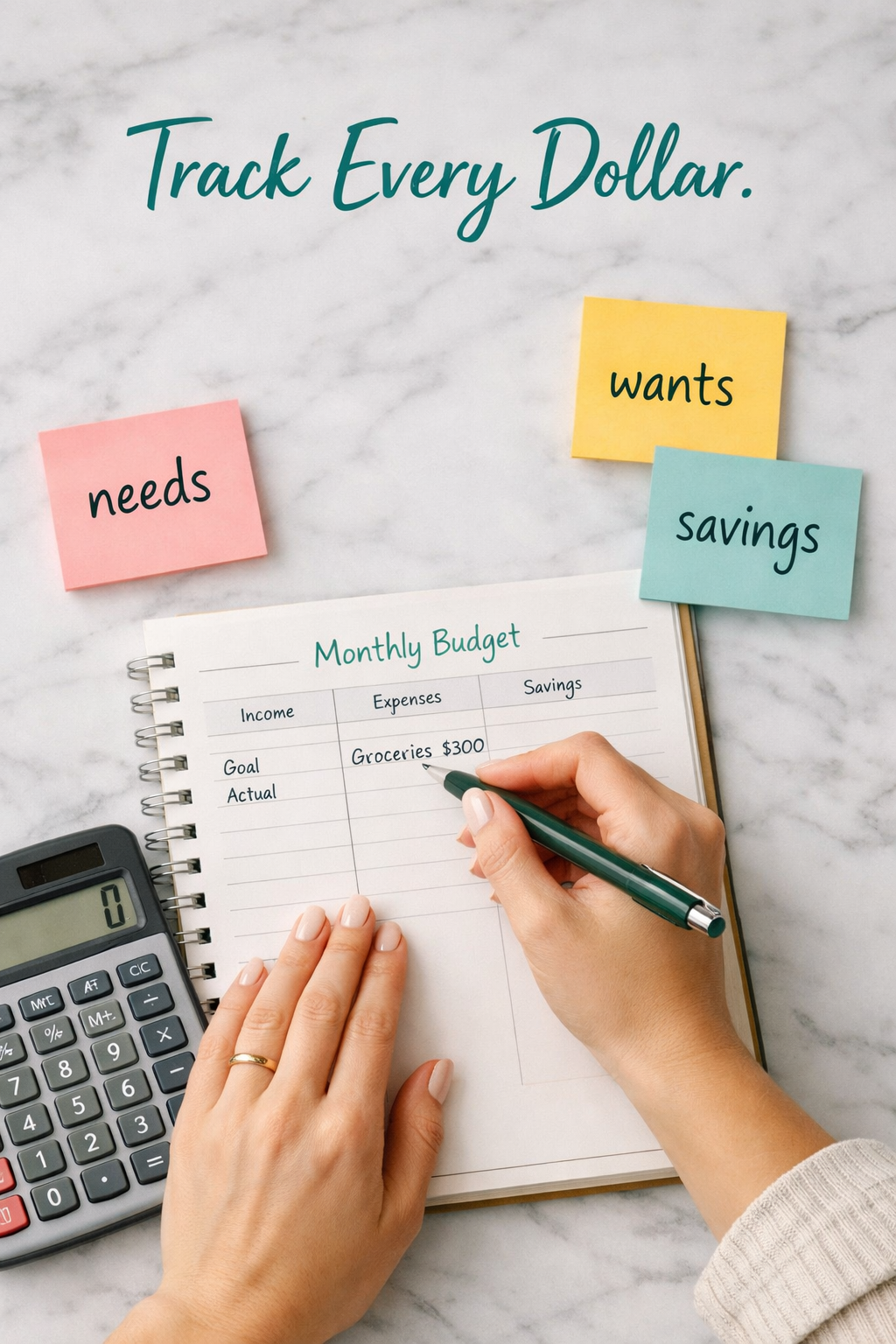
Good budgeting habits are consistent, flexible, and tied to real goals — not just a list of restrictions. Financially savvy people don’t obsess over every cent, but they do know where their money is going and why.
Think of a budget less like a diet and more like a GPS. It tells you where you are, shows you the route, and recalculates when life happens. The 10 habits below are the ones that show up again and again in people who build real financial stability — regardless of income level.
Habit 1: They Choose a Budget Framework and Actually Use It
The first step is picking a structure. Without one, budgeting is just guessing.
Two of the most popular frameworks right now:
| Framework | Needs | Savings | Wants | Best For |
|---|---|---|---|---|
| 50/30/20 Rule | 50% | 20% | 30% | Most income levels |
| 70/20/10 Rule | 70% | 20% | 10% | High-cost-of-living areas |
The 50/30/20 budget rule allocates half your after-tax income to needs, 30% to wants, and 20% to savings. It’s flexible enough to survive real life. If you’re in a high-inflation area where rent and groceries eat up more than 50%, the 70/20/10 budget rule may be a better fit.
Common mistake: Choosing a framework and never revisiting it. Review your percentages every three to six months, especially if your income or expenses change.
Habit 2: They Track Spending — Every Single Month
Tracking is the foundation of every other budgeting habit. You can’t improve what you don’t measure.
Financially savvy people don’t just glance at their bank balance. They categorize their spending and compare it to their plan. This can be as simple as a spreadsheet or as automated as a budgeting app like YNAB, Mint, or your bank’s built-in tools.
How to start:
- Pull up last month’s bank and credit card statements.
- Label every transaction: needs, wants, savings, or debt.
- Total each category and compare to your budget framework.
- Identify the one or two areas where spending leaked.
“What gets measured gets managed.” Tracking isn’t about guilt — it’s about awareness.
If you’re new to this, check out these budgeting hacks for beginners to make the process feel less overwhelming.
Habit 3: They Pay Themselves First (Automatically)
Saving what’s “left over” at the end of the month rarely works. Financially savvy people save before they spend.
Set up an automatic transfer to your savings account on payday — even if it’s just $25 to start. The money moves before you have a chance to spend it, and over time, you stop noticing it’s gone.
This one habit is behind most savings success stories. If you get paid every two weeks, budgeting biweekly paychecks with automatic transfers is especially effective because you align savings with each paycheck rather than waiting for a monthly surplus.
Choose this if: You’ve tried saving manually and it never sticks. Automation removes the decision entirely.
Habit 4: They Cut “Little Treats” With Intention, Not Guilt
This one is big in 2026. A recent survey found that 59% of consumers are actively trying to cut back on small daily purchases, and 45% admitted that impulse spending has derailed their financial progress before.
The key word here is intention. Financially savvy people don’t eliminate all small pleasures — they decide in advance which ones are worth it.
Practical approach:
- Identify your top three “little treat” spending categories (coffee, takeout, subscriptions, etc.).
- Keep one or two that genuinely bring you joy.
- Cut the ones that are just habits, not actual enjoyment.
- Redirect those dollars to a savings goal you care about.
This is the difference between deprivation and mindful spending — and mindful spending is exactly what 49% of consumers say they’re committing to this year.

Habit 5: They Build an Emergency Fund Before Anything Else
An emergency fund is the foundation that makes every other financial habit possible. Without one, a single car repair or medical bill can send you straight to a credit card.
Financially savvy people keep three to six months of essential expenses in a separate, accessible savings account. If that feels out of reach, start with a $500 mini emergency fund — just enough to cover most common unexpected costs.
Edge case: If you have high-interest credit card debt (many cards now carry APRs around 20%), you might pause at $1,000 in emergency savings and focus aggressively on debt first. Then rebuild the full fund once the debt is gone. For a step-by-step plan, see this guide on staying debt free for life.
Habit 6: They Make Debt Repayment a Non-Negotiable Line Item
Paying down debt isn’t optional for financially savvy people — it’s built into the budget like rent or groceries.
In 2026, 20% of people list paying down debt as their top financial goal, and that focus only grows with age as the weight of high-interest balances compounds. Treating debt payments as a fixed expense — not something you do with leftover money — is what separates people who get out of debt from those who stay stuck.
Two popular strategies:
- Avalanche method: Pay minimums on all debts, then throw extra money at the highest-interest debt first. Saves the most money overall.
- Snowball method: Pay off the smallest balance first for quick wins and momentum.
Neither is wrong. Pick the one you’ll actually stick with. For more on this, the 7 proven ways to pay down debt faster is worth a read.
Habit 7: They Review Their Budget Weekly (Not Just Monthly)
Monthly budget reviews catch problems after the damage is done. A quick weekly check-in — five to ten minutes — lets you course-correct before you overspend.
Financially savvy people often do a “money date” with themselves (or their partner) once a week. They check account balances, confirm upcoming bills, and make sure they’re still on track.
Simple weekly checklist:
- Check account balances
- Review any new charges
- Confirm upcoming bills for the week
- Note any upcoming irregular expenses (birthdays, car registration, etc.)
- Adjust discretionary spending if needed
Couples especially benefit from this habit — it keeps both people aligned and reduces money arguments. If you’re managing finances as a team, the couples budgeting bootcamp covers this in detail.
Habit 8: They Use the “Balanced” Approach, Not the All-or-Nothing Mindset
One of the biggest shifts happening in 2026: 43% of people are moving away from rigid, zero-tolerance budgets toward flexible frameworks that allow for real life.
Financially savvy people don’t quit their budget because they had an expensive weekend. They plan for it. This is sometimes called “financial gymnastics” — living frugally during the week so you can enjoy the weekend without guilt. About 49% of Americans already do this intentionally.
The balanced approach means:
- Allowing planned splurges without derailing the whole budget
- Building a “fun money” category so spontaneous spending has a home
- Forgiving yourself for slip-ups and getting back on track immediately
If you’ve been burned by overly strict budgets before, check out budgeting mistakes to avoid — many of them come from being too rigid.
Habit 9: They Track Net Worth, Not Just Spending
Spending tracking tells you what happened this month. Net worth tracking tells you if you’re actually building wealth over time.
Net worth = everything you own (assets) minus everything you owe (debts). Financially savvy people calculate this number monthly or quarterly and watch it trend upward over time — even if progress is slow.
How to calculate yours:
- List all assets: savings, investments, home equity, retirement accounts.
- List all debts: mortgage, car loans, student loans, credit cards.
- Subtract debts from assets.
- Record the number and repeat next month.
Watching this number grow is genuinely motivating. It also shows you that even when you have a rough spending month, your overall financial picture might still be improving.
Habit 10: They Talk About Money Openly
This one surprises people, but it’s real. The “loud budgeting” trend — openly sharing financial wins, challenges, and goals with friends and family — has been growing and continues strong into 2026.
Financially savvy people don’t treat money as a taboo topic. They talk about their savings goals, share what’s working, and aren’t embarrassed to say “that’s not in my budget right now.”
Why this works:
- It creates accountability.
- It normalizes financial boundaries.
- It often leads to discovering tips and resources you wouldn’t find alone.
- It reduces the social pressure to overspend to keep up with others.
If you’re ready to go deeper on building lasting financial habits, the guide on 15 good financial habits that changed my life is a great companion read.

FAQ: Budgeting Habits People Ask About Most
Q: How long does it take to build a budgeting habit?
Most people start to see consistent budgeting feel natural after 60 to 90 days of practice. The first month is the hardest — after that, it becomes routine.
Q: What’s the easiest budgeting habit to start with?
Automating savings is the easiest and highest-impact habit to start. Set it up once and it works every month without any ongoing effort.
Q: Do I need a budgeting app to be financially savvy?
No, but apps make tracking much easier. A simple spreadsheet or even a notebook works fine if you use it consistently.
Q: What if my income is irregular?
Budget based on your lowest expected monthly income. In months you earn more, direct the extra toward savings or debt. This is the safest approach for freelancers and gig workers.
Q: Is the 50/30/20 rule realistic if I live in an expensive city?
For many people in high-cost areas, needs alone exceed 50% of income. In that case, the 70/20/10 rule is more realistic — 70% for needs, 20% for savings, and 10% for wants.
Q: How do I stop impulse spending?
The most effective method is a 24-to-48-hour waiting rule for any unplanned purchase. Most impulse urges fade within a day. Also, unsubscribe from retail emails and remove saved payment info from shopping sites.
Q: Should I budget if I’m in debt?
Absolutely — budgeting is even more critical when you’re in debt. It’s how you find the money to pay it down faster. See the debt-free in 12 months plan for a structured approach.
Q: What’s the biggest budgeting mistake people make?
Not having a plan for irregular expenses (car registration, annual subscriptions, holiday gifts). These feel like emergencies but they’re predictable. Budget for them monthly by dividing the annual cost by 12.
Conclusion: Start With One Habit, Then Build From There
You don’t need to adopt all 10 of these budgeting habits at once. In fact, trying to overhaul everything at the same time is one of the fastest ways to burn out and quit.
Here’s what I’d suggest:
- This week: Pick a budget framework (50/30/20 or 70/20/10) and calculate your current spending categories.
- This month: Set up one automatic savings transfer, even if it’s small.
- Over the next 90 days: Add a weekly money check-in and start tracking your net worth.
The financially savvy people you admire didn’t build their habits overnight. They started somewhere, stayed consistent, and adjusted as life changed. You can do exactly the same thing — starting today.
For more practical steps, the guide on how to achieve financial freedom in 5 steps is a great next read.