
I’ll be honest—before I tried the 50 30 20 Budget Rule, my finances looked like a messy junk drawer. I knew money was coming in and going out, but where exactly? That was anyone’s guess. I’d tried budgeting apps that required tracking every single latte, spreadsheets that made my head spin, and even the “hope and pray” method (spoiler: it didn’t work). Then I stumbled across this simple budgeting framework that promised to transform my financial life without requiring a degree in accounting. Skeptical but desperate, I committed to testing the 50 30 20 Budget Rule for two full months. What happened next genuinely surprised me—and my bank account.
Key Takeaways
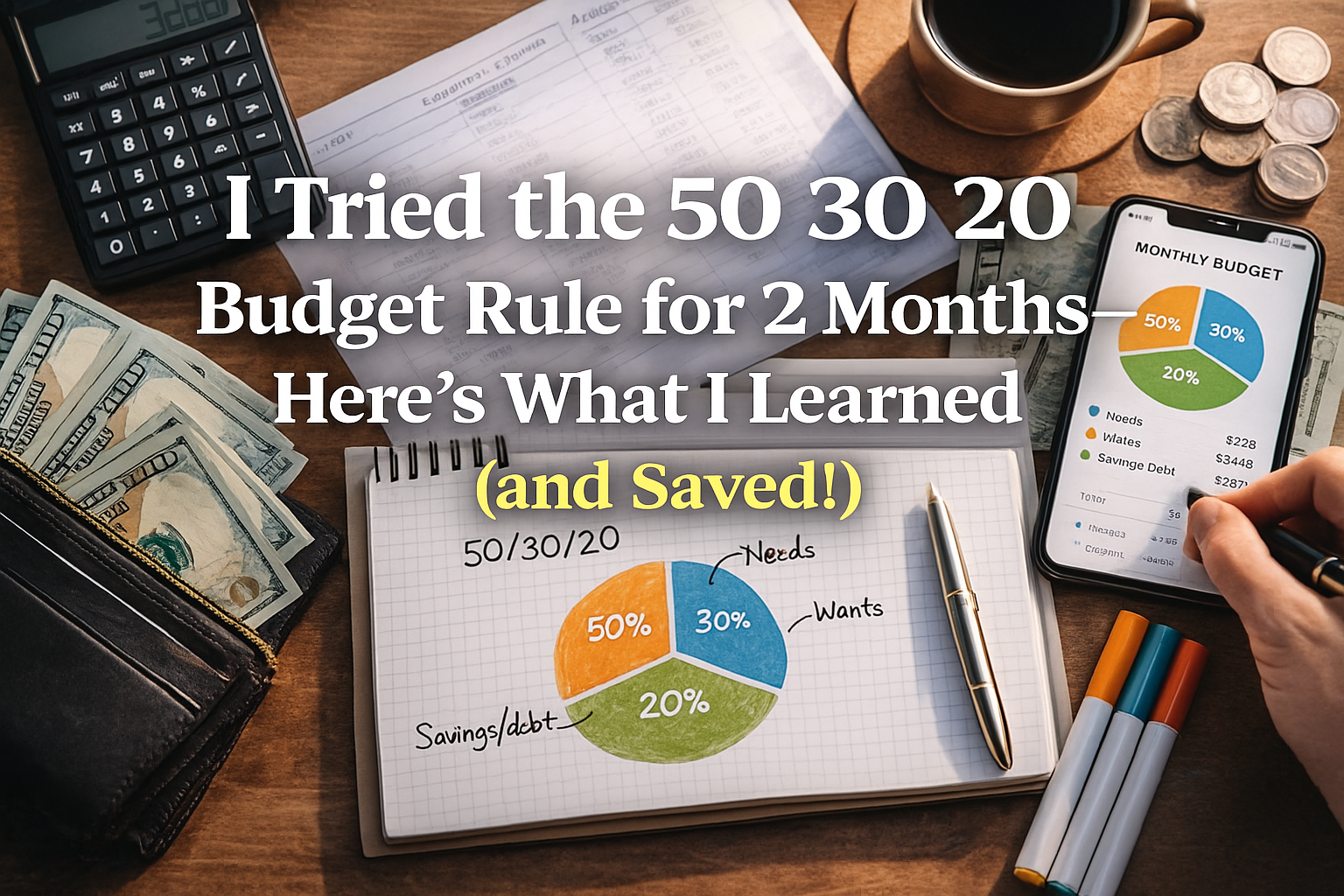
- 💰 The 50 30 20 Budget Rule divides your after-tax income into three simple categories: 50% for needs, 30% for wants, and 20% for savings and debt repayment
- 📊 I saved $1,847 in just two months by following this framework consistently, compared to my previous “wing it” approach
- 🎯 The rule works best when you automate your savings and treat the 20% as a non-negotiable expense that happens first
- ⚠️ It requires honest self-assessment about what truly counts as a “need” versus a “want”—this was harder than I expected
- 🔄 Flexibility is essential: The percentages are guidelines, not rigid rules, and may need adjustment based on your location and life circumstances
What Exactly Is the 50 30 20 Budget Rule?
The 50 30 20 Budget Rule is a straightforward budgeting framework that Senator Elizabeth Warren popularized in her book “All Your Worth: The Ultimate Lifetime Money Plan.” Unlike complicated budgeting systems that require tracking every penny across dozens of categories, this method simplifies everything into three main buckets.
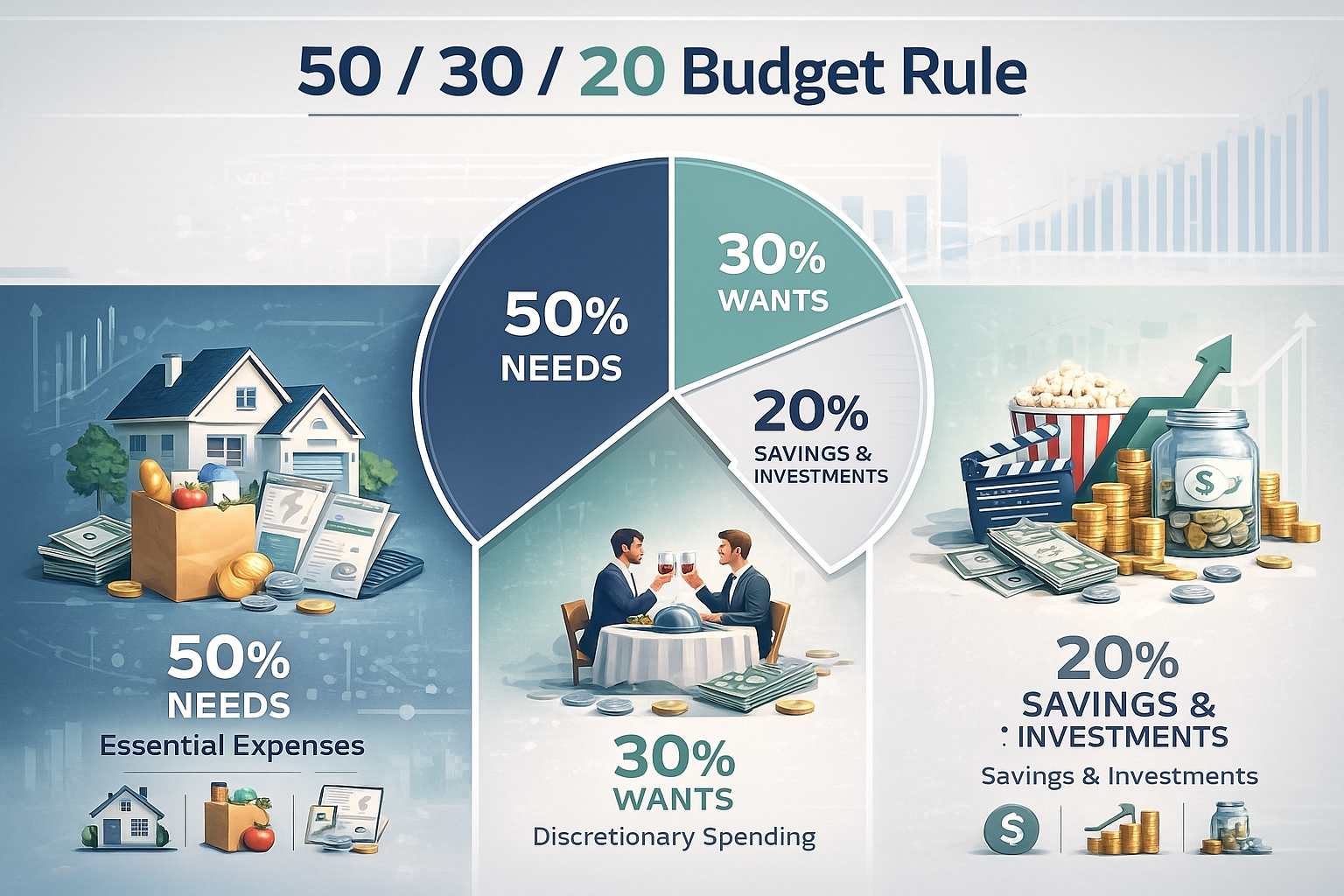
Here’s how it breaks down:
- 50% for Needs: Essential expenses you can’t avoid—housing, groceries, utilities, healthcare, minimum debt payments, transportation, and insurance
- 30% for Wants: The fun stuff that makes life enjoyable—dining out, entertainment, hobbies, subscriptions, shopping, and vacations
- 20% for Savings and Debt Repayment: Your financial future—emergency fund, retirement contributions, investments, and extra debt payments beyond minimums
The beauty of this system lies in its simplicity. You don’t need fancy software or complicated spreadsheets. Just three categories. That’s it.
Why I Chose This Method
I’d been living paycheck to paycheck despite earning a decent income. The problem wasn’t how much I made—it was that I had zero structure around how I spent it. I needed something simple enough that I’d actually stick with it, but effective enough to create real change.
When I discovered that Americans were saving only 4.4% of their disposable income as of mid-2025[1], while consumer debt had ballooned to $18.39 trillion (including $1.21 trillion in credit card debt)[2], I realized I wasn’t alone in my financial struggles. But I also knew I needed to do better.
The 50 30 20 framework appealed to me because it didn’t require perfection—just awareness and intentionality.
Setting Up My 50 30 20 Budget Rule Experiment
Before diving in, I needed to do some homework. The 50 30 20 Budget Rule starts with one critical number: your after-tax income. Not your gross salary, but what actually hits your bank account after taxes, health insurance, and retirement contributions are deducted.
Calculating My Starting Numbers
My monthly take-home pay was $4,200. Here’s how I calculated my three categories:
| Category | Percentage | Monthly Amount | What It Covers |
|---|---|---|---|
| Needs | 50% | $2,100 | Rent, groceries, utilities, car payment, insurance, minimum credit card payment |
| Wants | 30% | $1,260 | Dining out, streaming services, gym membership, shopping, entertainment |
| Savings & Debt | 20% | $840 | Emergency fund, extra debt payments, retirement contributions |
Looking at these numbers on paper was eye-opening. I’d never actually calculated what 20% of my income looked like as a concrete dollar amount. $840 per month suddenly felt both achievable and intimidating.
The Reality Check Moment 😬
When I tracked my previous month’s spending (before starting this experiment), here’s what I discovered:
- Needs: $2,450 (58% of income)
- Wants: $1,580 (38% of income)
- Savings: $170 (4% of income)
Ouch. No wonder I felt broke all the time. I was spending nearly 60% on needs and saving less than 5%—right in line with the national average, but far from where I needed to be.
This reality check motivated me to make real changes. I set up three separate bank accounts labeled “Needs,” “Wants,” and “Savings” to keep everything organized. On payday, I immediately divided my paycheck according to the 50/30/20 split.
Month One: The Adjustment Period (And My Biggest Challenges)
The first month of following the 50 30 20 Budget Rule felt like learning to walk again. Everything that seemed automatic before now required conscious thought.
Challenge #1: Defining “Needs” vs. “Wants”
This was way harder than I expected. Is my $60/month gym membership a need or a want? What about my car—I need transportation, but did I need a car with a $380 monthly payment?
I had to get brutally honest with myself. Here’s what I decided:
True Needs:
- Rent: $1,200
- Groceries: $350
- Utilities (electric, water, internet): $180
- Car payment: $380
- Car insurance: $95
- Health insurance copays: $50
- Minimum credit card payment: $75
Total Needs: $2,330
Wait. That was already $230 over my 50% allocation of $2,100. Houston, we had a problem.
Making the Numbers Work
I had three options:
- Increase my income (not happening overnight)
- Reduce my needs (possible, but required sacrifice)
- Adjust the percentages temporarily (the realistic choice)
I chose a combination of options 2 and 3. I switched to a cheaper internet plan, saving $25/month. I meal-prepped more aggressively and cut my grocery budget to $300. I also temporarily adjusted my split to 55/25/20 until I could tackle my car situation.
This flexibility is crucial—the 50 30 20 Budget Rule provides a framework, not handcuffs. If you’re living in a high-cost area like New York or San Francisco, hitting exactly 50% for needs might be unrealistic. The key is moving toward the ideal while being honest about your constraints.
Challenge #2: Cutting Back on “Wants” Was Painful
Going from $1,580 in wants to $1,050 (my adjusted 25%) meant cutting $530 in monthly spending. That’s serious money.
Here’s what got the axe:
- ❌ Daily coffee shop visits ($120/month) → ☕ Home brewing
- ❌ Impulse online shopping ($200/month) → 🛍️ 48-hour waiting rule
- ❌ Eating out 4x/week ($280/month) → 🍳 Cooking at home, eating out 1x/week
- ❌ Three streaming services ($45/month) → 📺 Kept one, rotated others
- ❌ Unused gym membership ($60/month) → 🏃 Free YouTube workouts and running
The first two weeks were rough. I felt deprived. I missed my morning Starbucks ritual. But something interesting happened around week three: I stopped missing most of it. The home coffee tasted fine. Cooking became enjoyable. I realized I’d been spending money out of habit, not genuine desire.
The Win: Automating My 20% Savings 🎉
The best decision I made was automating everything. On payday, my paycheck automatically split:
- $2,310 to my “Needs” checking account
- $1,050 to my “Wants” checking account
- $840 to my high-yield savings account
That $840 disappeared before I could spend it. This “pay yourself first” approach made the 20% savings goal non-negotiable. I couldn’t accidentally spend it because it never hit my main checking account.
By the end of month one, I’d saved $840—nearly five times what I’d saved the previous month. I also felt more in control of my money than I had in years.
Month Two: Finding My Rhythm with the 50 30 20 Budget Rule
The second month felt completely different. The initial shock had worn off, and I’d developed new habits that made the 50 30 20 Budget Rule feel natural rather than restrictive.
Unexpected Benefits I Didn’t Anticipate
1. Less Financial Stress
Knowing exactly how much I could spend in each category eliminated the constant low-level anxiety about money. Before, every purchase came with guilt: Should I be buying this? Can I afford this? Now, if I had money in my “Wants” account, I could spend it guilt-free.
2. Better Purchasing Decisions
With limited funds in each category, I became more intentional. Instead of buying three mediocre shirts, I saved up for one quality piece I actually loved. Instead of subscribing to every streaming service, I chose the one I’d actually use.
3. Increased Motivation
Watching my savings account grow was addictive. By week two of month two, I had over $1,600 saved—more than I’d saved in the entire previous year. This visible progress motivated me to find creative ways to stay under budget.
Where I Splurged (And Why That’s Okay)
I’m not going to pretend I was perfect. In week six, my best friend had a birthday dinner at an expensive restaurant. The meal cost $85—way more than my weekly “dining out” budget.
Here’s what I did: I pulled from my “Wants” account and adjusted my spending for the rest of the month. I skipped other discretionary purchases to balance it out. The 50 30 20 Budget Rule isn’t about never enjoying yourself—it’s about making conscious trade-offs.
This flexibility kept me from feeling deprived and prevented the “screw it” moment that had derailed previous budgeting attempts.
Tackling Debt More Aggressively
With my savings automation humming along, I decided to redirect some of my 20% toward debt payoff. I had $3,200 in credit card debt at 18.9% interest—a financial vampire draining my resources.
I split my 20% allocation:
- $420 to emergency fund (10%)
- $420 to debt payoff (10%)
This approach aligned with proven debt-free strategies that prioritize building a small emergency cushion while aggressively attacking high-interest debt.
By the end of month two, I’d paid down $840 of credit card debt on top of my regular minimum payments. The psychological boost of seeing that balance drop was incredible.
The Numbers: What I Actually Saved in Two Months
Let’s get to the good stuff—the actual results of my 50 30 20 Budget Rule experiment.
My Two-Month Financial Snapshot
Total Income (2 months): $8,400
Previous Spending Pattern (what I would have done):
- Needs: $4,900
- Wants: $3,160
- Savings: $340
Actual Spending with 50/30/20:
- Needs: $4,620
- Wants: $2,100
- Savings & Debt: $1,680
Total Saved/Debt Paid: $1,680 vs. previous $340 = $1,340 difference
But wait—there’s more. By cutting unnecessary expenses and being more intentional, I actually came in under budget in several categories. My real numbers:
- Needs: $4,510 (saved $110)
- Wants: $1,893 (saved $207)
- Savings & Debt: $1,680 (on target)
Total additional savings: $317
Grand total saved beyond my previous pattern: $1,657 in two months
Plus, I’d paid down $840 in credit card debt, which would save me approximately $190 in interest over the following year.
The Compound Effect 📈
Here’s what really blew my mind: If I maintained this pace for a full year, I’d save $9,942 and pay off $5,040 in debt. That’s nearly $15,000 in improved financial position in just one year, simply by following a basic framework.
These results align with effective savings strategies that emphasize consistency over perfection.
What I Learned: The Good, The Bad, and The Surprising
After two months with the 50 30 20 Budget Rule, I had some strong opinions about what works, what doesn’t, and what surprised me along the way.
The Good: Why This Budget Rule Actually Works ✅
1. It’s Beginner-Friendly
You don’t need to be a financial expert or use complicated software. Three categories. Simple math. That’s it. This accessibility makes it perfect for people who’ve never budgeted before or who’ve been intimidated by more complex systems.
2. It Builds in Fun
Unlike restrictive budgets that eliminate all discretionary spending, the 30% “wants” category ensures you can still enjoy life. This built-in permission to spend on non-essentials prevents the deprivation mindset that kills most budgets.
3. It Prioritizes Your Future
The 20% savings allocation forces you to pay yourself first. This is the opposite of how most people budget—spending first, then saving whatever’s left (usually nothing). By making savings automatic and non-negotiable, you ensure your future self is taken care of.
4. It’s Flexible
The percentages are guidelines, not commandments. You can adjust based on your circumstances, location, and goals. Living in an expensive city? Try 60/20/20. Aggressively paying off debt? Go 50/20/30 with that 30% split between savings and debt payoff.
The Bad: Where This Budget Rule Falls Short ⚠️
1. High Cost-of-Living Areas Are Challenging
If you live in San Francisco, New York, or other expensive cities, keeping needs to 50% might be impossible. When rent alone consumes 40-50% of your income, the math simply doesn’t work without significant income increases or lifestyle changes (like roommates or moving).
2. Variable Income Is Tricky
Freelancers, entrepreneurs, and commission-based workers face a unique challenge: How do you budget with the 50 30 20 Budget Rule when your income fluctuates wildly month to month?
I spoke with a freelance designer who solved this by:
- Calculating her average monthly income over the past 6 months
- Using that average as her baseline for the 50/30/20 split
- Saving excess income during high-earning months
- Drawing from savings during lean months
It’s doable, but requires more planning than the standard approach.
3. It Doesn’t Address Serious Debt
If you’re drowning in debt, the 20% allocation might not be aggressive enough. Someone with $50,000 in student loans at 7% interest needs a more focused debt payoff strategy than this rule provides.
The 50 30 20 Budget Rule works best for people with manageable debt who want to build savings while making progress on balances. For serious debt situations, consider debt-free strategies that might temporarily shift to 50/10/40 (with that 40% hammering debt).
The Surprising: What I Didn’t Expect 🤯
1. I Spent Less on “Wants” Than Allocated
I thought limiting myself to 30% for wants would feel restrictive. Instead, I consistently came in under budget. Why? Because I was being intentional. I wasn’t spending out of boredom or habit—I was choosing purchases that actually mattered to me.
2. Needs Were Negotiable
I assumed my “needs” were fixed. They weren’t. I found cheaper car insurance. I negotiated my internet bill. I meal-prepped instead of buying convenience foods. What I thought were non-negotiable expenses had surprising flexibility.
3. Saving Became Addictive
Watching my savings account grow created a dopamine hit that rivaled shopping. Every week, I’d check my balance and feel proud. This positive reinforcement loop made me want to find more ways to save.
4. My Relationship with Money Changed
This is hard to quantify, but real: I stopped feeling like money controlled me. Instead, I controlled my money. This shift from reactive to proactive transformed how I felt about my financial future.
How to Start Your Own 50 30 20 Budget Rule Journey
Ready to try this yourself? Here’s exactly how to get started, based on what I learned through trial and error.
Step 1: Calculate Your After-Tax Income
Start with your actual take-home pay—what hits your bank account after taxes and deductions. If your income varies, use a 3-6 month average.
Example calculation:
- Gross monthly salary: $5,500
- Taxes (federal, state, FICA): -$1,100
- Health insurance: -$200
- 401(k) contribution: -$275
- After-tax income: $3,925
Step 2: Do the Math
Multiply your after-tax income by 0.5, 0.3, and 0.2:
- 50% for Needs: $3,925 × 0.5 = $1,962.50
- 30% for Wants: $3,925 × 0.3 = $1,177.50
- 20% for Savings/Debt: $3,925 × 0.2 = $785
Step 3: Track Your Current Spending
Before making changes, spend one month tracking where your money actually goes. Use your bank statements, credit card statements, and cash spending to categorize every expense.
Be honest. This isn’t about judgment—it’s about awareness.
Step 4: Categorize Ruthlessly
Go through each expense and assign it to needs, wants, or savings/debt. Use these guidelines:
Needs (essentials for survival and basic functioning):
- Housing (rent/mortgage, property taxes, HOA fees)
- Utilities (electric, water, gas, basic internet)
- Groceries
- Transportation (car payment, gas, public transit, insurance)
- Healthcare (insurance premiums, medications, copays)
- Minimum debt payments
- Childcare (if you work)
Wants (things that enhance your life but aren’t essential):
- Dining out and takeout
- Entertainment (movies, concerts, hobbies)
- Subscriptions (streaming, gym, apps)
- Shopping (clothes beyond basics, electronics, home décor)
- Travel and vacations
- Premium versions of needs (fancy groceries, premium cable package)
Savings and Debt:
- Emergency fund contributions
- Retirement accounts (beyond employer match)
- Investment accounts
- Extra debt payments (beyond minimums)
- Savings goals (house down payment, vacation fund)
Step 5: Make Adjustments
If your current spending doesn’t align with 50/30/20, identify where to cut or adjust. Focus on the biggest gaps first.
If your needs exceed 50%:
- Find cheaper housing (roommate, smaller place, different neighborhood)
- Reduce transportation costs (cheaper car, public transit, bike)
- Cut insurance costs (shop around, increase deductibles)
- Lower utility bills (energy-efficient habits, cheaper plans)
If your wants exceed 30%:
- Eliminate unused subscriptions
- Cook at home more often
- Find free entertainment alternatives
- Implement a 48-hour rule for non-essential purchases
- Use the library for books, movies, and magazines
If you’re saving less than 20%:
- Automate savings first (pay yourself before spending)
- Start with a smaller percentage and increase monthly
- Find ways to increase income (side hustle, raise, promotion)
Step 6: Automate Everything
This is the secret sauce. Set up automatic transfers on payday:
- Direct deposit split: Many employers allow you to split your paycheck across multiple accounts. Have 20% go directly to savings.
- Automatic transfers: Schedule transfers for the day after payday to move money into designated accounts.
- Separate accounts: Open separate checking accounts for needs and wants, plus a high-yield savings account for your 20%.
Automation removes willpower from the equation. You can’t spend money you never see.
Step 7: Review and Adjust Monthly
The 50 30 20 Budget Rule isn’t set-it-and-forget-it. Review your spending monthly:
- Did you stay within each category?
- Where did you overspend? Why?
- Where did you underspend? Can you reallocate?
- Has your income changed?
- Do your percentages need adjustment?
I spend 20 minutes at the end of each month reviewing my numbers and planning for the next month. This regular check-in keeps me accountable and aware.
Common Mistakes to Avoid (I Made Most of These)
Learn from my errors so you don’t have to repeat them:
Mistake #1: Being Too Rigid
I initially treated the percentages as absolute rules. When I went $50 over in one category, I felt like I’d failed. This all-or-nothing thinking almost made me quit.
The fix: Remember these are guidelines. Life happens. The goal is progress, not perfection. If you overspend one month, adjust the next month.
Mistake #2: Miscategorizing Expenses
I initially counted my $60 gym membership as a “need” because “health is essential.” Be honest—it’s a want. You can exercise for free.
The fix: Use the brutal honesty test: If you lost your job tomorrow, what would you cut immediately? Those are wants.
Mistake #3: Forgetting Irregular Expenses
I budgeted for monthly expenses but forgot about annual costs like car registration, Amazon Prime, and holiday gifts. When these hit, they blew up my budget.
The fix: List all irregular expenses for the year, total them, divide by 12, and include that amount in your monthly needs or wants category.
Mistake #4: Not Building an Emergency Fund First
I initially put all 20% toward debt payoff. Then my car needed a $600 repair, and I had to put it on a credit card—undoing my progress.
The fix: Build a starter emergency fund of $500-$1,000 before aggressively attacking debt. This prevents setbacks from derailing your progress.
Mistake #5: Comparing My Budget to Others
I saw someone online who saved 40% of their income and felt inadequate. Then I learned they lived with parents rent-free. Context matters.
The fix: Your budget is personal. Compare yourself to your past self, not to others with different circumstances.
Advanced Tips: Optimizing Your 50 30 20 Budget Rule

Once you’ve mastered the basics, try these advanced strategies to supercharge your results:
Strategy #1: The 50/30/20 + Income Growth Formula
Every time you get a raise, promotion, or bonus, allocate it before you receive it:
- 50% to increasing your standard of living (needs and wants)
- 50% to increasing savings/debt payoff
This prevents lifestyle inflation from consuming all income growth while still letting you enjoy increased earnings.
Strategy #2: Gamify Your Savings
I created challenges for myself:
- No-spend weekends: Every dollar not spent goes to savings
- The $5 challenge: Every time I receive a $5 bill, it goes into savings
- Underspending rewards: If I come in under budget, I split the difference—half to savings, half to wants next month
These games made budgeting fun instead of restrictive.
Strategy #3: Optimize Your “Needs” Category
Your needs category offers the most potential for long-term savings:
- Refinance high-interest debt to lower monthly payments
- Shop insurance annually (I saved $340/year on car insurance)
- Negotiate bills (internet, phone, subscriptions)
- Reduce housing costs (roommate, downsizing, house hacking)
- Lower transportation costs (cheaper car, public transit, biking)
A 10% reduction in needs frees up 5% of your total income—that’s huge.
Strategy #4: Use the 80/20 Alternative for Simplicity
Some months, I simplified even further using the 80/20 method: 20% automatically goes to savings, and I spend the remaining 80% however I want (within reason).
This works great for people who find three categories still too complicated or for months when you need mental space from detailed budgeting.
Strategy #5: Create Sinking Funds
Within my savings category, I created sub-accounts for specific goals:
- Emergency fund (3-6 months expenses)
- Car replacement fund
- Vacation fund
- Home down payment fund
Seeing progress toward specific goals was more motivating than one generic “savings” number.
Is the 50 30 20 Budget Rule Right for You?
After two months of testing, I can confidently say the 50 30 20 Budget Rule works—but not for everyone in every situation.
This Budget Rule Works Best If You:
✅ Are new to budgeting and want something simple to start with
✅ Have a stable, predictable income
✅ Live in a moderate cost-of-living area
✅ Have manageable debt (not drowning in it)
✅ Want flexibility and don’t need to track every penny
✅ Struggle with saving and need a structured approach
✅ Earn enough to cover basics with room for discretionary spending
Consider Alternatives If You:
❌ Live in an extremely high cost-of-living area where housing alone exceeds 50%
❌ Have variable income (freelance, commission, seasonal work)
❌ Are dealing with significant debt that requires aggressive payoff
❌ Are naturally frugal and already save more than 20%
❌ Need more detailed categories for complex financial situations
❌ Are working toward very specific, aggressive financial goals
For those situations, you might benefit from zero-based budgeting, the envelope method, or a customized approach. Check out additional budgeting resources for alternative strategies.
My Biggest Takeaway: Awareness Is Everything
Here’s what I learned after two months with the 50 30 20 Budget Rule: The specific percentages matter less than the awareness they create.
Before this experiment, I was financially unconscious. Money came in, money went out, and I had no idea where. The simple act of categorizing my spending and setting boundaries transformed my relationship with money.
I’m not perfect. I still overspend sometimes. I still make impulse purchases. But now I’m aware when it happens, and I can make conscious adjustments instead of wondering why I’m broke at the end of every month.
The 50 30 20 Budget Rule gave me a framework to build on. As I’ve gotten more comfortable, I’ve customized it to fit my situation. Some months I do 55/25/20. Other months I push to 50/25/25 when I have extra to put toward savings.
The rule isn’t the destination—it’s the vehicle that gets you there.
Conclusion: Your Money, Your Rules (But Start Somewhere)
Two months ago, I was skeptical that something as simple as the 50 30 20 Budget Rule could make a real difference in my finances. I’d tried budgeting before and failed. I assumed I’d fail again.
But here I am, $1,847 richer (between savings and debt paid down), feeling more in control of my money than ever before. The transformation wasn’t about the specific percentages—it was about finally taking ownership of where my money went.
If you’re reading this and feeling overwhelmed by your finances, start here. Don’t wait for the perfect budgeting app, the ideal income level, or the right life circumstances. Start with this simple framework:
50% for what you need. 30% for what you want. 20% for your future.
Adjust as needed. Be flexible. Forgive yourself when you mess up. But start.
Your Next Steps:
- Calculate your after-tax income (do this today—it takes 5 minutes)
- Track your spending for one month to establish your baseline
- Set up separate accounts for needs, wants, and savings
- Automate your 20% savings on your next payday
- Review and adjust monthly to stay on track
Remember, personal finance is personal. The 50 30 20 Budget Rule is a starting point, not a finish line. Use it as a foundation, then build the financial life that works for you.
Your future self—the one with a healthy emergency fund, manageable debt, and actual savings—will thank you for starting today.
Now if you’ll excuse me, I need to go check my savings account balance. It’s become my favorite hobby. 😊