
Last month, I looked at my bank statement and nearly fell off my chair. Despite making decent money, I had less than $200 left after paying bills. That wake-up call forced me to discover frugal living tips that completely transformed my finances—and I’m not talking about extreme penny-pinching or living like a hermit. Within three months, I was saving over $600 monthly using simple, sustainable strategies that didn’t make me feel deprived.
If you’re tired of living paycheck to paycheck or want to accelerate your path to financial freedom, these 25 frugal living tips will help you keep more money in your pocket without sacrificing your quality of life. I’ve personally tested each one, and I’ll show you exactly how much you can expect to save.
Key Takeaways
- Housing and transportation represent your biggest savings opportunities, with potential monthly savings of $200-400 through strategic choices
- Smart shopping habits and meal planning can reduce food costs by 30-50%, saving the average household $150-300 monthly
- Technology-driven automation and subscription audits eliminate wasteful spending most people don’t even notice
- Sustainable frugal living isn’t about deprivation—it’s about intentional spending that aligns with your values and long-term goals
- Small daily habits compound into substantial savings, with the average person saving $500-800 monthly by implementing just 10-15 of these strategies
Understanding Frugal Living: More Than Just Being Cheap
Before we dive into specific frugal living tips, let’s clear up a common misconception. Frugal living isn’t about being cheap or miserly—it’s about maximizing value and making intentional choices with your money. While a cheap person might buy the lowest-quality item regardless of long-term costs, a frugal person invests in quality when it saves money over time.
Frugal living is a lifestyle philosophy that prioritizes financial wellness, sustainability, and mindful consumption. It’s about asking yourself: “Does this purchase align with my values and goals?” rather than “Can I afford this right now?”
Research shows that people who adopt frugal living principles report higher life satisfaction and lower financial stress [1]. They’re not depriving themselves—they’re choosing to spend on what truly matters while cutting costs on things that don’t enhance their lives.
Housing & Utilities: Your Biggest Money-Saving Opportunity
1. Refinance or Renegotiate Your Rent 💰
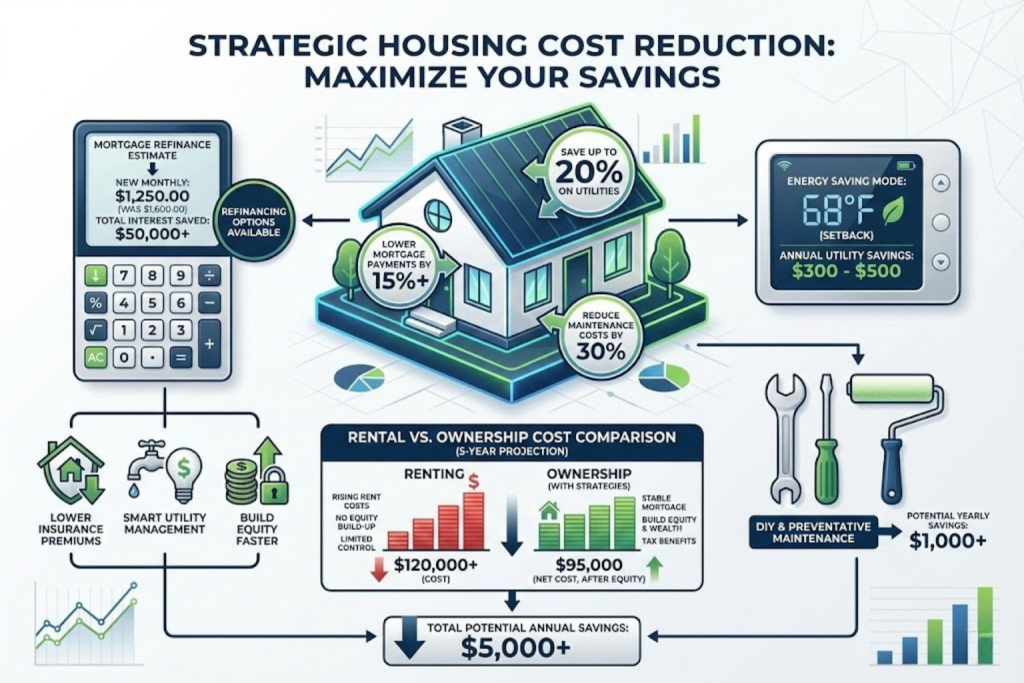
Your housing costs likely eat up 25-35% of your income. I refinanced my mortgage when rates dropped and saved $340 monthly. If you rent, negotiating a lease renewal can save $50-150 per month—especially if you’ve been a reliable tenant.
Potential savings: $50-400/month
2. Get a Roommate or Rent Out a Room
I was hesitant about this one, but renting out my spare bedroom through a trusted friend cut my housing costs nearly in half. Even short-term rentals through platforms can generate $300-800 monthly.
Potential savings: $300-800/month
3. Master the Thermostat Game
Adjusting your thermostat by just 3 degrees (lower in winter, higher in summer) reduced my utility bills by $45 monthly. Installing a programmable thermostat maximizes this strategy without requiring constant attention.
Potential savings: $30-60/month
4. Conduct an Energy Audit
Many utility companies offer free energy audits. Mine identified air leaks and inefficient appliances. After sealing gaps and replacing old light bulbs with LEDs, I saved an additional $35 monthly.
Potential savings: $25-50/month
5. Bundle and Negotiate Utilities
I called my internet provider, threatening to cancel, and they immediately offered a promotion saving me $40 monthly. Bundling services or switching providers annually keeps costs competitive. For more strategies on reducing monthly expenses, check out these budgeting mistakes to avoid.
Potential savings: $30-80/month
Transportation: Cut Costs Without Losing Mobility
6. Embrace the One-Car Household
This was transformative for my family. We sold our second vehicle, eliminating a $320 car payment, $110 insurance premium, and maintenance costs. We coordinate schedules and occasionally use rideshare—still saving over $350 monthly.
Potential savings: $200-500/month
7. Bike or Walk for Short Trips
I started biking to my gym (2 miles away) instead of driving. This small change saves about $40 monthly in gas while improving my health. Win-win.
Potential savings: $30-60/month
8. Maintain Your Vehicle Religiously
Regular oil changes and tire rotations prevent expensive repairs. Since adopting a maintenance schedule, I’ve avoided the surprise $800-1,200 repair bills that used to derail my budget annually.
Potential savings: $50-100/month (averaged)
9. Carpool or Use Public Transportation
Carpooling with a coworker three days weekly cut my gas costs by 40%. If public transit is available, monthly passes typically cost less than gas, parking, and vehicle wear.
Potential savings: $50-150/month
Food & Groceries: The Low-Hanging Fruit of Frugal Living Tips

10. Meal Plan Like Your Budget Depends on It 🍽️
This single habit transformed my food spending. I plan weekly menus, create shopping lists, and stick to them religiously. My grocery bill dropped from $680 to $420 monthly for a family of three.
Potential savings: $100-250/month
11. Cook in Batches and Freeze
Sunday meal prep sessions save me hours during the week and prevent expensive takeout temptations. I cook large portions of staples like rice, beans, and proteins, then freeze individual portions.
Potential savings: $80-150/month
12. Embrace Generic Brands
Blind taste tests consistently show minimal difference between name brands and store brands. Switching to generic products for pantry staples, cleaning supplies, and medications saves me about $65 monthly.
Potential savings: $50-100/month
13. Shop Sales and Use Cashback Apps
I combine store sales with apps like Ibotta and Fetch Rewards. This stacking strategy returns $30-50 monthly in cashback on purchases I’d make anyway. Learn more about smart money-saving strategies that complement this approach.
Potential savings: $30-70/month
14. Reduce Meat Consumption
Going meatless 3-4 days weekly slashed my grocery costs significantly. Plant-based proteins like beans, lentils, and eggs cost a fraction of meat while offering excellent nutrition.
Potential savings: $60-120/month
15. Pack Your Lunch
The $12 daily lunch habit costs $240-300 monthly. I pack leftovers or simple sandwiches, saving over $200 monthly while eating healthier.
Potential savings: $150-250/month
Lifestyle & Entertainment: Enjoy Life Without Breaking the Bank
16. Cancel Unused Subscriptions 📺
I audited my subscriptions and discovered I was paying for three streaming services I barely used, a gym membership I’d visited twice in six months, and a magazine subscription I’d forgotten about. Total monthly waste: $87.
Potential savings: $50-150/month
17. Use Your Library Card
My library offers free books, audiobooks, movies, museum passes, and even tool lending. This replaced my Audible subscription ($15/month) and frequent book purchases ($30-40/month).
Potential savings: $40-80/month
18. Host Instead of Going Out
Instead of $60 restaurant dinners, we host potluck gatherings. Friends bring dishes, we provide the space, and everyone saves money while enjoying better conversation than in noisy restaurants.
Potential savings: $80-200/month
19. Find Free Entertainment
Free community events, hiking, parks, and free museum days provide excellent entertainment. I discovered a free outdoor concert series in my city that rivals paid venues.
Potential savings: $50-150/month
20. Master the 30-Day Rule
Before any non-essential purchase over $50, I wait 30 days. This simple rule eliminates impulse buying and has saved me thousands annually. For additional discipline, try a no-spend challenge to reset your spending habits.
Potential savings: $100-300/month
Technology & Automation: Let Your Phone Save You Money

21. Automate Your Savings 💻
I set up automatic transfers of $200 to savings on payday. Treating savings like a non-negotiable bill ensures it happens before I can spend the money. Consider exploring passive income ideas to supplement your automated savings strategy.
Potential savings: Variable (forces intentional saving)
22. Use Price Tracking Tools
Browser extensions like Honey and CamelCamelCamel track prices and alert you to deals. I saved $180 on a laptop by waiting for the price drop these tools predicted.
Potential savings: $30-100/month (averaged)
23. Switch to a No-Fee Bank
Monthly maintenance fees and ATM charges added up to $25 monthly at my old bank. Switching to an online bank with no fees and ATM reimbursements was a no-brainer.
Potential savings: $20-40/month
24. Negotiate Your Phone Plan
I called my carrier and reduced my data plan (I’m on WiFi 90% of the time anyway) and removed insurance I didn’t need. Instant $35 monthly savings.
Potential savings: $25-60/month
Personal Finance Fundamentals: Build Long-Term Wealth
25. Pay Yourself First and Track Everything 📊
The most powerful frugal living tip is this: pay yourself first. Before bills, before fun money, transfer savings. Then track every expense for one month to identify spending leaks.
I use a simple spreadsheet, but apps like Mint or YNAB work great too. This awareness alone helped me find $200+ in monthly waste I didn’t know existed. If you’re serious about financial transformation, explore these simple habits that keep you debt-free.
Potential savings: $50-200+/month (by identifying waste)
The Psychology of Frugal Living: Making It Sustainable
Here’s what nobody tells you about frugal living tips: the psychological shift matters more than the tactics. I’ve watched people implement every strategy on this list, save aggressively for three months, then burn out and return to old habits.
Sustainable frugality requires reframing your relationship with money:
Shift from deprivation to optimization. You’re not sacrificing—you’re choosing better alternatives. That home-cooked meal isn’t a punishment; it’s healthier and tastier than fast food.
Focus on values alignment. Spend freely on what brings genuine joy; cut ruthlessly on everything else. I spend $80 monthly on quality coffee beans because my morning ritual matters to me, but I don’t spend a dime on cable TV I never watched.
Celebrate small wins. Each month I hit my savings goal, I acknowledge it. This positive reinforcement makes frugality feel rewarding rather than restrictive.
Build community. I joined online frugal living communities where people share tips and encouragement. Knowing others are on the same journey makes it easier when temptation strikes.
Research shows that people who view frugality as a positive lifestyle choice rather than forced deprivation maintain these habits long-term and report higher financial satisfaction [2].
Creating Your Personalized Frugal Living Plan
Not every tip will work for your situation, and that’s okay. Here’s how to create a sustainable plan:
Step 1: Audit Your Current Spending
Track every expense for 30 days. Use an app, spreadsheet, or even a notebook. You can’t improve what you don’t measure. This 30-day saving challenge provides a structured framework for this process.
Step 2: Identify Your Top 5 Expense Categories
Housing, transportation, and food typically dominate. Focus your initial efforts where you spend the most.
Step 3: Choose 5-7 Tips to Implement This Month
Don’t try everything at once. Pick strategies that align with your lifestyle and seem manageable. Master these before adding more.
Step 4: Calculate Your Savings Goal
Based on the tips you’ve chosen, estimate monthly savings. My initial goal was $300 monthly—I exceeded it by month two.
Step 5: Automate What You Can
Set up automatic bill payments, savings transfers, and price alerts. The less you rely on willpower, the more consistent your results.
Step 6: Review and Adjust Monthly
Spend 30 minutes monthly reviewing what’s working and what isn’t. Adjust your approach as needed. For comprehensive guidance on managing your finances, explore how to achieve financial freedom in 5 simple steps.
Common Frugal Living Mistakes to Avoid
Even with the best intentions, I’ve made these mistakes (so you don’t have to):
❌ Being cheap instead of frugal – Buying low-quality items that break quickly wastes more money than investing in quality.
❌ Depriving yourself completely – Build occasional treats into your budget. Complete deprivation leads to burnout and spending binges.
❌ Ignoring time value – If a money-saving strategy takes three hours to save $5, your time might be better spent on side income opportunities.
❌ Forgetting to enjoy the savings – What’s the point of saving if you never use it for meaningful goals? Define what you’re saving for.
❌ Comparing yourself to others – Your frugal journey is personal. Someone else’s $2,000 monthly savings shouldn’t make your $300 feel inadequate.
The Long-Term Impact: Beyond Monthly Savings
Let’s talk about what these frugal living tips mean over time. If you implement just 10 of these strategies and save a conservative $400 monthly, that’s $4,800 annually.
Over 5 years: $24,000 saved
Over 10 years: $48,000 saved
Invested at 7% annual return over 10 years: $66,000+
This isn’t just about having extra spending money. This is about:
- Building an emergency fund that protects you from financial disasters
- Eliminating debt faster (check out these proven ways to pay down debt)
- Funding retirement so you’re not working until 75
- Achieving financial independence where work becomes optional
- Reducing financial stress that impacts your health and relationships
The compound effect of frugal living extends beyond your bank account. Studies show that people with strong financial habits experience better mental health, stronger relationships, and greater overall life satisfaction [3].
Real-Life Success Story: From Paycheck to Paycheck to $15K Saved
Let me share my friend Maria’s transformation. In January 2024, she was $8,000 in credit card debt, living paycheck to paycheck despite a $55,000 salary.
She started with five frugal living tips:
- Meal planning and cooking at home
- Canceling unused subscriptions
- Switching to a cheaper phone plan
- Biking to work three days weekly
- Implementing the 30-day rule for purchases
Month 1: Saved $380
Month 2: Saved $425 (got better at meal planning)
Month 3: Saved $510 (negotiated rent reduction)
By month 6, she’d paid off $3,200 in debt. By month 12, she was completely debt-free with $4,800 in savings. As of early 2025, she has $15,000 in her emergency fund and is investing $400 monthly for retirement.
Maria’s secret? She didn’t try to be perfect. She focused on consistency over intensity, celebrated small wins, and adjusted strategies that didn’t work for her lifestyle.
Your Action Plan: Start Today
Here’s your roadmap to implement these frugal living tips starting right now:
Today:
- Audit your subscriptions and cancel at least one unused service
- Create a meal plan for this week
- Call one service provider to negotiate a better rate
This Week:
- Track every expense to understand your spending patterns
- Choose 5 tips from this article to implement
- Set up automatic savings transfer for payday
This Month:
- Complete a full spending audit
- Calculate your total savings from implemented strategies
- Adjust and add 2-3 more tips to your routine
- Join a frugal living community for support and accountability
This Quarter:
- Review progress and celebrate wins
- Redirect savings toward your highest-priority financial goal
- Explore additional strategies like savings strategy hacks
Conclusion: Your Frugal Living Journey Starts Now
Frugal living tips aren’t about deprivation—they’re about liberation. Liberation from financial stress, from living paycheck to paycheck, from feeling like you’ll never get ahead. Every dollar you save is a vote for the future you want to create.
Start small. Pick just three strategies from this list that resonate with you. Implement them consistently for 30 days and track your savings. I guarantee you’ll be surprised by the results and motivated to continue.
Remember, frugal living is a marathon, not a sprint. Some months you’ll save more, some less. What matters is the overall trajectory and building sustainable habits that serve your long-term financial goals.
The question isn’t whether you can afford to live frugally—it’s whether you can afford not to. Your future self will thank you for the choices you make today.
Ready to take control of your finances? Start with one tip today. Track your progress. Celebrate your wins. And watch as small, consistent actions transform your financial life.
What frugal living tip will you implement first? The journey to saving hundreds every month starts with a single decision. Make that decision now.