


Imagine waking up tomorrow morning to find money in your bank account that you didn’t actively work for overnight. Sounds like a dream, right? Well, I’m here to tell you that creating passive income streams isn’t just possible—it’s becoming easier than ever in 2026. With the right strategies and a bit of upfront effort, you can build income sources that generate money while you sleep, travel, or spend time with loved ones. In this comprehensive guide, I’ll walk you through 15 proven passive income ideas 2026 that actually work, breaking down everything from startup costs to implementation steps.
Key Takeaways
- Passive income requires upfront work but generates ongoing revenue with minimal maintenance once established
- Diversification is critical—combining multiple passive income ideas 2026 creates financial resilience and accelerates wealth building
- Technology and AI have dramatically lowered barriers to entry, making passive income accessible to almost anyone
- Starting small is perfectly fine—many strategies require little to no initial capital investment
- Tax implications vary significantly across different passive income streams, so understanding the financial landscape is essential
What Is Passive Income and Why Does It Matter in 2026?

Let me start by clearing up a common misconception: passive income isn’t about getting rich quick without any effort. Rather, it’s about creating systems that generate recurring revenue with minimal ongoing time investment after the initial setup.
Passive income is money earned with little to no daily effort to maintain it. Unlike your 9-to-5 job where you trade time for money, passive income continues flowing even when you’re not actively working. This could come from investments, digital products, rental properties, or automated online businesses.
In 2026, passive income matters more than ever because:
- Economic uncertainty makes relying on a single income source increasingly risky
- Inflation erodes purchasing power, requiring additional income streams to maintain lifestyle
- Technology advancements have democratized wealth-building opportunities previously available only to the wealthy
- Work-life balance has become a priority, and passive income provides time freedom alongside financial security
The beauty of building smart passive income ideas is that they work toward financial independence while you focus on what matters most to you.
Investment-Based Passive Income Ideas 2026
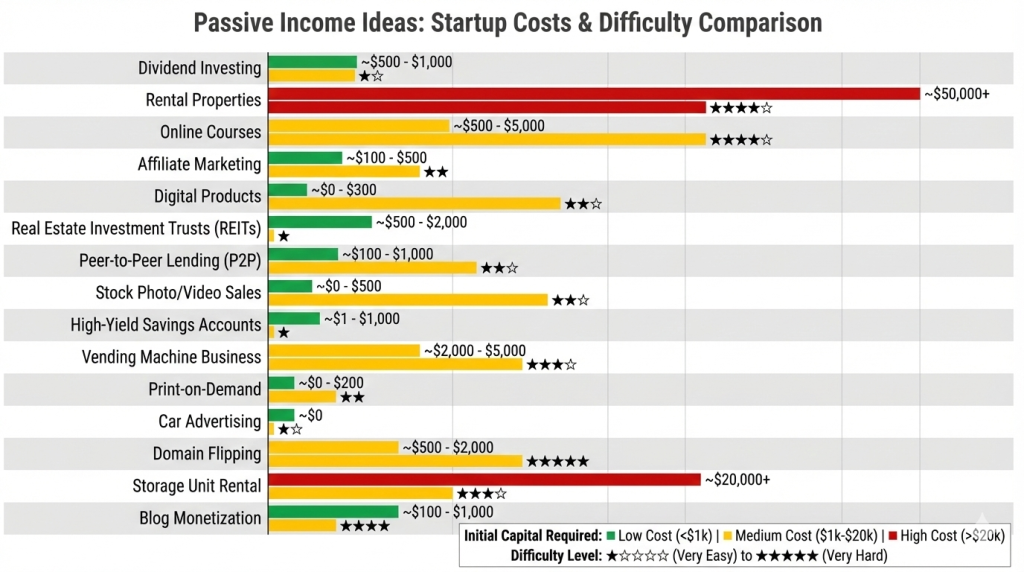
1. Dividend-Paying Stocks and ETFs
Dividend investing remains one of the most reliable passive income strategies. When you invest in dividend-paying stocks or ETFs, companies share their profits with you regularly—typically quarterly.
How it works: You purchase shares of established companies or dividend-focused ETFs. These investments pay you a percentage of their earnings, creating a steady income stream.
Startup cost: You can start with as little as $100 through fractional shares on platforms like Robinhood or Fidelity.
Difficulty level: ⭐⭐ (Beginner-friendly)
Pros:
- Highly liquid—you can sell anytime
- Potential for both income and capital appreciation
- Historically reliable returns from established companies
Cons:
- Requires capital to generate meaningful income
- Market volatility can affect both dividends and share prices
- Tax implications on dividend income
For those just starting their investment journey, check out my guide on investing in stocks for beginners with little money.
2. Real Estate Investment Trusts (REITs)
REITs allow you to invest in real estate without the hassle of being a landlord. These companies own and operate income-producing properties and are required to distribute at least 90% of taxable income to shareholders.
How it works: Purchase REIT shares through your brokerage account. You receive regular dividend payments from the rental income and property sales the REIT generates.
Startup cost: $100-$500 depending on share price
Difficulty level: ⭐⭐ (Beginner-friendly)
Pros:
- Real estate exposure without property management
- High dividend yields (often 3-7%)
- Portfolio diversification
Cons:
- Sensitive to interest rate changes
- Less control than direct property ownership
- Dividends taxed as ordinary income
3. Peer-to-Peer Lending
P2P lending platforms connect borrowers with individual lenders, allowing you to earn interest by funding personal or business loans.
How it works: You lend money through platforms like Prosper or LendingClub, earning interest as borrowers repay their loans.
Startup cost: $25-$1,000 minimum depending on platform
Difficulty level: ⭐⭐⭐ (Intermediate)
Pros:
- Higher returns than traditional savings accounts (5-10%)
- Diversification across multiple loans reduces risk
- Automated investing options available
Cons:
- Default risk—borrowers may not repay
- Less liquid than stocks
- Platform fees reduce overall returns
4. High-Yield Savings Accounts and CDs
While not exciting, high-yield savings accounts and certificates of deposit offer guaranteed returns with zero risk.
How it works: Deposit money into accounts offering competitive interest rates, currently ranging from 4-5% in 2026.
Startup cost: $0-$1,000 depending on account minimums
Difficulty level: ⭐ (Easiest)
Pros:
- FDIC insured—no risk of losing principal
- Completely passive
- Liquid (for savings accounts)
Cons:
- Lower returns than other investments
- May not outpace inflation
- CDs lock up funds for fixed periods
Digital Product Passive Income Ideas 2026
5. Online Courses and Educational Content
Creating and selling online courses has exploded in 2026, with the e-learning market continuing its rapid growth. If you have expertise in any area, you can package that knowledge into a course.
How it works: Develop a comprehensive course on platforms like Teachable, Udemy, or Kajabi. Students purchase access, and you earn revenue with each sale.
Startup cost: $0-$500 (for recording equipment and platform fees)
Difficulty level: ⭐⭐⭐ (Intermediate)
Pros:
- Unlimited scalability—sell to thousands without additional work
- Establishes you as an authority in your field
- High profit margins once created
Cons:
- Significant upfront time investment (20-100 hours)
- Requires marketing to drive sales
- May need periodic updates to keep content relevant
6. E-books and Digital Guides
Writing and self-publishing e-books has never been easier, thanks to platforms like Amazon Kindle Direct Publishing.
How it works: Write a book on a topic you’re knowledgeable about, publish it on Amazon or your own website, and earn royalties from each sale.
Startup cost: $0-$200 (optional editing and cover design)
Difficulty level: ⭐⭐⭐ (Intermediate)
Pros:
- Low barrier to entry
- Amazon’s massive audience provides built-in traffic
- Royalties continue for years after publication
Cons:
- Highly competitive market
- Requires strong writing skills or hiring help
- Marketing needed to stand out
7. Stock Photography and Digital Assets
If you’re a photographer or graphic designer, selling your work on stock platforms creates ongoing passive revenue.
How it works: Upload photos, illustrations, or design templates to sites like Shutterstock, Adobe Stock, or Creative Market. Earn royalties each time someone downloads your work.
Startup cost: $0-$1,000 (camera/design software if you don’t already have)
Difficulty level: ⭐⭐⭐ (Intermediate)
Pros:
- Single asset can sell hundreds of times
- Multiple platforms increase earning potential
- Creative and enjoyable work
Cons:
- Saturated market requires high-quality, unique content
- Low per-download earnings (typically $0.25-$5)
- Requires substantial portfolio to generate meaningful income
8. Print-on-Demand Products
Print-on-demand allows you to sell custom-designed merchandise without holding inventory or handling shipping.
How it works: Create designs for t-shirts, mugs, phone cases, etc. Upload them to platforms like Printful, Redbubble, or Teespring. When customers order, the platform prints and ships the product, and you earn a profit margin.
Startup cost: $0-$100 (design software)
Difficulty level: ⭐⭐ (Beginner-friendly)
Pros:
- Zero inventory risk
- Automated fulfillment
- Scalable without additional work
Cons:
- Lower profit margins than traditional e-commerce
- Requires design skills or hiring designers
- Competitive marketplace
AI-Powered Passive Income Strategies for 2026
One of the biggest content gaps in traditional passive income advice is the revolutionary impact of artificial intelligence. In 2026, AI has opened entirely new opportunities that didn’t exist just a few years ago.
9. AI-Generated Content Websites
AI writing tools have matured to the point where you can create content-rich websites with minimal manual writing.
How it works: Use AI tools to generate blog posts, product reviews, or informational content. Monetize through display ads (Google AdSense), affiliate links, or sponsored content.
Startup cost: $50-$300 (domain, hosting, AI tool subscriptions)
Difficulty level: ⭐⭐⭐ (Intermediate)
Pros:
- Dramatically reduced content creation time
- Scalable to multiple niche websites
- Multiple monetization options
Cons:
- Requires SEO knowledge to drive traffic
- AI content needs human editing for quality
- Google’s evolving stance on AI content creates uncertainty
Pro tip: Combine AI efficiency with human expertise—use AI for drafts and research, but add your unique insights and experiences to create genuinely valuable content.
10. Automated Social Media Accounts
AI-powered scheduling and content creation tools allow you to build engaged social media followings with minimal daily involvement.
How it works: Create niche-focused Instagram, TikTok, or YouTube accounts. Use AI tools to generate content ideas, captions, and even video scripts. Schedule posts in advance and monetize through sponsorships, affiliate marketing, or selling your own products.
Startup cost: $0-$200 (scheduling tools, stock footage subscriptions)
Difficulty level: ⭐⭐⭐⭐ (Advanced)
Pros:
- Highly scalable once systems are established
- Multiple monetization paths
- Builds valuable digital assets
Cons:
- Algorithm changes can impact reach
- Requires consistent content output initially
- Authenticity concerns with fully automated content
Online Business Passive Income Ideas 2026
11. Affiliate Marketing Websites
Affiliate marketing involves promoting other companies’ products and earning commissions on resulting sales. It’s one of the most popular realistic ideas for making money from home.
How it works: Create a website or blog focused on a specific niche. Write product reviews, comparisons, and helpful content. Include affiliate links, and earn commissions when readers purchase through your links.
Startup cost: $100-$500 (domain, hosting, content creation)
Difficulty level: ⭐⭐⭐ (Intermediate)
Pros:
- No product creation or customer service needed
- Unlimited earning potential
- Works 24/7 once content is published
Cons:
- Takes 6-12 months to generate significant traffic
- Dependent on affiliate programs (which can change terms)
- Requires SEO and content marketing skills
12. YouTube Channel with Evergreen Content
Creating evergreen YouTube content—videos that remain relevant for years—can generate ad revenue and affiliate income long after publication.
How it works: Create tutorial videos, educational content, or entertaining videos in your niche. Monetize through YouTube ads, sponsorships, and affiliate links in descriptions.
Startup cost: $0-$500 (camera, microphone, editing software)
Difficulty level: ⭐⭐⭐⭐ (Advanced)
Pros:
- Videos can earn for years after upload
- Multiple revenue streams (ads, affiliates, sponsorships)
- Builds personal brand and authority
Cons:
- Highly competitive platform
- Requires video production skills
- YouTube algorithm changes can impact earnings
13. Membership Sites and Subscription Communities
Recurring revenue from membership sites provides predictable monthly income.
How it works: Create a members-only community offering exclusive content, resources, or access. Charge monthly or annual subscription fees.
Startup cost: $100-$1,000 (platform fees, initial content creation)
Difficulty level: ⭐⭐⭐⭐ (Advanced)
Pros:
- Predictable recurring revenue
- Higher lifetime customer value
- Builds engaged community around your expertise
Cons:
- Requires ongoing content creation (not truly passive)
- Member retention challenges
- Significant upfront work to build value proposition
Real Estate Passive Income Opportunities
14. Rental Properties
Traditional rental real estate remains one of the most proven wealth-building strategies, though it’s less passive than other options.
How it works: Purchase residential or commercial property, rent it to tenants, and collect monthly rental income exceeding your expenses (mortgage, maintenance, taxes).
Startup cost: $10,000-$50,000+ (down payment, closing costs)
Difficulty level: ⭐⭐⭐⭐⭐ (Advanced)
Pros:
- Tangible asset that typically appreciates
- Tax advantages (depreciation, deductions)
- Leverage allows controlling valuable assets with limited capital
Cons:
- High capital requirements
- Property management headaches (unless you hire a manager)
- Market risk and illiquidity
Making it more passive: Hire a property management company to handle tenant issues, maintenance, and rent collection for 8-12% of monthly rent.
15. Vacation Rental Arbitrage
Rental arbitrage involves leasing properties long-term and subletting them short-term on platforms like Airbnb or Vrbo.
How it works: Lease an apartment or house, furnish it, and list it on short-term rental platforms. The nightly rate typically exceeds your monthly lease cost, creating profit.
Startup cost: $2,000-$10,000 (first/last month’s rent, furniture, supplies)
Difficulty level: ⭐⭐⭐⭐ (Advanced)
Pros:
- Lower capital requirement than buying property
- Higher returns than traditional rentals
- Scalable to multiple properties
Cons:
- Requires landlord permission (many prohibit subletting)
- More management intensive than long-term rentals
- Regulatory risks in some cities
Risk Assessment and Tax Implications
One critical competitor weakness I’ve noticed is the lack of comprehensive risk analysis. Let me address this directly.
Risk Levels by Passive Income Type
Low Risk:
- High-yield savings accounts and CDs
- Dividend stocks from established companies
- REITs from major operators
Medium Risk:
- Peer-to-peer lending
- Affiliate marketing
- Online courses and digital products
High Risk:
- Individual stock picking
- Cryptocurrency staking
- Rental arbitrage in unproven markets
Tax Considerations for 2026
Different passive income streams have vastly different tax treatments:
- Dividend income: Qualified dividends taxed at favorable capital gains rates (0-20% depending on income)
- Interest income: Taxed as ordinary income at your marginal rate
- Rental income: Deductible expenses and depreciation can significantly reduce taxable income
- Royalties and digital products: Self-employment tax may apply depending on structure
- Capital gains: Long-term gains (held >1 year) receive preferential tax treatment
Pro tip: Consult with a tax professional to optimize your passive income tax strategy. Proper structuring can save thousands annually.
Before diving into passive income strategies, make sure you’ve addressed any existing debt. Check out these proven ways to pay down debt faster and learn simple habits that help you stay debt-free for life.
Overcoming Psychological Barriers to Creating Passive Income
Here’s something competitors rarely discuss: the mental obstacles that prevent people from starting.
Common psychological barriers:
- Perfectionism paralysis: Waiting for the “perfect” idea or setup before starting
- Fear of failure: Worrying about wasting time or money on unsuccessful ventures
- Overwhelm: Feeling paralyzed by too many options
- Imposter syndrome: Believing you don’t have valuable knowledge to share
- Short-term thinking: Giving up when results don’t appear immediately
How to overcome these barriers:
- Start small: Choose one passive income idea and commit to 90 days of focused effort
- Embrace experimentation: View initial attempts as learning experiences, not all-or-nothing ventures
- Set realistic expectations: Most passive income streams take 6-12 months to generate meaningful revenue
- Track progress: Celebrate small wins like publishing your first blog post or making your first $1
- Find accountability: Join communities of people building passive income to stay motivated
Your 90-Day Passive Income Action Plan
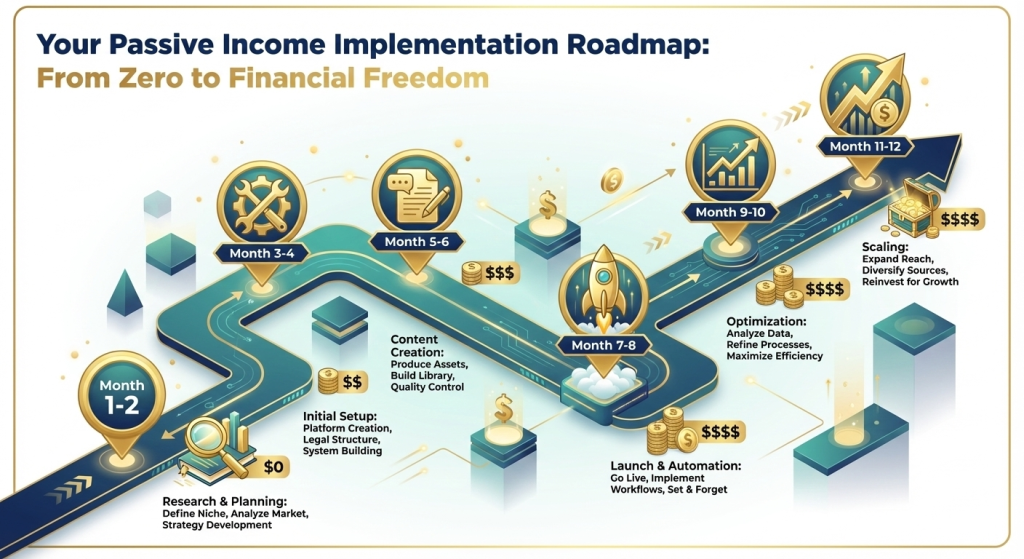
Here’s a practical roadmap to get started, regardless of which passive income ideas 2026 you choose:
Month 1: Research and Planning
- Assess your skills, interests, and available capital
- Choose 1-2 passive income strategies aligned with your resources
- Research successful examples in your chosen area
- Create a detailed implementation plan with specific milestones
Month 2: Initial Setup and Creation
- Set up necessary accounts, platforms, or infrastructure
- Create your first batch of content, products, or assets
- Invest in essential tools or education
- Build your initial offering (course, website, investment portfolio, etc.)
Month 3: Launch and Optimization
- Publish your content or launch your product
- Implement marketing strategies to drive initial traffic or sales
- Gather feedback and make improvements
- Track metrics and identify what’s working
Beyond 90 Days:
- Scale what’s working, eliminate what isn’t
- Automate repetitive tasks
- Reinvest profits into growth
- Consider adding complementary passive income streams
If you’re looking to fund your passive income investments, try my 7 genius savings strategy hacks that helped me save $3,000 in 90 days or take the 30-day saving challenge.
Scaling Your Passive Income Portfolio
Once you’ve successfully established your first passive income stream, the real wealth-building begins through income diversification and scaling.
Cross-platform income generation: Don’t put all your eggs in one basket. For example:
- Create a YouTube channel AND a blog covering the same niche
- Invest in both dividend stocks AND REITs
- Sell digital products on your own website AND marketplaces like Etsy or Gumroad
Reinvestment strategy: In the first 12-24 months, reinvest 50-100% of passive income earnings back into growth:
- Use dividend income to purchase more dividend-paying stocks
- Reinvest affiliate commissions into content creation or SEO
- Use rental profits for property improvements that increase rent
Automation and delegation: As income grows, invest in tools and people to reduce your time involvement:
- Hire virtual assistants for routine tasks
- Use automation tools for social media, email marketing, and customer service
- Implement systems that allow your business to run without daily involvement
Emerging Passive Income Opportunities for 2026
The passive income landscape continues evolving. Here are cutting-edge opportunities gaining traction:
NFT royalties: Create digital art or collectibles that generate royalties on secondary sales
Tokenized real estate: Invest in fractional property ownership through blockchain platforms
AI model training: License your specialized data or content to train AI models
Carbon credit investments: Earn from environmental projects through carbon offset programs
Micro-SaaS products: Build simple software tools that solve specific problems with subscription revenue
While these emerging opportunities offer exciting potential, they also carry higher risk. Start with proven strategies before experimenting with cutting-edge options.
Common Mistakes to Avoid
Learning from others’ mistakes saves time and money. Here are the most common pitfalls:
- Spreading too thin: Trying to build 10 passive income streams simultaneously instead of mastering one
- Underestimating initial effort: Expecting income without putting in substantial upfront work
- Neglecting marketing: Creating great products but failing to drive traffic or awareness
- Ignoring tax planning: Facing unexpected tax bills due to poor planning
- Giving up too soon: Quitting after 2-3 months when most strategies need 6-12 months to gain traction
- Failing to reinvest: Spending all passive income instead of compounding growth
For more financial wisdom, avoid these budgeting mistakes that could derail your passive income goals.
Measuring Success: Key Performance Indicators
Track these metrics to evaluate your passive income progress:
- Monthly passive income: Total earnings from all passive sources
- Passive income ratio: Passive income ÷ total income (goal: 20%+)
- Return on investment (ROI): Earnings ÷ initial investment
- Time to profitability: Months from start to first dollar earned
- Passive income growth rate: Month-over-month percentage increase
- Diversification score: Number of independent income streams
Create a simple spreadsheet to track these monthly. Seeing progress, even small amounts, provides motivation to continue.
Conclusion: Your Path to Financial Freedom Starts Today
Building passive income isn’t a get-rich-quick scheme—it’s a proven path to financial independence that requires upfront effort, strategic thinking, and patience. But the rewards are absolutely worth it: money flowing into your accounts while you sleep, travel, or pursue your passions.
The passive income ideas 2026 I’ve shared in this guide work across different skill levels, capital requirements, and risk tolerances. Whether you’re starting with $0 or $10,000, whether you’re tech-savvy or prefer traditional investments, there’s a strategy that fits your situation.
Your next steps:
- Choose one strategy from this guide that aligns with your skills and resources
- Commit to 90 days of focused implementation using the action plan above
- Track your progress and adjust based on results
- Reinvest earnings to accelerate growth
- Add additional streams once your first is generating consistent income
Remember, every successful passive income earner started exactly where you are now—with zero passive income and a decision to begin. The difference between those earning passive income and those wishing they were is simple: they started.
The best time to plant a tree was 20 years ago. The second best time is today. Your future self will thank you for taking action now.
Ready to start your passive income journey? Visit MSBudget for more money-making strategies, budgeting tips, and financial freedom resources.