
Let me be honest with you: I used to think passive income was just another internet myth—something only tech geniuses or lucky investors could achieve. Then I discovered that smart passive income ideas aren’t about getting rich quick or finding some secret loophole. They’re about strategically building income streams that work for you, even while you sleep. The best part? Many of these opportunities require minimal upfront investment, just your time, creativity, and commitment to learning.
In 2025, the landscape of passive income ideas has evolved dramatically. Technology has democratized wealth-building opportunities that were once reserved for the wealthy elite. Whether you’re looking to supplement your 9-to-5 income, achieve financial independence, or simply create a safety net for unexpected expenses, these strategies can transform your financial future without requiring a massive bankroll to get started.
Key Takeaways
- Digital products and content creation offer the highest profit margins with virtually zero startup costs beyond your time investment
- Investment-based passive income can start with as little as $100 through fractional shares, high-yield savings accounts, and micro-investing platforms
- Hybrid strategies that combine multiple income streams provide the most stable and scalable path to financial freedom
- Automation and technology are essential for truly passive income—initial setup requires work, but systems can run with minimal ongoing maintenance
- Risk assessment and diversification across different income methods protects you from market volatility and platform changes
Understanding Smart Passive Income Ideas in 2025
Before diving into specific strategies, let’s clarify what passive income actually means. Passive income is money earned with minimal ongoing effort after the initial setup. Notice I said “minimal,” not “zero.” The myth that passive income requires absolutely no work is why many people fail before they even start.
What Makes Income Truly “Passive”?
True passive income has three characteristics:
- Scalability: Your income potential isn’t directly tied to hours worked
- Automation: Systems handle most operations without constant intervention
- Recurring revenue: Money continues flowing from work you’ve already completed
The difference between passive and active income is simple: Active income stops when you stop working. Passive income continues generating returns long after you’ve completed the initial effort.
The Reality Check: Initial Investment Required
While this article focuses on smart passive income ideas that require little to no money, they do require an investment of time, energy, and often skill development. According to financial research, most successful passive income streams take 6-12 months of consistent effort before generating meaningful returns[1].
Understanding this timeline helps set realistic expectations and prevents the discouragement that causes 78% of people to abandon their passive income projects within the first three months[2].
Digital Product Creation: Smart Passive Income Ideas for Creators
Digital products represent one of the most accessible entry points into passive income. Once created, they can be sold infinitely without additional production costs, making them incredibly scalable.
📚 1. Ebook Publishing and Self-Publishing
Creating and selling ebooks has become remarkably simple with platforms like Amazon Kindle Direct Publishing, Apple Books, and Google Play Books. You don’t need to be a professional writer—you need expertise in a specific area that people want to learn about.
How to get started:
- Identify a niche topic where you have knowledge or experience
- Write 10,000-30,000 words (shorter than traditional books)
- Use free tools like Google Docs or Canva for formatting
- Publish on multiple platforms to maximize reach
Income potential: $100-$5,000+ monthly depending on topic, marketing, and volume
Time to first income: 2-4 months
The beauty of ebook publishing is that your book works for you 24/7. I’ve seen creators generate $500-$1,000 monthly from a single well-positioned ebook on topics ranging from keto meal planning to Excel formulas for small businesses.
🎨 2. Selling Digital Templates and Printables
Spreadsheet templates, budget planners, social media graphics, resume templates, and printable wall art can generate consistent income through platforms like Etsy, Creative Market, and Gumroad.
What sells well:
- Budget tracking spreadsheets (perfect for readers interested in budgeting strategies)
- Social media content calendars
- Wedding planning checklists
- Business invoice templates
- Motivational wall art
Startup costs: $0-$50 (free design tools available)
Income potential: $200-$3,000+ monthly
One creator I know generates $2,400 monthly selling budget planner printables—products she created over three weekends. The initial time investment was about 40 hours, but now she spends less than 5 hours monthly managing customer service and updating listings.
🎵 3. Music, Audio, and Sound Effects Licensing
Musicians and audio creators can upload original compositions to licensing platforms like AudioJungle, Pond5, and Epidemic Sound. Every time someone licenses your track for a video, podcast, or commercial project, you earn a commission.
Best for: Musicians, sound designers, and audio enthusiasts
Income potential: $50-$2,000+ monthly (highly variable)
💻 4. Software Tools and Mobile Apps
If you have coding skills or can learn basic development, creating simple software tools, browser extensions, or mobile apps can generate substantial passive income through one-time purchases, subscriptions, or ad revenue.
Low-code options:
- No-code app builders like Bubble or Adalo
- WordPress plugins (if you know basic PHP)
- Browser extensions (JavaScript knowledge helpful)
- Notion templates and databases
Income potential: $100-$10,000+ monthly (extremely variable based on usefulness and user base)
Content-Based Smart Passive Income Ideas
Content creation offers multiple monetization pathways and can be started with equipment you already own—a smartphone and internet connection.
📹 5. YouTube Channel Monetization
YouTube remains one of the most powerful passive income platforms in 2025. Once you reach 1,000 subscribers and 4,000 watch hours, you can monetize through ads, sponsorships, and affiliate marketing.
Monetization streams:
- Ad revenue (Google AdSense)
- Sponsored content
- Affiliate product links
- Channel memberships
- YouTube Shorts Fund
Income potential: $200-$50,000+ monthly (extremely variable)
Time to monetization: 6-18 months for most creators
The key is creating “evergreen” content—videos that remain relevant for years. Tutorial videos, educational content, and how-to guides continue generating views and income long after publication.
✍️ 6. Blogging with Multiple Revenue Streams
Blogging isn’t dead—it’s evolved. Successful blogs in 2025 combine multiple income sources: display ads, affiliate marketing, sponsored posts, and digital product sales.
Getting started:
- Choose a specific niche (personal finance, parenting, technology, etc.)
- Start with free platforms (WordPress.com, Medium) or invest $50-100 for self-hosting
- Create valuable, SEO-optimized content consistently
- Monetize through ad networks (Mediavine, AdThrive) once you reach traffic thresholds
Income potential: $100-$20,000+ monthly
Time to first income: 6-12 months
For readers interested in financial topics, blogging about debt management strategies or savings techniques can attract audiences seeking practical money advice—audiences that convert well for financial affiliate products.
📸 7. Stock Photography and Video Sales
If you have photography or videography skills, uploading content to stock platforms like Shutterstock, Adobe Stock, iStock, and Pexels can generate ongoing royalties.
What sells:
- Business and office scenes
- Technology and lifestyle imagery
- Nature and travel photography
- Diverse people in everyday situations
- Abstract backgrounds and textures
Income potential: $50-$1,500+ monthly
Commission rates: Typically 15-45% per download
One photographer I follow uploads 50-100 photos monthly and generates $800-$1,200 in passive royalties from a portfolio of 3,000+ images built over two years.
🎓 8. Online Course Development
Creating and selling online courses allows you to package your expertise into a structured learning experience. Platforms like Teachable, Udemy, Skillshare, and Kajabi handle payment processing, hosting, and student management.
Course topics that sell:
- Professional skills (Excel, project management, coding)
- Creative skills (photography, graphic design, writing)
- Personal development (productivity, communication, leadership)
- Hobbies and crafts (cooking, gardening, woodworking)
Income potential: $500-$15,000+ monthly
Startup time: 40-120 hours to create a comprehensive course
The beauty of online courses is that you create the content once and sell it repeatedly. Students can access your course 24/7 while you earn income automatically.
E-Commerce Smart Passive Income Ideas Without Inventory
Traditional e-commerce required significant capital for inventory. These modern approaches eliminate that barrier.
🎨 9. Print-on-Demand Products
Print-on-demand (POD) services like Printful, Printify, and Redbubble allow you to sell custom-designed products—t-shirts, mugs, phone cases, posters—without holding inventory. Products are only created after customers order them.
How it works:
- Create designs using free tools like Canva or GIMP
- Upload designs to POD platforms
- Set your profit margin
- Platform handles printing, shipping, and customer service
Income potential: $200-$5,000+ monthly
Profit margins: Typically $5-$15 per item
The key is identifying niche audiences with specific interests—dog breeds, professions, hobbies, or causes—and creating designs that resonate with those communities.
📦 10. Dropshipping Stores
Dropshipping allows you to run an online store without managing inventory. When customers order products, your supplier ships directly to them. You profit from the difference between wholesale and retail prices.
Platforms to use:
- Shopify (most popular, $29/month)
- WooCommerce (WordPress plugin, free)
- BigCommerce ($29/month)
Supplier networks:
- AliExpress
- Spocket
- Oberlo
- SaleHoo
Income potential: $500-$10,000+ monthly
Startup costs: $100-$500 (platform fees, marketing)
Time investment: 10-20 hours weekly initially, 5-10 hours for maintenance
While dropshipping requires more active management than other passive income streams, automation tools can handle order processing, inventory updates, and customer notifications, making it increasingly hands-off over time.
Marketing-Based Smart Passive Income Ideas
These strategies leverage your audience, platform, or influence to generate commissions and sponsorship revenue.
🔗 11. Affiliate Marketing
Affiliate marketing involves promoting other companies’ products and earning commissions on sales generated through your unique referral links. Major platforms include Amazon Associates, ShareASale, CJ Affiliate, Rakuten, and ClickBank.
Best platforms for beginners:
- Amazon Associates: 1-10% commission on millions of products
- ShareASale: Wide variety of merchants and niches
- Impact: Premium brands and higher commissions
- ClickBank: Digital products with 50-75% commissions
How to succeed:
- Build an audience through blogging, YouTube, or social media
- Promote products you genuinely use and recommend
- Create valuable content that naturally incorporates affiliate links
- Disclose affiliate relationships transparently (see our affiliate disclosure)
Income potential: $100-$50,000+ monthly
Time to first commission: 1-6 months
I’ve found that affiliate marketing works best when combined with content creation. For example, if you’re writing about investing for beginners, you can naturally recommend brokerage platforms, investment books, or financial tools and earn commissions when readers sign up.
📱 12. Social Media Influencer Partnerships
If you have or can build a following on Instagram, TikTok, YouTube, or other platforms, brands will pay for sponsored content and product promotions.
Monetization thresholds:
- Nano-influencers (1,000-10,000 followers): $50-$500 per post
- Micro-influencers (10,000-100,000 followers): $500-$5,000 per post
- Mid-tier influencers (100,000-1M followers): $5,000-$50,000 per post
How to start:
- Choose a specific niche (fitness, fashion, finance, parenting, etc.)
- Post consistently (daily or several times weekly)
- Engage authentically with your audience
- Join influencer networks like AspireIQ, Grin, or Upfluence
Income potential: $200-$100,000+ monthly (highly variable)
The “passive” element emerges once you’ve built your audience and established relationships with brands. Recurring sponsorships and evergreen content continue generating income with less effort than the initial building phase.
Investment-Based Smart Passive Income Ideas
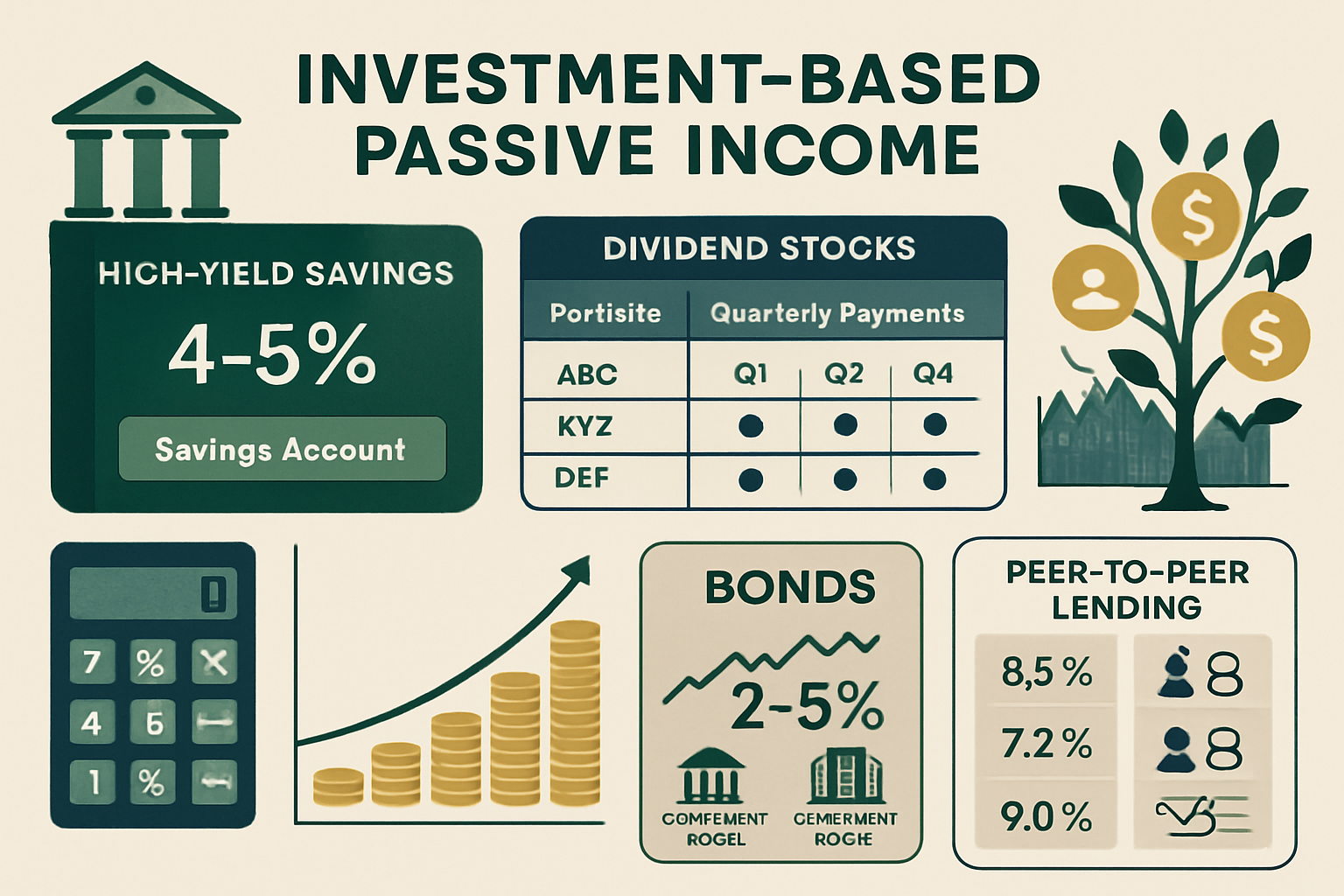
These strategies require some capital but can start with surprisingly small amounts thanks to fractional investing and low-minimum platforms.
💰 13. High-Yield Savings Accounts and CDs
While not glamorous, high-yield savings accounts and certificates of deposit (CDs) offer guaranteed returns with zero risk (up to FDIC insurance limits of $250,000).
2025 rates:
- High-yield savings: 4.0-5.0% APY
- CDs (1-5 years): 3.5-5.5% APY
Best for: Emergency funds and short-term savings goals
Minimum investment: $0-$1,000 depending on institution
Income potential: $200-$5,000+ annually per $100,000 invested
For someone following a 50/30/20 budget approach, placing the 20% savings portion in a high-yield account immediately generates passive returns while maintaining liquidity.
📈 14. Dividend Stocks and Index Funds
Dividend-paying stocks distribute portions of company profits to shareholders on regular schedules (typically quarterly). Dividend-focused index funds and ETFs provide diversification across multiple dividend-paying companies.
Popular dividend ETFs:
- VYM (Vanguard High Dividend Yield): ~3% annual yield
- SCHD (Schwab U.S. Dividend Equity): ~3.5% annual yield
- JEPI (JPMorgan Equity Premium Income): ~7-9% annual yield
Minimum investment: $1-$100 (fractional shares available on most platforms)
Income potential: 2-8% annual yield depending on holdings
Risk level: Moderate (stocks fluctuate in value)
The power of dividend investing lies in reinvestment. Automatically reinvesting dividends creates compound growth—your dividends buy more shares, which generate more dividends, creating an exponential growth curve over decades.
🏦 15. Bonds and Fixed-Income Securities
Bonds involve lending money to governments or corporations in exchange for regular interest payments. They typically offer lower returns than stocks but with significantly less volatility.
Types of bonds:
- U.S. Treasury bonds: 3-5% annual yield, virtually zero default risk
- Corporate bonds: 4-7% annual yield, moderate risk
- Municipal bonds: 2-5% annual yield, often tax-free
- Bond ETFs: Diversified bond portfolios with easy trading
Minimum investment: $25-$1,000 depending on type
Income potential: 2-6% annual yield
Risk level: Low to moderate
Bond laddering—purchasing bonds with staggered maturity dates—provides regular income while maintaining access to your principal at predictable intervals.
🤝 Peer-to-Peer Lending
P2P lending platforms like Prosper, LendingClub, and Funding Circle allow you to lend money directly to individuals or small businesses and earn interest on those loans.
Returns: 5-10% annually (before defaults)
Minimum investment: $25-$1,000
Risk level: Moderate to high (borrower default risk)
Income potential: $50-$2,000+ annually per $10,000 invested
The key to P2P lending success is diversification—spreading investments across dozens or hundreds of loans to minimize the impact of individual defaults.
Building Your Smart Passive Income Strategy: A Practical Framework
Now that you understand the individual opportunities, let’s discuss how to strategically build a diversified passive income portfolio.
The Three-Tier Approach
I recommend organizing passive income ideas into three tiers based on time to profitability and risk level:
Tier 1: Quick Wins (1-3 months to first income)
- High-yield savings accounts
- Affiliate marketing (if you have an existing audience)
- Stock photography
- Print-on-demand
Tier 2: Medium-Term Builds (3-12 months to meaningful income)
- Blogging
- YouTube channel
- Ebook publishing
- Online courses
- Dropshipping
Tier 3: Long-Term Wealth Builders (1-5+ years to substantial income)
- Dividend stock portfolios
- Bond ladders
- Real estate crowdfunding
- Software/app development
The Hybrid Strategy: Maximizing Synergies
The most successful passive income creators combine multiple strategies that reinforce each other. For example:
Content Creator Hybrid:
- Start a blog about personal finance
- Create YouTube videos on the same topics
- Include affiliate links for financial tools and services
- Develop an online course teaching budgeting skills
- Publish an ebook compiling your best advice
- Invest profits in dividend stocks
This approach creates six income streams from one core expertise area, with each element supporting the others through cross-promotion.
Automation Tools That Make Income Truly Passive
Technology is what transforms semi-passive income into truly passive income. Essential automation tools include:
For content creators:
- Scheduling: Buffer, Hootsuite, Later (social media automation)
- Email marketing: ConvertKit, MailChimp (automated email sequences)
- Analytics: Google Analytics, YouTube Studio (performance tracking)
For e-commerce:
- Inventory management: Oberlo, Printful integration (automatic order fulfillment)
- Customer service: Zendesk, Gorgias (automated responses)
- Marketing: Klaviyo (automated email campaigns)
For investors:
- Automatic investing: M1 Finance, Betterment (portfolio rebalancing)
- Dividend reinvestment: DRIP programs (automatic reinvestment)
- Rebalancing: Robo-advisors (maintain target allocations)
Tax Implications of Passive Income Streams
One critical topic most passive income articles ignore is taxation. Different income types face different tax treatments:
Ordinary income rates (10-37% federal):
- Affiliate commissions
- Course sales
- Ebook royalties
- YouTube ad revenue
- P2P lending interest
Capital gains rates (0-20% federal):
- Stock sales (if held >1 year)
- Real estate sales
Qualified dividend rates (0-20% federal):
- Most dividend stocks
Tax-advantaged:
- Municipal bond interest (often federal tax-free)
- Roth IRA investment growth (tax-free withdrawals)
Consulting with a tax professional helps optimize your passive income structure for tax efficiency. For instance, holding dividend stocks in a Roth IRA eliminates taxes on that income entirely.
Overcoming Psychological Barriers to Creating Passive Income
Beyond the practical strategies, psychological obstacles often prevent people from building passive income streams.
The Perfectionism Trap
Many aspiring entrepreneurs never launch because they’re waiting for their product, course, or content to be “perfect.” The reality? Your first ebook, YouTube video, or online course will probably be mediocre—and that’s okay.
The solution: Embrace the “minimum viable product” mindset. Launch with good-enough quality, then improve based on customer feedback. Version 1.0 generates income and learning; version 2.0 benefits from real-world data.
The Comparison Trap
Social media showcases successful passive income creators earning $10,000-$50,000 monthly, creating unrealistic expectations for beginners. This comparison leads to discouragement when your first month generates $47.
The solution: Focus on your own progress metrics. Celebrate your first $1, then $10, then $100. Every successful passive income creator started at zero.
The Delayed Gratification Challenge
Passive income requires months of effort before meaningful returns appear. Our brains are wired for immediate rewards, making this delayed gratification psychologically difficult.
The solution: Track leading indicators (content published, products listed, followers gained) rather than just lagging indicators (revenue). This provides regular positive feedback during the building phase.
Risk Tolerance Assessment
Different passive income strategies carry different risk profiles:
Low risk:
- High-yield savings accounts
- Government bonds
- Ebook publishing
- Stock photography
Moderate risk:
- Dividend stocks
- Corporate bonds
- Blogging
- Online courses
- Affiliate marketing
Higher risk:
- Dropshipping
- P2P lending
- App development
- Cryptocurrency staking
Understanding your personal risk tolerance helps you select appropriate strategies. Conservative investors might focus on dividend stocks and bonds, while risk-tolerant entrepreneurs might pursue dropshipping and course creation.
Case Studies: Real-World Smart Passive Income Success
Case Study 1: The Budget Blogger
Background: Sarah, a 32-year-old accountant, started a personal finance blog in 2023 while working full-time.
Strategy:
- Published 2-3 articles weekly about budgeting and debt reduction
- Included affiliate links for budgeting apps and financial tools
- Created a budgeting spreadsheet template, sold for $12
- Built an email list with a free budgeting challenge
Results after 18 months:
- Monthly blog traffic: 45,000 visitors
- Affiliate income: $1,800/month
- Digital product sales: $600/month
- Sponsored posts: $500/month
- Total passive income: $2,900/month
Time investment: Now 8-10 hours monthly for maintenance and new content
Case Study 2: The Dividend Investor
Background: Marcus, a 28-year-old teacher, started investing $300 monthly in dividend stocks and ETFs in 2020.
Strategy:
- Invested in SCHD, VYM, and individual dividend aristocrats
- Automatically reinvested all dividends
- Increased contributions as the salary grew
- Never sold holdings (buy-and-hold strategy)
Results after 5 years:
- Portfolio value: $26,400
- Annual dividend income: $950
- Monthly passive income: $79 (growing 8-10% annually)
Time investment: 2 hours monthly reviewing portfolio
Case Study 3: The Print-on-Demand Designer
Background: Jessica, a graphic designer, launched print-on-demand products in 2024 as a side project.
Strategy:
- Created 50 designs targeting dog lovers (specific breeds)
- Listed products on Redbubble, TeePublic, and Etsy
- Spent $200 on Facebook ads testing
- Expanded to cat designs after initial success
Results after 12 months:
- Active designs: 200+
- Monthly sales: 180-250 items
- Average profit per item: $8
- Monthly passive income: $1,600-$2,000
Time investment: Now 5-6 hours monthly creating new designs
Common Mistakes to Avoid
Learning from others’ mistakes saves time and money. Here are the most common passive income pitfalls:
❌ Mistake 1: Spreading Too Thin
Attempting to launch five different passive income streams simultaneously usually results in five mediocre efforts that generate minimal returns.
Solution: Master one strategy before adding another. Build your first income stream to $500-$1,000 monthly, then diversify.
❌ Mistake 2: Ignoring the “Passive” Timeline
Expecting immediate returns leads to premature abandonment. Most passive income streams require 6-12 months of consistent effort before generating meaningful revenue.
Solution: Commit to a 12-month timeline before evaluating success. Track progress metrics weekly to maintain motivation.
❌ Mistake 3: Neglecting Market Research
Creating products or content without validating audience demand wastes time and energy.
Solution: Before investing significant effort, research:
- Search volume for related keywords
- Competition analysis
- Existing product reviews (what do customers want improved?)
- Social media discussions about the topic
❌ Mistake 4: Underestimating Ongoing Maintenance
While passive income requires less effort than active income, it’s rarely completely hands-off. Platforms change, algorithms update, and competitors emerge.
Solution: Budget 5-10% of your initial time investment for ongoing maintenance, updates, and optimization.
❌ Mistake 5: Forgetting to Reinvest
Taking all profits as spending money prevents compound growth that accelerates income over time.
Solution: Reinvest 50-70% of passive income profits during the first 1-2 years to accelerate growth, whether that means buying more dividend stocks, creating more digital products, or investing in marketing.
For readers working toward becoming debt-free, I recommend using passive income specifically for debt payoff initially, then transitioning to reinvestment once debt is eliminated.
Emerging Opportunities: Smart Passive Income Ideas for 2025 and Beyond
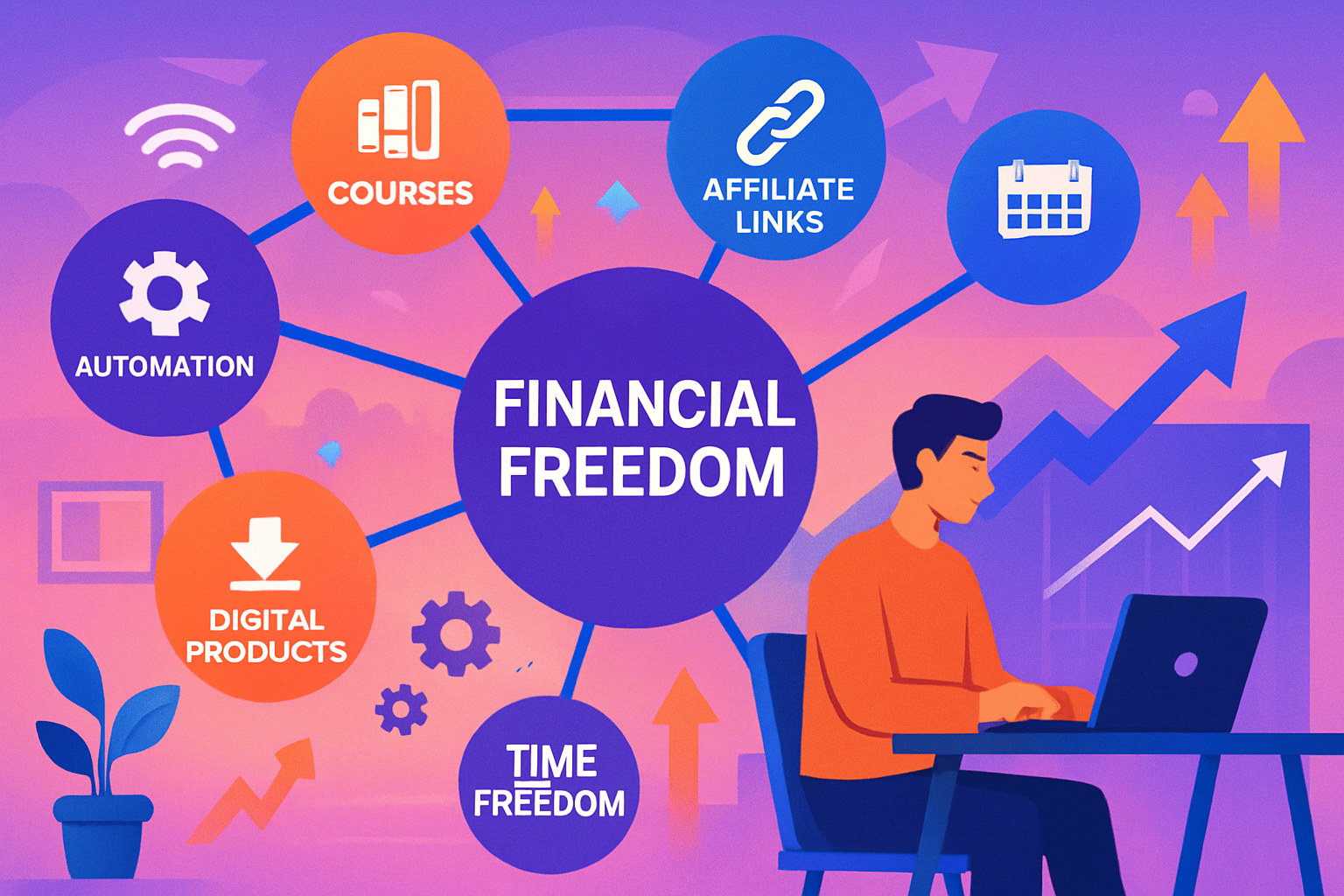
The passive income landscape continues evolving. Here are emerging opportunities gaining traction:
AI-Assisted Content Creation
Artificial intelligence tools are democratizing content creation, allowing non-experts to produce professional-quality materials more efficiently. However, human expertise, creativity, and authentic experience remain irreplaceable for building trust and authority.
Opportunities:
- AI-enhanced writing for faster blog content production
- AI-generated art for print-on-demand designs
- AI voice cloning for audiobook creation
- AI video editing for faster YouTube production
Caution: Over-reliance on AI without human oversight produces generic content that fails to connect with audiences.
Micro-SaaS Products
Micro-SaaS (Software as a Service) involves creating small, niche software tools that solve specific problems for targeted audiences. Unlike traditional software companies, micro-SaaS products serve small markets and can be built by solo developers or small teams.
Examples:
- Niche productivity tools
- Industry-specific calculators
- Workflow automation tools
- Browser extensions for specific tasks
Income potential: $500-$10,000+ monthly
Skill requirement: Moderate to advanced coding knowledge (or budget to hire developers)
NFTs and Digital Collectibles
While the NFT market has matured beyond the 2021 hype, legitimate use cases continue emerging for digital artists, musicians, and creators to monetize unique digital assets.
Viable applications:
- Digital art collections
- Music and audio NFTs
- Membership and access tokens
- Virtual real estate in metaverse platforms
Risk level: High (volatile and speculative market)
Sustainability-Focused Income Streams
Consumer demand for ethical and sustainable products creates opportunities for passive income aligned with environmental and social values.
Examples:
- Eco-friendly print-on-demand products
- Sustainable investing (ESG dividend stocks)
- Educational content about sustainability
- Affiliate marketing for green products
Creating Your 90-Day Action Plan
Knowledge without action generates zero income. Here’s a practical 90-day plan to launch your first passive income stream:
Month 1: Foundation and Selection
Week 1-2:
- Assess your skills, interests, and available time
- Research 3-5 passive income ideas that align with your strengths
- Analyze competition and market demand
- Select ONE strategy to pursue
Week 3-4:
- Create detailed implementation plan
- Set up necessary accounts and platforms
- Invest in essential tools (if needed)
- Begin learning required skills through free resources
Month 2: Creation and Launch
Week 5-6:
- Create your first products/content (minimum viable version)
- Set up automation systems
- Develop a basic marketing strategy
- Build initial audience (email list, social media, etc.)
Week 7-8:
- Launch publicly
- Gather initial feedback
- Make quick improvements based on feedback
- Begin a consistent content/product creation schedule
Month 3: Optimization and Scaling
Week 9-10:
- Analyze performance data
- Optimize based on what’s working
- Expand product line or content library
- Improve marketing and distribution
Week 11-12:
- Implement additional automation
- Plan scaling strategy
- Evaluate whether to continue, pivot, or add a second income stream
- Set goals for months 4-6
Measuring Success: Key Performance Indicators
Track these metrics to evaluate your passive income progress:
Revenue Metrics
- Monthly recurring revenue (MRR): Total predictable monthly income
- Growth rate: Month-over-month percentage increase
- Average revenue per customer: Total revenue ÷ number of customers
- Customer lifetime value: Average total revenue per customer over the relationship
Efficiency Metrics
- Time investment: Hours spent per $1,000 earned
- Profit margin: (Revenue – Expenses) ÷ Revenue
- Automation percentage: % of processes requiring no manual intervention
- Passive income ratio: Passive income ÷ total income
Audience Metrics
- Email subscribers: Size and growth rate of email list
- Website traffic: Monthly visitors and page views
- Social media followers: Platform-specific audience size
- Engagement rate: Comments, shares, likes relative to audience size
Investment Metrics
- Annual yield: Investment income ÷ principal invested
- Dividend growth rate: Year-over-year dividend increase
- Portfolio value: Total investment account value
- Reinvestment rate: Percentage of returns reinvested vs. withdrawn
Conclusion: Your Path to Financial Freedom Starts Today
Building smart passive income ideas into sustainable revenue streams isn’t about overnight success or get-rich-quick schemes. It’s about strategically investing your time, skills, and (when possible) money into systems that generate returns long after the initial work is complete.
The fifteen strategies outlined in this guide offer diverse pathways suited to different skills, interests, and risk tolerances. Whether you’re a creative person drawn to digital products and content creation, an analytical thinker attracted to investment-based income, or an entrepreneur excited by e-commerce opportunities, there’s a passive income strategy that aligns with your strengths.
Your next steps:
- Choose ONE strategy from this article that resonates with your skills and interests
- Commit to 90 days of consistent effort before evaluating results
- Start today with the smallest possible action—register a domain, open a brokerage account, create your first design, or write your first blog outline
- Track your progress using the metrics outlined above
- Join communities of others pursuing similar goals for accountability and learning
Remember, every successful passive income creator started exactly where you are now—with zero income from passive sources. The difference between those who succeed and those who don’t isn’t talent, luck, or secret knowledge. It’s simply taking action and maintaining consistency through the initial months when results are minimal.
Financial freedom isn’t built in a day, but it is built one decision, one action, one income stream at a time. Your future self will thank you for starting today.
Ready to begin your passive income journey? Visit MSBudget for more financial strategies, budgeting tools, and wealth-building resources to support your path to financial independence.