
I’ll never forget the week I stared at my bank account and realized I had exactly $53 until payday—and a family of four to feed. That moment changed everything about how I approached food. Budget meal planning isn’t just about cutting costs; it’s about making intentional choices that keep your family healthy without breaking the bank. And yes, you absolutely can do it on $50 a week in 2026.
Key Takeaways
- A $50 weekly grocery budget remains achievable in 2026 when you plan meals around simple, repeatable ingredients rather than variety
- The biggest budget killer isn’t high prices—it’s decision fatigue leading to impulse purchases and food waste
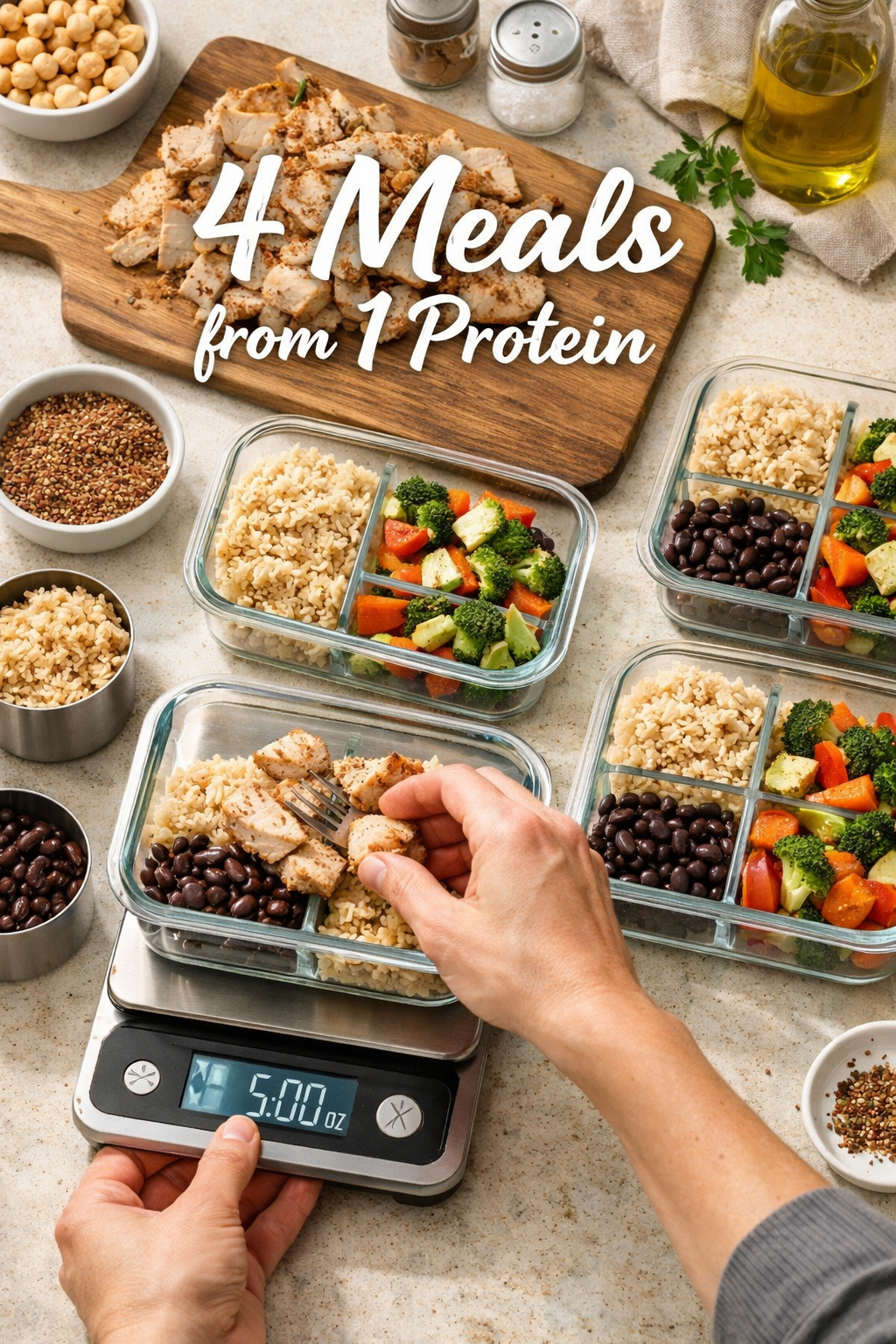
- One protein cooked once can become 4-5 different meals throughout the week when portioned and frozen properly
- Uncooked staples like rice and oats provide 3-4 times more servings than prepared convenience foods at the same price point
- A single unplanned fast-food run can consume your entire weekly budget, making advance planning essential
Quick Answer
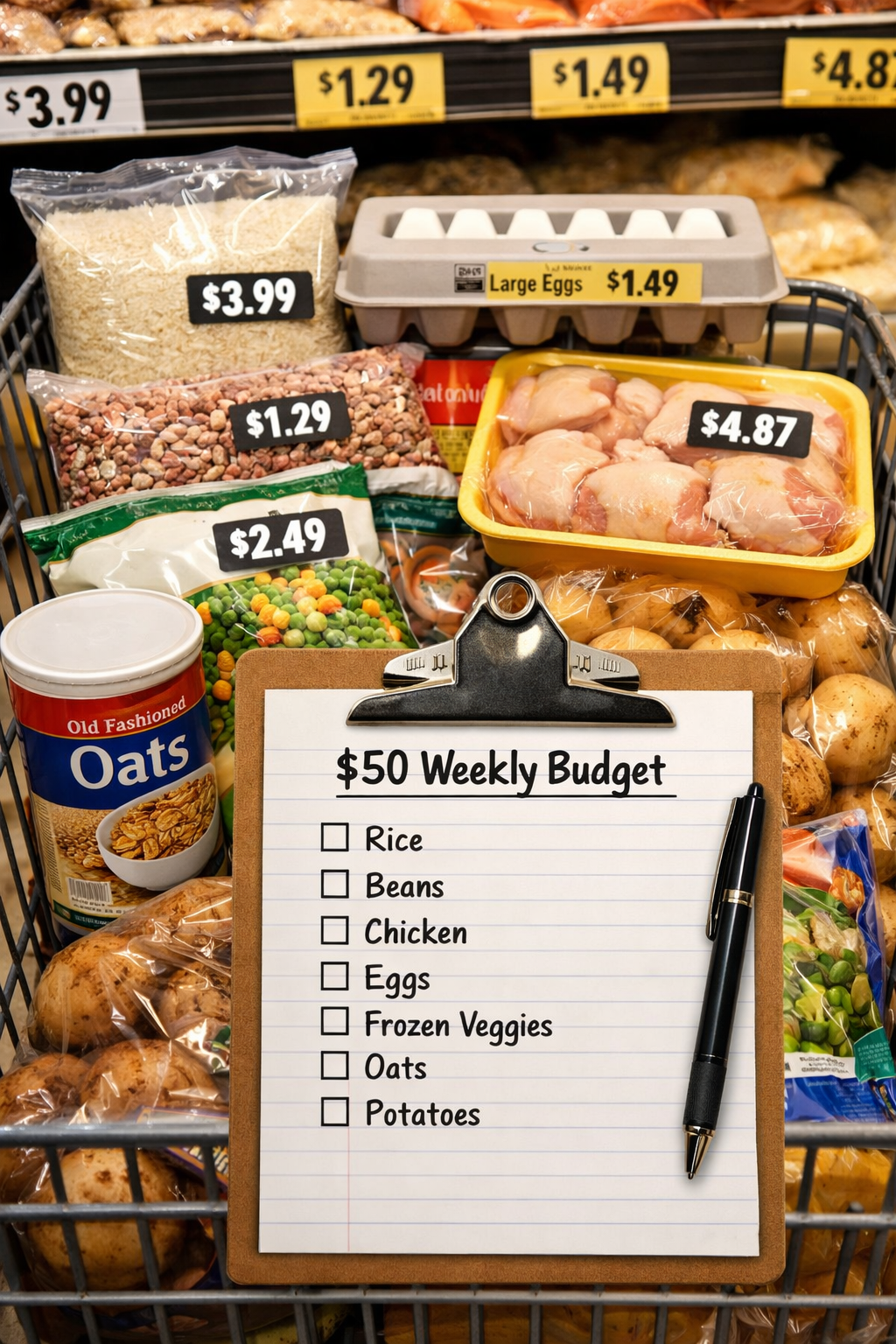
Budget meal planning on $50 a week works by building meals around affordable staple ingredients—chicken thighs, eggs, beans, rice, oats, and frozen vegetables—then using repetition with variation to create different meals from the same core proteins. The key is shopping with a categorized list, avoiding prepared foods, and cooking one protein source that divides into multiple meals throughout the week. This approach feeds a family healthy, filling meals while staying within budget.
Can You Really Feed a Family on $50 a Week in 2026?
Yes, feeding a family on $50 weekly is still possible in 2026, but it requires intentional planning and strategic ingredient choices. The budget works for families of 3-4 people when meals are built around cost-efficient staples rather than specialty products or variety-focused menus.[1]
The reality is that $50 weekly budgets remain viable if you accept certain constraints. You won’t have organic berries, grass-fed beef, or trendy superfoods. Instead, you’ll build meals around proven affordable ingredients that deliver nutrition and satisfaction.
Here’s what makes or breaks a $50 budget:
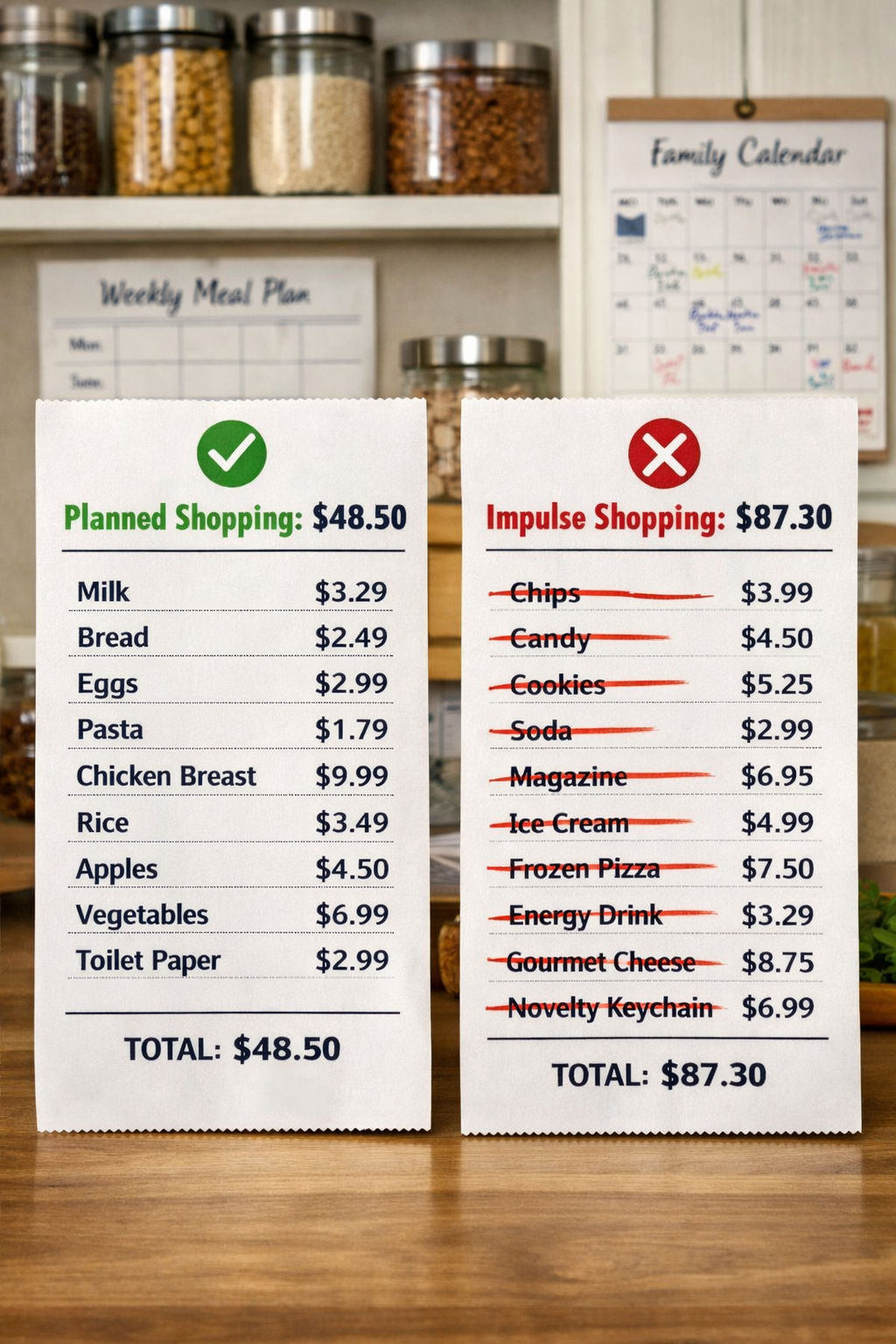
- Decision fatigue is your enemy – Loose meal planning leads to impulse purchases that destroy budgets faster than high prices[1]
- Food waste costs more than you think – Fresh produce that wilts before use represents wasted money and wasted meals
- One drive-thru trip can consume your entire budget – A single family fast-food meal often costs $35-50, eliminating your grocery funds[4]
- Prepared convenience foods carry massive markups – A $5.49 prepared meal purchased daily costs over $38 weekly, leaving only $12 for everything else[2]
The families who succeed on this budget treat meal planning as non-negotiable, not optional. They shop with detailed lists organized by category and resist the temptation to “just grab something quick” when tired.
If you’re working on tightening your overall household budget, check out our guide on how to create a family budget that accounts for all expenses including groceries.
What Should You Buy for Budget Meal Planning on $50?
Your $50 should go toward ingredients that work across multiple meals rather than single-use specialty items. Focus on proteins, carbohydrates, produce, and flavor staples that create variety through combination rather than through purchasing many different foods.
Core proteins (choose 2-3 per week):
- Chicken thighs (more flavorful and cheaper than breasts)
- Whole eggs (breakfast, lunch additions, dinner proteins)
- Canned beans (black, pinto, or chickpeas)
- Ground turkey or beef when on sale
Carbohydrate staples:
- Uncooked rice (basmati, jasmine, or brown rice)
- Old-fashioned oats (not instant packets)
- Potatoes (russet or gold)
- Whole grain pasta
- Flour tortillas
Produce that lasts:
- Frozen broccoli and mixed vegetables
- Fresh onions and garlic
- Carrots (fresh or frozen)
- Cabbage (stays fresh 2+ weeks)
- Bananas (for early week eating)
Flavor and fat staples:
- Olive oil or vegetable oil
- Peanut butter
- Butter
- Basic spices (garlic powder, cumin, chili powder)
- Fresh cilantro or parsley
The math matters: Uncooked basmati rice at $2.99 yields approximately 20 servings, while frozen prepared rice at $4.99 provides only 6 servings—you’re paying triple per serving for convenience.[1][2]
Choose ingredients based on overlap potential. Beans work in rice bowls, quick salads, and as taco filling. Oats cover breakfast while potatoes anchor dinners. This overlap reduces your total ingredient count while maintaining meal variety.[1]
For more strategies on cutting grocery costs, see our 21 frugal grocery hacks that can save hundreds monthly.
How Do You Plan a Week of Meals on a Tight Budget?
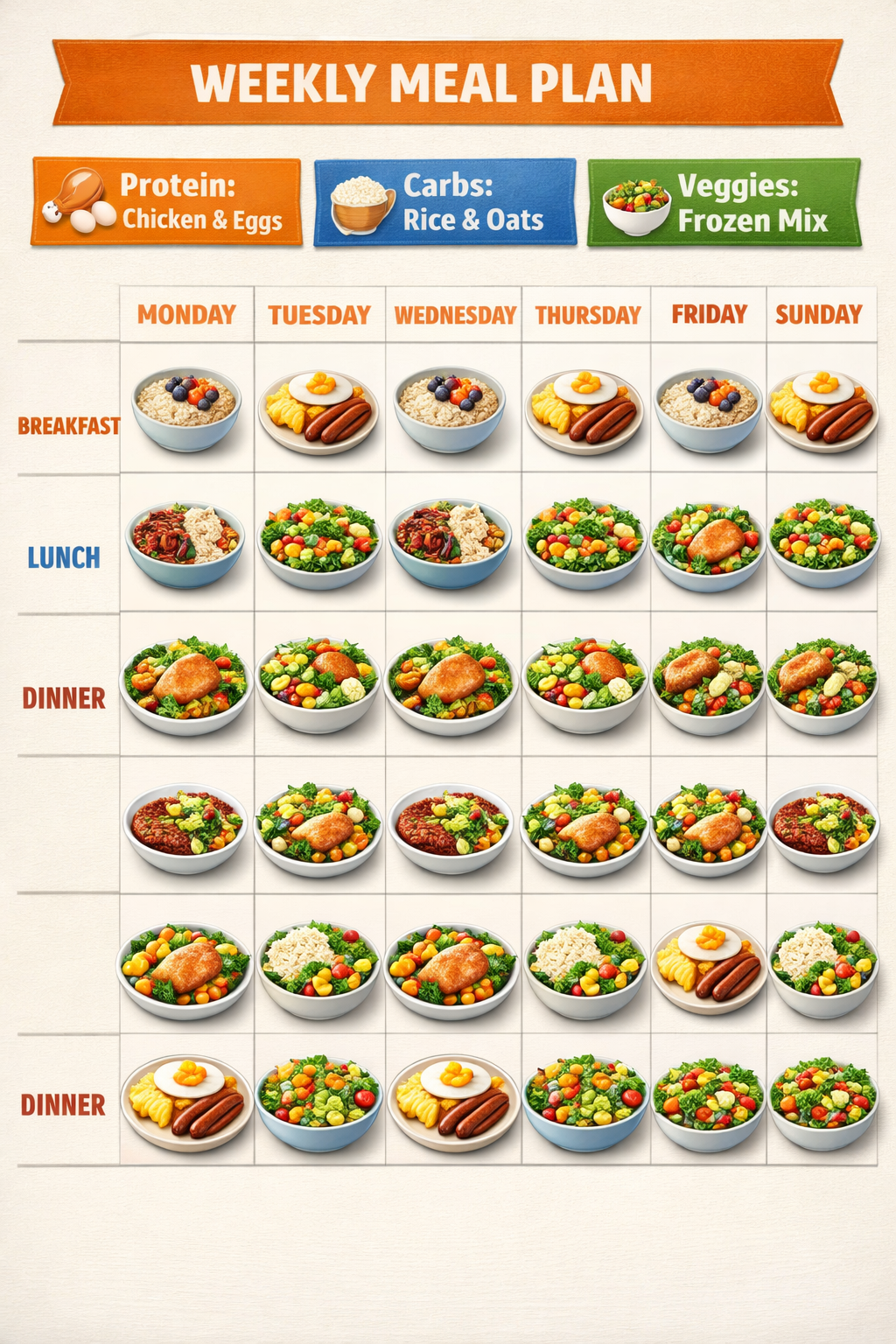
Start by planning meals in reverse: identify what you already have, then build a weekly menu around those ingredients plus 5-8 new staples. This prevents double-buying and reduces waste from forgotten pantry items.
Step-by-step weekly planning process:
- Inventory what you have – Check your pantry, fridge, and freezer before planning anything
- Choose one main protein – Select chicken, beans, or eggs as your weekly anchor
- Plan 3 dinner templates – Each template repeats 2-3 times with slight variations
- Build breakfast around one staple – Oatmeal or eggs every day with different toppings
- Keep lunch simple and repetitive – Leftovers, rice bowls, or sandwiches
- Create your categorized shopping list – Organize by protein, carbs, produce, extras
- Calculate your total before shopping – Estimate costs to stay within $50
Sample week structure:
- Monday & Thursday: Roasted chicken thighs with rice and frozen broccoli
- Tuesday & Friday: Bean and rice bowls with salsa and cheese
- Wednesday: Chicken fried rice using leftover chicken and rice
- Saturday: Egg scramble with potatoes and vegetables
- Sunday: Pasta with marinara and leftover protein
The repetition with variation strategy is essential. Cook chicken once on Sunday, portion it for Monday and Thursday dinners, use leftovers for Wednesday’s fried rice, and freeze any extra for next week.[1][2]
Common mistake to avoid: Planning seven completely different dinners requires too many ingredients and guarantees you’ll exceed $50. Instead, plan 3-4 meal templates that repeat with minor changes.
This approach aligns with broader budgeting strategies—if you’re looking to improve your overall money management, our new year budget plan offers a complete framework.
What Are the Best Budget-Friendly Recipes for Families?
The best budget recipes use 5-7 ingredients maximum, require minimal prep time, and create leftovers that taste good reheated. Focus on one-pot meals, sheet pan dinners, and grain bowls that feed multiple people without complex techniques.
Top budget-friendly meal formulas:
1. Rice and Beans Bowl
- Cooked rice + canned beans + salsa + shredded cheese + cilantro
- Cost per serving: approximately $0.75
- Variations: Add scrambled eggs, use different bean types, top with sour cream
2. Sheet Pan Chicken and Vegetables
- Chicken thighs + potatoes + frozen broccoli + olive oil + garlic powder
- Cost per serving: approximately $1.50
- Variations: Swap vegetables, change seasonings, use different cuts
3. Egg Fried Rice
- Leftover rice + eggs + frozen mixed vegetables + soy sauce + oil
- Cost per serving: approximately $0.60
- Variations: Add leftover protein, use different vegetables
4. Oatmeal with Toppings
- Old-fashioned oats + peanut butter + banana + cinnamon
- Cost per serving: approximately $0.40
- Variations: Use different nut butters, add frozen berries when on sale
5. Bean Quesadillas
- Flour tortillas + canned beans + shredded cheese + salsa
- Cost per serving: approximately $0.80
- Variations: Add rice, use different beans, top with sour cream
6. Potato and Egg Scramble
- Diced potatoes + eggs + onions + cheese
- Cost per serving: approximately $0.90
- Variations: Add vegetables, change cheese types, season differently
These recipes work because they share ingredients across multiple meals, reducing your total shopping list. The same bag of rice appears in bowls, fried rice, and as a side dish. The same eggs work for breakfast scrambles and fried rice.[5]
Choose recipes based on this rule: If a recipe requires more than two ingredients you don’t already have, skip it for now. Budget cooking succeeds through ingredient overlap, not culinary adventure.
How Can You Avoid Food Waste on a $50 Budget?
Food waste destroys tight budgets faster than any other factor because you’re literally throwing money in the trash. Preventing waste requires strategic shopping, proper storage, and flexible meal planning that adapts to what needs eating first.
Waste prevention strategies:
Storage matters:
- Store fresh herbs in water like flowers to extend life by 5-7 days
- Keep potatoes and onions separate (they spoil faster together)
- Freeze bread immediately if you won’t use it within 3 days
- Transfer opened canned goods to containers (they last longer)
Shopping strategies:
- Buy frozen vegetables instead of fresh when possible—no wilting, no waste[1]
- Choose whole chickens or larger cuts you can portion yourself
- Skip pre-cut produce (it costs more and spoils faster)
- Buy only what fits your specific meal plan
Flexible planning:
- Plan “leftover remix” nights where you combine odds and ends
- Keep one “clean out the fridge” meal slot each week
- Use vegetables in order of perishability (leafy greens first, carrots last)
- Freeze portions immediately after cooking, not days later
The rotisserie chicken rule: A cooked rotisserie chicken stays fresh refrigerated for four days maximum. If you buy one, plan to use it within that window or freeze portions immediately.[2]
I learned this lesson the hard way when I threw away half a bag of wilted spinach and two moldy bell peppers in the same week—that was $6 wasted, or 12% of my entire budget gone.
Edge case: If you have a family member with unpredictable eating patterns (shift work, variable appetite), plan meals that freeze and reheat well rather than dishes that must be eaten fresh. This flexibility prevents waste when plans change.
For more money-saving strategies beyond groceries, explore our 50 ways to save money every month.
Where Should You Shop for the Best Budget Meal Planning Deals?
The store you choose matters as much as what you buy. Discount grocers, warehouse clubs (if you have membership), and stores with robust generic brands typically offer 20-40% savings compared to premium retailers on identical staples.
Best store options for $50 budgets:
Discount grocers (Aldi, Lidl, Save-A-Lot):
- Lowest prices on staples like eggs, milk, bread, produce
- Limited selection forces simpler shopping (fewer impulse purchases)
- Strong generic brands at 30-50% less than name brands
- Best for: Weekly shopping trips, buying everything on your list
Walmart or Target:
- Competitive pricing on shelf-stable goods
- Price matching available at some locations
- Good for comparing generic vs. name brand options
- Best for: Combining grocery trips with other household needs
Warehouse clubs (Costco, Sam’s Club):
- Only worthwhile if you can split bulk purchases with another family
- Excellent per-unit pricing on rice, oats, chicken, eggs
- Requires upfront membership cost
- Best for: Buying staples monthly, not weekly shopping
Ethnic grocery stores:
- Significantly cheaper rice, beans, spices, and produce
- Larger package sizes at better per-unit costs
- May require cash payment
- Best for: Stocking up on staples, buying in bulk
Avoid premium retailers for staples: A prepared meal at Trader Joe’s or Whole Foods that costs $5.49 daily adds up to over $38 weekly—consuming 76% of your budget before you buy any other groceries.[2]
Smart shopping tactic: Shop one discount grocer for 90% of your list, then hit a conventional grocery store only for the 1-2 items the discount store doesn’t carry. This prevents the “while I’m here” purchases that inflate budgets.
The 54321 grocery shopping method offers another systematic approach to controlling grocery spending.
What Budget Meal Planning Mistakes Should You Avoid?
The biggest mistakes aren’t about which foods you buy—they’re about planning failures, impulse decisions, and underestimating how quickly small purchases add up. Avoiding these errors matters more than finding the perfect recipe.
Critical mistakes that destroy $50 budgets:
1. Shopping without a detailed list
- Leads to impulse purchases and forgotten essentials
- Results in multiple “quick trips” that each add $15-20
- Solution: Write every single item before leaving home
2. Buying ingredients for variety instead of overlap
- Seven different proteins for seven dinners requires too many ingredients
- Creates partial packages that spoil before use
- Solution: Plan meals around 2-3 proteins maximum
3. Choosing convenience over value
- Pre-cut vegetables, instant oatmeal, prepared meals cost 2-4x more
- “Time-saving” products consume budget without adding nutrition
- Solution: Accept that budget cooking requires basic prep time
4. Ignoring unit pricing
- Buying smaller packages because the total price seems lower
- Missing that you’re paying significantly more per ounce/pound
- Solution: Always compare unit prices, not package prices
5. Skipping inventory before shopping
- Buying duplicates of items you already have
- Letting existing food spoil while you buy new ingredients
- Solution: Check pantry, fridge, and freezer before planning
6. Planning meals you’ve never made before
- Unfamiliar recipes often require specialty ingredients
- Higher failure rate means wasted food and money
- Solution: Stick to 3-4 proven recipes you know work
7. Shopping when hungry or stressed
- Impulse purchases increase by 40-60% when shopping hungry
- Stress shopping leads to comfort food additions
- Solution: Eat before shopping, go when you’re calm and focused
I made mistake #6 repeatedly my first month—I’d find an interesting recipe online, buy all the ingredients, then realize I didn’t actually know how to make it properly. The failed experiments cost me an extra $20-30 monthly until I committed to mastering simple recipes first.
The $5 rule: Before adding any item not on your list, ask yourself: “Would I rather have this item or have $5 more in my budget next week?” This simple question prevents most impulse purchases.
For broader budgeting guidance that helps prevent financial mistakes, see our article on 10 budgeting mistakes to avoid.
How Do You Make Budget Meal Planning Sustainable Long-Term?
Sustainable budget meal planning requires building systems that reduce decision fatigue, creating flexibility for occasional treats, and accepting that some weeks will be harder than others. The goal is consistency over months, not perfection every single week.
Long-term sustainability strategies:
Build a rotation of 10-12 proven meals:
- Master recipes you can make without thinking
- Rotate through them monthly so you don’t get bored
- Add one new recipe every 4-6 weeks, not weekly
Create a standard shopping template:
- Develop a baseline list of staples you buy every week
- Only modify the list based on what you already have
- Reduces planning time from 60 minutes to 15 minutes
Plan for occasional flexibility:
- Budget an extra $10-15 monthly for a special ingredient or treat
- Don’t aim for perfection—aim for 90% consistency
- One pizza night every 3-4 weeks won’t destroy your budget
Batch cook on your best energy days:
- Cook 2-3 proteins when you have time and energy
- Freeze portions for weeks when you’re busy or tired
- Prevents the “too tired to cook” drive-thru temptation
Track what actually works:
- Keep notes on which meals your family eats without complaint
- Identify which ingredients consistently get wasted
- Adjust your planning based on real data, not aspirations
The 80/20 rule for budget cooking: If you stick to your plan 80% of the time, you’ll succeed. The families who fail aim for 100% perfection, then quit entirely when they have one off week.
I’ve maintained a $50-60 weekly budget for three years now, but I still have weeks where unexpected events push me to $75. The difference is that I don’t let one expensive week derail the entire system—I just return to the plan the following week.
Edge case for shift workers or variable schedules: Build your meal plan around foods that freeze and reheat well (rice bowls, soups, casseroles) rather than dishes that must be eaten fresh. This flexibility prevents waste when schedules change unexpectedly.
The principles that make budget meal planning work long-term are the same ones that make any budget sustainable—check out our guide on budgeting for dummies for fundamental strategies.
Frequently Asked Questions
Can you eat healthy on $50 a week?
Yes, you can eat healthy on $50 weekly by focusing on nutrient-dense staples like beans, eggs, oats, rice, frozen vegetables, and chicken thighs. These ingredients provide protein, fiber, complex carbohydrates, and essential nutrients at the lowest per-serving cost.
How many people does a $50 weekly budget feed?
A $50 weekly budget typically feeds 3-4 people when meals are planned around affordable staples and prepared at home. Larger families or those with teenagers may need $60-75 weekly depending on portion sizes and activity levels.
What’s the cheapest protein for budget meal planning?
Eggs and dried beans are the cheapest proteins per serving, costing $0.15-0.30 per serving. Chicken thighs and whole chickens are the most affordable meat options at $0.80-1.20 per serving when purchased on sale.
Should you buy organic on a $50 budget?
No, organic products aren’t necessary or feasible on a $50 budget. Conventional produce, grains, and proteins provide the same nutritional value at 30-60% lower cost. Focus on buying more vegetables overall rather than organic versions.
How do you meal prep on a tight budget?
Cook one large batch of protein (chicken, beans, rice) on Sunday, then portion it into 4-5 containers with different vegetables and seasonings. This creates variety from a single cooking session and prevents daily decision fatigue.
Can you buy meat on a $50 weekly budget?
Yes, but choose affordable cuts like chicken thighs, drumsticks, or ground turkey, and limit meat to 3-4 meals weekly. Use eggs and beans for other protein sources to stretch your budget further.
What should you never buy on a tight grocery budget?
Avoid prepared meals, pre-cut produce, individual snack packages, specialty beverages, and out-of-season fresh produce. These convenience items cost 2-4 times more than whole ingredients with minimal nutritional benefit.
How do you handle food allergies on a $50 budget?
Substitute affordable allergen-free alternatives: use rice instead of wheat pasta, beans instead of dairy for protein, and oats instead of wheat for breakfast. Many budget staples are naturally allergen-free.
Is meal planning worth the time investment?
Yes, spending 30-45 minutes weekly on meal planning saves 5-8 hours of decision-making time during the week and prevents costly impulse purchases. One prevented drive-thru meal pays for the planning time investment.[4]
What’s the fastest meal you can make on a budget?
Egg fried rice takes 10 minutes using leftover rice, frozen vegetables, eggs, and soy sauce. It costs under $1 per serving and provides complete protein with vegetables.
How do you make budget meals taste good?
Use affordable flavor enhancers like garlic, onions, cumin, chili powder, soy sauce, and fresh cilantro. These ingredients cost $0.10-0.25 per meal but dramatically improve taste without expensive proteins or specialty ingredients.
Should you use coupons for budget meal planning?
Only clip coupons for items already on your list. Coupons often promote processed foods and name brands that cost more than generic staples even with the discount. Focus on store sales for staples instead.
Key Takeaways
- Budget meal planning on $50 weekly succeeds through intentional ingredient choices and repetition with variation, not through finding the cheapest possible foods
- Decision fatigue and impulse purchases destroy budgets faster than high prices—shopping with a detailed, categorized list is non-negotiable
- Build meals around 2-3 affordable proteins (chicken thighs, eggs, beans) that work across multiple dishes rather than buying different proteins for each meal
- Uncooked staples like rice, oats, and dried beans provide 3-4 times more servings per dollar than prepared convenience foods
- One protein cooked once can become 4-5 different meals when portioned properly and frozen immediately after cooking
- Frozen vegetables prevent waste and last weeks longer than fresh produce while providing the same nutritional value
- The families who succeed long-term aim for 80% consistency rather than 100% perfection, accepting that some weeks will exceed budget
- Food waste represents the single largest budget leak—proper storage and flexible meal planning prevent throwing money in the trash
- Shop discount grocers for 90% of staples and avoid premium retailers where a single prepared meal can cost $5-8
- Sustainable budget meal planning requires building systems that reduce weekly decision-making, not finding perfect recipes
Conclusion
Budget meal planning on $50 a week isn’t about deprivation or eating poorly—it’s about making strategic choices that prioritize nutrition and satisfaction over variety and convenience. The families who succeed build simple systems, master a core rotation of affordable meals, and accept that consistency matters more than perfection.
Start with just one week. Plan three simple dinner templates that repeat twice, build a categorized shopping list around those meals, and commit to shopping only what’s on that list. You’ll probably make mistakes your first attempt—I certainly did. But each week you’ll get faster at planning, better at identifying what your family actually eats, and more confident in your ability to feed everyone well on limited funds.
The skills you build through budget meal planning extend far beyond groceries. You’re learning to plan ahead, resist impulse decisions, and find satisfaction in simple pleasures. These are the exact skills that help people stop living paycheck to paycheck and build long-term financial stability.
Your next steps:
- Inventory your pantry, fridge, and freezer this weekend
- Choose 3 simple meal templates from this article
- Create a categorized shopping list for those meals
- Shop at a discount grocer with your list (and only your list)
- Cook one protein on Sunday and portion it for the week
Remember: Every dollar you save on groceries is a dollar you can put toward debt payoff, emergency savings, or financial goals that matter to your family. The $50 weekly budget isn’t the end goal—it’s a tool that helps you build the life you want.
References
[1] 50 Dollar A Week Healthy Grocery List Us 2026 – https://planeatai.com/blog/50-dollar-a-week-healthy-grocery-list-us-2026
[2] Trader Joes Weekly Budget Shopping – https://www.foodrepublic.com/2096669/trader-joes-weekly-budget-shopping/
[3] Cost Food Monthly Reports – https://www.fns.usda.gov/research/cnpp/usda-food-plans/cost-food-monthly-reports
[4] How To Feed A Family In The Shifting Economy Of 2026 – https://www.tablemagazine.com/how-to-feed-a-family-in-the-shifting-economy-of-2026/
[5] How To Turn A 50 Grocery Haul Into 20 Healthy Meals – https://jenneatsgoood.com/how-to-turn-a-50-grocery-haul-into-20-healthy-meals/
[6] 50 Per Week Meal Plan Family – https://www.savvyfrugalmom.com/50-per-week-meal-plan-family/