If you’ve ever scrolled through Pinterest and thought, “I could create content like this,” I have some exciting news for you: you absolutely can, and you can get paid for it too! 💰
In 2026, Pinterest isn’t just a digital mood board for wedding planning and recipe hunting—it’s become a legitimate income-generating platform where everyday people are building side hustles and even full-time businesses. With over 450 million active users searching for products, ideas, and inspiration every single month, the opportunity to make money on Pinterest has never been more accessible or profitable.
I’ll be honest: when I first heard people were earning thousands of dollars from Pinterest, I was skeptical. But after diving deep into the platform’s monetization strategies and seeing real results from creators just like you and me, I realized this isn’t some get-rich-quick scheme—it’s a genuine business opportunity that rewards consistency, creativity, and smart strategy.
Whether you’re looking to earn an extra few hundred dollars each month or build a substantial income stream, this guide will walk you through five proven methods to make money on Pinterest in 2026. Let’s turn those pins into profit! 📌
Key Takeaways
- Pinterest offers multiple monetization pathways including affiliate marketing, sponsored content, selling products, driving blog traffic, and creating digital products—most successful creators combine several strategies for maximum income
- You don’t need a massive following to start earning—even accounts with 1,000-5,000 monthly viewers can generate income through strategic affiliate marketing and optimized content
- Pinterest SEO is critical for success—keyword optimization in pin titles, descriptions, and board names directly impacts your visibility and earning potential
- Video pins and Rich Pins significantly outperform static images in engagement and conversion rates, making them essential for serious monetization efforts
- Consistency beats perfection—regular pinning (5-10 quality pins daily) with a clear niche focus generates better long-term results than sporadic viral content
Understanding How Pinterest Works as a Money-Making Platform
Before we dive into the specific strategies to make money on Pinterest, it’s essential to understand what makes this platform different from other social media channels. Pinterest isn’t really social media at all—it’s a visual search engine where people actively look for solutions, products, and ideas.[2]
Think about it: when someone opens Instagram or Facebook, they’re usually just scrolling for entertainment. But when someone opens Pinterest, they’re on a mission. They’re searching for “budget-friendly home office ideas” or “best running shoes for beginners” or “easy meal prep recipes.” This search intent is what makes Pinterest such a powerful monetization tool.
Why Pinterest Is Perfect for Making Money
Here’s what sets Pinterest apart:
- Long content lifespan: Unlike Instagram posts that disappear from feeds within hours, Pinterest pins continue generating traffic for months or even years[1]
- Built-in shopping features: Pinterest has integrated shopping capabilities, making it seamless to connect products with interested buyers[3]
- High purchase intent: Studies show Pinterest users are actively planning purchases, not just browsing[5]
- Free organic reach: You don’t need to pay for ads to get visibility—Pinterest’s algorithm rewards quality content regardless of follower count[2]
The platform has evolved significantly, introducing features like Rich Pins that automatically sync information from your website, Product Pins that show real-time pricing and availability, and Idea Pins (formerly Story Pins) that allow for multi-page storytelling.[1][3] All these features create multiple touchpoints for monetization.
Method 1: Affiliate Marketing on Pinterest
Let me start with what I consider the most accessible and profitable way to make money on Pinterest for beginners: affiliate marketing. This strategy involves promoting other people’s products and earning a commission when someone makes a purchase through your unique affiliate link.[2][4]
How Affiliate Marketing Works on Pinterest
Here’s the simple process:
- Join affiliate programs like Amazon Associates, ShareASale, or Rakuten[1]
- Get your unique affiliate links for products you want to promote
- Create eye-catching pins featuring those products
- Add your affiliate link to the pin’s destination URL
- Earn commissions when people click through and make purchases
The beauty of affiliate marketing on Pinterest is that you’re not selling to people—you’re helping them find solutions to problems they’re already trying to solve. When someone searches for “best budget planners for 2026” and finds your beautifully designed pin featuring your top five recommendations, you’re providing genuine value while earning income.
High-Performing Affiliate Content Formats
Based on what’s working in 2026, these content types consistently drive affiliate sales:[2]
- Gift guides: “15 Thoughtful Gifts for New Moms Under $50”
- Product roundups: “Top 10 Ergonomic Office Chairs for Remote Workers”
- Comparison content: “Vitamix vs. Ninja: Which Blender Is Worth Your Money?”
- Seasonal shopping ideas: “Spring Wardrobe Essentials on a Budget”
- Tutorial content: “How to Create a Capsule Wardrobe” (featuring specific clothing items)
“The most successful affiliate marketers on Pinterest focus on solving specific problems rather than just promoting products. When you genuinely help people make informed decisions, the commissions follow naturally.” – Pinterest Marketing Expert[2]
Optimizing Your Affiliate Pins for Maximum Earnings
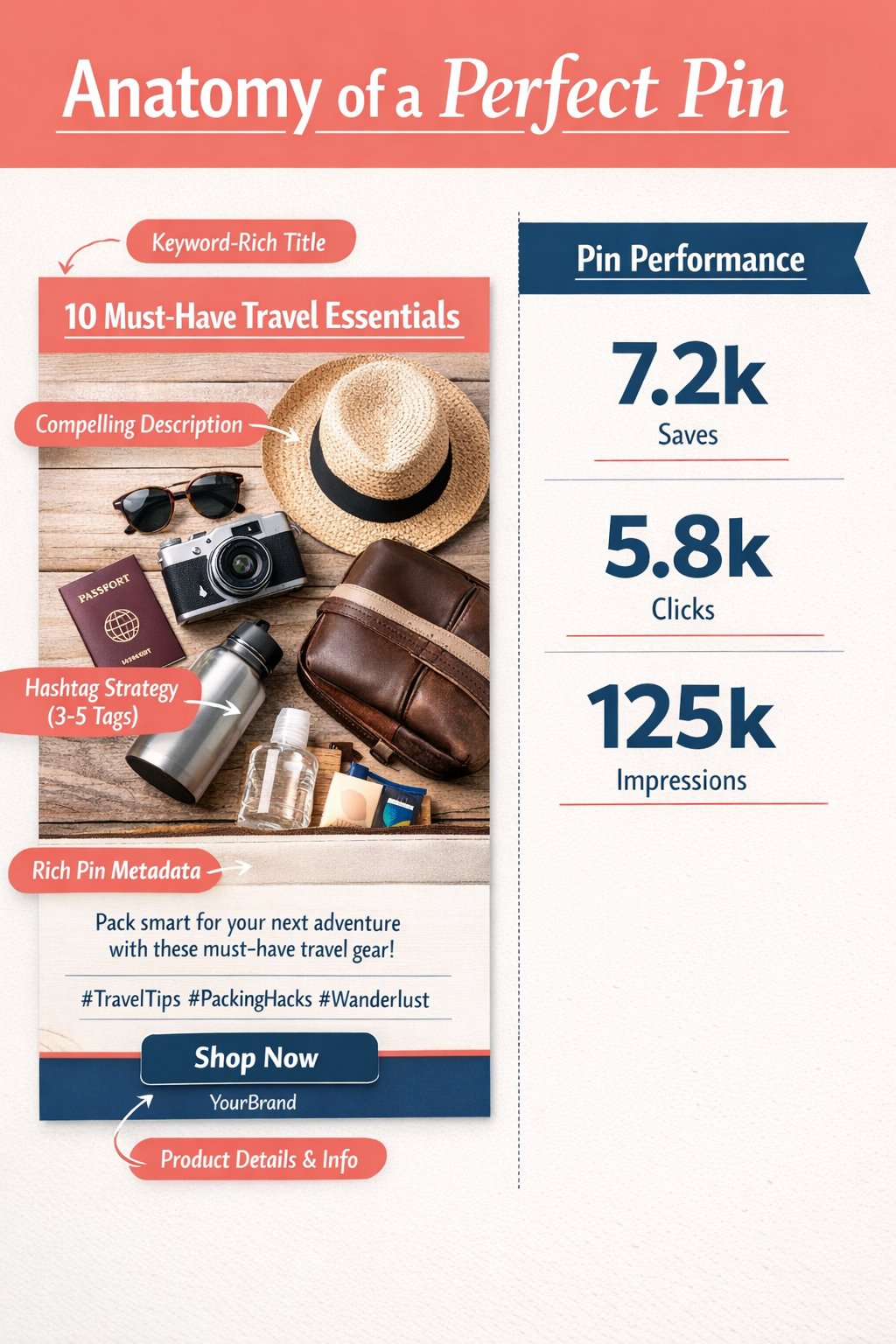
To truly succeed with affiliate marketing, you need to master Pinterest SEO. Here’s my proven optimization checklist:
Pin Title Optimization:
- Include your target keyword naturally (e.g., “Budget Meal Prep Containers”)
- Keep it under 100 characters
- Make it benefit-focused and clickable
Pin Description Strategy:
- Write 300-500 characters with your keyword mentioned 2-3 times[1][2]
- Include a clear call-to-action
- Add 3-5 relevant hashtags (not more—Pinterest’s algorithm penalizes hashtag stuffing)[1]
- Disclose affiliate relationships with #ad or #affiliate
Visual Design Elements:
- Use vertical format (2:3 ratio works best—1000 x 1500 pixels)[1]
- Include text overlay with the main benefit
- Use bright, eye-catching colors
- Show the product in use, not just stock photos
If you’re serious about building multiple income streams, affiliate marketing on Pinterest pairs perfectly with other strategies like passive income ideas and can be done entirely from home, making it ideal for those exploring ways to make money from home.
Method 2: Driving Traffic to Your Monetized Blog
The second powerful strategy to make money on Pinterest involves using the platform as a traffic engine for your blog or website. This is actually how many of the highest-earning Pinterest users generate income—they use Pinterest to drive thousands of visitors to their blogs, where they monetize through display ads, affiliate marketing, and sponsored content.[4]
Why Blog Traffic Equals Money
When you drive Pinterest traffic to your blog, you can earn money through:
- Display advertising networks like Mediavine, AdThrive, or Google AdSense (earning $15-$40 per 1,000 pageviews)[4]
- Affiliate links within blog posts (higher conversion rates than pins alone)
- Email list building (creating long-term customer relationships)
- Sponsored blog posts (brands pay $200-$2,000+ per post depending on your traffic)
The math is simple: if you drive 50,000 monthly visitors from Pinterest to your blog, and you’re earning $25 per 1,000 pageviews through display ads alone, that’s $1,250 per month—just from one monetization method.[4]
Creating Pin-Worthy Blog Content
Not all blog posts perform equally well on Pinterest. The most successful content types include:
| Content Type | Why It Works | Example |
|---|---|---|
| How-to Tutorials | High search intent | “How to Organize Your Pantry in 5 Steps” |
| Listicles | Easy to scan and save | “21 Frugal Living Tips That Actually Work” |
| Resource Guides | Comprehensive value | “Complete Guide to Starting a Side Hustle” |
| Before & After | Visual transformation | “Kitchen Makeover on a $500 Budget” |
| Product Reviews | Purchase decision support | “Honest Review: Best Budget Laptops 2026” |
Each blog post should have at least 3-5 different pin designs to test which visuals resonate best with your audience. I create variations with different headlines, color schemes, and images to maximize my reach.[1]
The Pinterest-to-Blog Traffic Strategy
Here’s my step-by-step process for driving consistent blog traffic:
- Write SEO-optimized blog posts targeting keywords with search volume
- Create 5 different pin designs for each post using Canva or Adobe Express
- Schedule pins strategically using tools like Tailwind or Pinterest’s native scheduler
- Join relevant group boards in your niche to expand reach
- Monitor analytics to identify top-performing pins and create more similar content
- Update and re-pin your best content every 3-4 months
The key is consistency. Pinning 5-10 quality pins daily (mix of your content and others’) keeps your account active and favored by Pinterest’s algorithm.[2] This steady effort compounds over time, creating a reliable traffic source that can help you make $100 a day or even more.
Method 3: Selling Your Own Products and Services
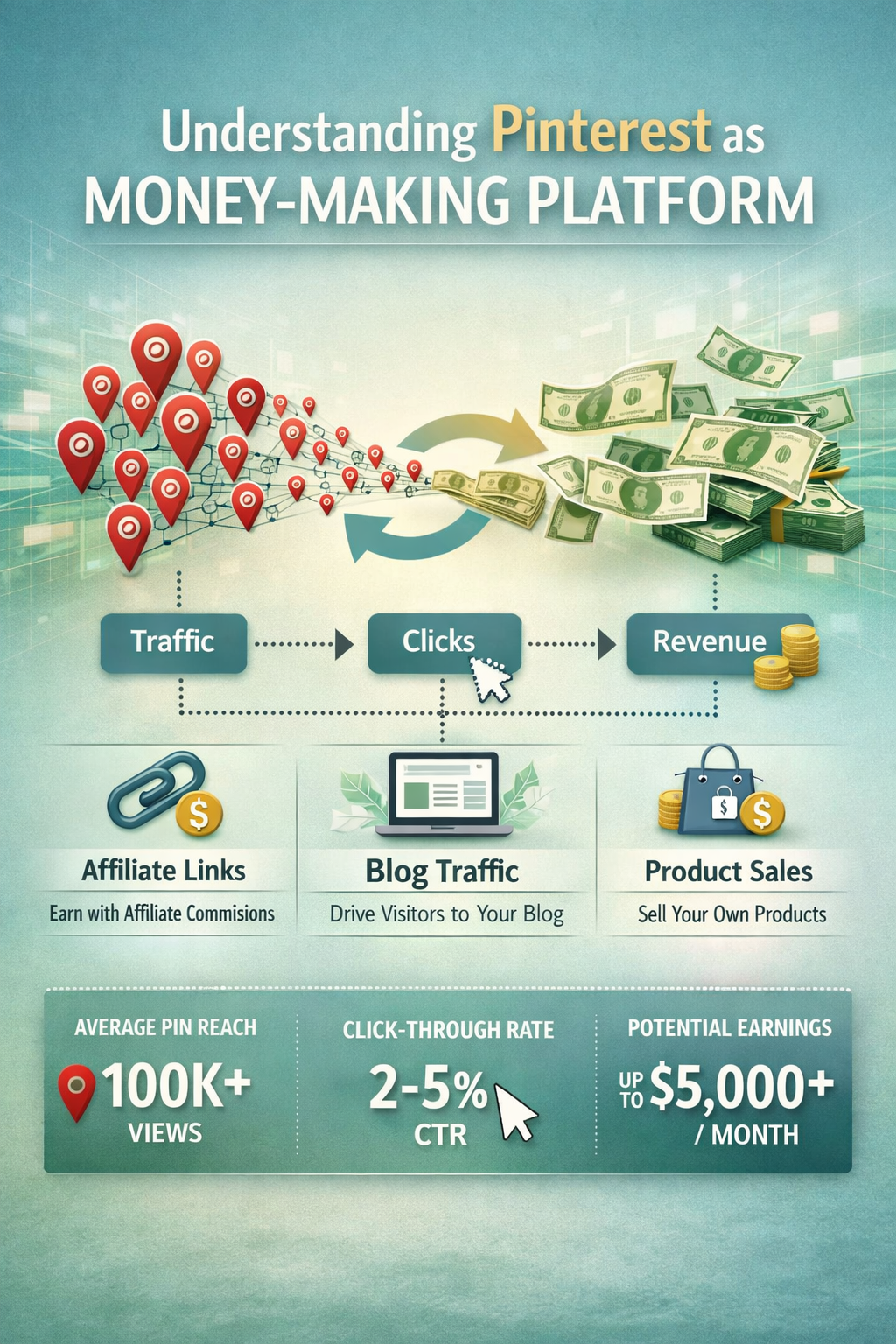
One of the most direct ways to make money on Pinterest is by selling your own products or services. Whether you’re selling physical products, digital downloads, or services like coaching or consulting, Pinterest can serve as a powerful sales channel.[3][7]
Types of Products That Thrive on Pinterest
Pinterest’s visual nature makes it ideal for certain product categories:
Physical Products:
- Handmade crafts and jewelry 🎨
- Home decor items
- Fashion and accessories
- Art prints and wall art
- Planners and stationery
Digital Products:
- Printable planners and organizers
- eBooks and guides
- Online courses
- Templates (resume, social media, business)
- Stock photos and graphics
Services:
- Virtual assistance
- Graphic design
- Social media management
- Coaching and consulting
- Photography
Setting Up Pinterest Shopping Features
In 2026, Pinterest has made it incredibly easy to sell directly on the platform:[3]
Step 1: Convert to a Business Account (it’s free!)
- Go to Settings → Account Management → Convert to Business Account
- Gain access to Pinterest Analytics and advertising tools
Step 2: Enable Rich Pins
- Install Pinterest’s verification tag on your website
- Rich Pins automatically pull product information (price, availability, description)
- They update in real-time when you change details on your site[1]
Step 3: Create a Product Catalog
- Upload your products through Pinterest’s Catalog Manager
- Or integrate directly with Shopify, WooCommerce, or other ecommerce platforms[3]
- Products automatically sync with your online store
Step 4: Design Product Pins
- Show your products in lifestyle settings (not just white background)
- Include clear pricing in the image overlay
- Use multiple angles and use-case scenarios
Print-on-Demand: A Low-Risk Product Strategy
If you don’t want to hold inventory, print-on-demand (POD) is an excellent option for making money on Pinterest. You create designs for t-shirts, mugs, phone cases, or wall art, and companies like Printful or Printify handle production and shipping when orders come in.[8]
Here’s why POD works so well with Pinterest:
- No upfront inventory costs 💰
- Visual products perfect for Pinterest’s format
- Passive income potential once designs are created
- Scalable without warehouse or shipping logistics
I’ve seen creators build entire businesses around niche POD products—everything from funny teacher t-shirts to minimalist wall art for nurseries—all driven primarily by Pinterest traffic. This approach can be combined with other home business ideas to diversify your income streams.
Method 4: Creating and Selling Digital Products
Digital products represent one of the highest-profit-margin ways to make money on Pinterest. Once you create a digital product, you can sell it infinitely without additional production costs, making it a true passive income stream.[4]
Why Digital Products Are Perfect for Pinterest
Pinterest users are actively seeking solutions, and digital products often provide exactly what they’re searching for:
- Someone searching “budget spreadsheet template” wants to buy a template
- Someone searching “meal planning guide” might purchase your eBook
- Someone searching “social media content calendar” needs your digital planner
The search intent aligns perfectly with digital product sales, and Pinterest’s long content lifespan means your product pins can generate sales for months or years after you create them.[1]
Top-Selling Digital Products on Pinterest in 2026
Based on current trends, these digital products consistently perform well:
Printables 📄
- Budget planners and financial trackers
- Meal planning templates
- Cleaning schedules and checklists
- Wedding planning materials
- Party decorations and invitations
Educational Products 📚
- eBooks on specific topics
- Online courses and workshops
- Tutorial guides and workbooks
- Cheat sheets and quick reference guides
Business Templates 💼
- Social media content templates
- Email marketing sequences
- Business plan templates
- Invoice and contract templates
- Resume and cover letter designs
Creative Resources 🎨
- Lightroom presets
- Photoshop actions
- Fonts and graphics
- Stock photo bundles
- Canva template packs
Creating Your First Digital Product
You don’t need to be a designer or tech expert to create digital products. Here’s my beginner-friendly process:
- Identify a problem your target audience has (use Pinterest search suggestions for ideas)
- Create a simple solution using tools like Canva, Google Docs, or Microsoft Excel
- Package it professionally with attractive cover design and clear instructions
- Set up a sales platform using Etsy, Gumroad, or your own website with payment processing
- Create multiple pin designs highlighting different benefits of your product
- Write compelling product descriptions with relevant keywords[2]
The key is starting simple. Your first digital product doesn’t need to be a comprehensive 100-page course. A well-designed budget template or meal planning printable can sell for $5-$15, and if you sell 100 copies, that’s $500-$1,500 in profit with zero additional work after creation.
Many successful digital product sellers on Pinterest treat this as one of several passive income streams, allowing them to build substantial monthly income over time.
Method 5: Sponsored Content and Brand Partnerships
Once you’ve built a following and established credibility in your niche, sponsored content and brand partnerships become a lucrative way to make money on Pinterest. Brands are actively seeking Pinterest influencers to promote their products, and they’re willing to pay well for it.[3]
How Sponsored Pinterest Campaigns Work
Brand partnerships on Pinterest typically involve:
- Sponsored pins: Creating and publishing pins featuring a brand’s products (paid per pin or campaign)
- Sponsored blog posts: Writing blog content about a brand and promoting it on Pinterest (paid $200-$5,000+ depending on your reach)[4]
- Product reviews: Receiving free products and creating pins/content reviewing them
- Brand ambassador programs: Ongoing partnerships with monthly compensation
- Affiliate + sponsorship hybrid: Combining affiliate commissions with flat sponsorship fees
What Brands Look for in Pinterest Creators
You don’t need millions of followers to attract brand deals. Here’s what actually matters:
Engagement Rate ✅
- Brands care more about saves, clicks, and comments than follower count
- An account with 10,000 engaged followers is more valuable than 100,000 inactive ones
Niche Relevance 🎯
- Brands want creators whose audience matches their target customers
- A focused niche (sustainable living, budget travel, minimalist fashion) is more attractive than general content
Professional Presence 💼
- Business account with complete profile
- Consistent branding across pins
- Quality content that aligns with brand values
Traffic and Reach 📊
- Monthly impressions and outbound clicks
- Website traffic from Pinterest
- Audience demographics that match brand targets
Finding and Negotiating Brand Deals
Here’s how to land your first sponsored opportunity:
1. Build Your Media Kit
Create a one-page document including:
- Your Pinterest statistics (monthly impressions, followers, engagement rate)
- Audience demographics
- Previous successful campaigns or top-performing content
- Your rates and services offered
2. Join Influencer Networks
- AspireIQ
- Activate by Bloglovin
- TRIBE
- Influence.co
3. Pitch Brands Directly
- Identify brands you genuinely use and love
- Send personalized pitches explaining how you can help them reach their target audience
- Start with smaller brands—they’re often more responsive and flexible
4. Set Fair Rates
A general pricing framework for 2026:
- Sponsored pin: $100-$500 per pin (depending on your reach)
- Sponsored blog post + Pinterest promotion: $300-$2,000+
- Monthly brand ambassador: $500-$5,000+
Remember to always disclose sponsored content with #sponsored or #ad to comply with FTC guidelines and maintain trust with your audience.[2]
Advanced Pinterest Strategies to Maximize Your Income
Now that you understand the five main methods to make money on Pinterest, let’s dive into advanced strategies that separate casual pinners from serious income earners.
Mastering Pinterest SEO for Higher Visibility
Pinterest SEO is fundamentally different from Google SEO, but equally important:[1][2]
Keyword Research Strategy:
- Use Pinterest’s search bar and note the auto-suggestions (these are actual searches)
- Check “Related Searches” at the bottom of search results
- Use tools like Pinterest Trends to identify seasonal opportunities
- Target long-tail keywords (e.g., “small apartment organization ideas for renters” instead of just “organization”)
Optimization Checklist:
- ✅ Profile name includes your niche keywords
- ✅ Profile description is keyword-rich (150 characters)
- ✅ Board names use specific search terms, not cute names
- ✅ Board descriptions include relevant keywords (200-300 characters)
- ✅ Pin titles are descriptive and keyword-focused
- ✅ Pin descriptions are detailed (300-500 characters) with natural keyword placement[1]
The Power of Video Content on Pinterest
Video pins are dominating Pinterest in 2026, generating significantly higher engagement than static images:[1][2]
Video Pin Best Practices:
- Keep videos 15-60 seconds for optimal performance
- Add captions (80% of users watch without sound)
- Use vertical format (9:16 ratio)
- Hook viewers in the first 3 seconds
- Include a clear call-to-action
Idea Pins for Deeper Engagement:
Idea Pins (multi-page story format) are getting prioritized in Pinterest’s algorithm:
- Create 5-20 page stories
- Mix images, videos, and text overlays
- Include step-by-step tutorials
- Add stickers and interactive elements
- End with a call-to-action
While Idea Pins don’t currently allow outbound links, they’re excellent for building authority and followers, which indirectly supports your monetization efforts.[3]
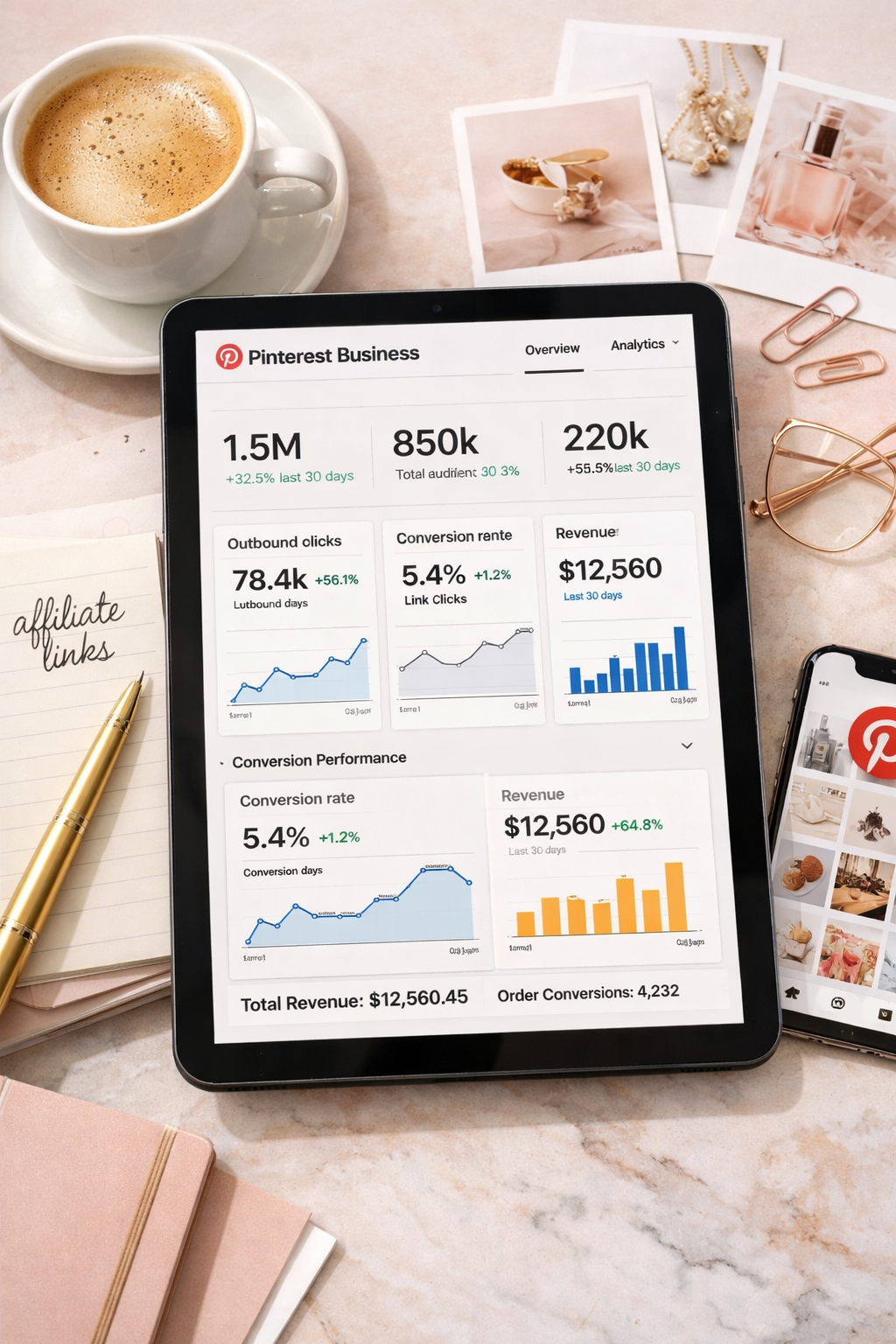
Leveraging Pinterest Analytics
Your Pinterest Analytics dashboard contains goldmine information for optimizing your income:[1]
Key Metrics to Monitor:
- Impressions: How many times your pins were seen
- Saves: How many people saved your pins (strong indicator of value)
- Outbound clicks: Traffic sent to your website/products
- Top pins: Your best-performing content (create more like these!)
- Audience insights: Demographics, interests, and behaviors
Monthly Optimization Routine:
- Review your top 10 performing pins
- Identify common elements (topics, design, keywords)
- Create more content in those successful categories
- Eliminate or update underperforming content
- Test new pin designs for existing top-performing content
Building a Sustainable Pinning Schedule
Consistency is crucial for Pinterest success. Here’s a sustainable approach:[2]
Daily Pinning Strategy:
- Fresh pins: 3-5 new pins daily (your original content)
- Repins: 5-10 saves of others’ relevant content
- Timing: Pinterest rewards consistent activity over sporadic bursts
Content Batching:
- Create 30-50 pins in one design session
- Schedule them using Pinterest’s native scheduler or Tailwind
- Maintain 2-4 weeks of scheduled content ahead
The 80/20 Rule:
- 80% valuable content (yours and others’)
- 20% promotional content (direct product/service promotion)
This balanced approach builds trust with your audience while still driving income. If you’re looking to build wealth through multiple strategies, combining Pinterest income with smart money moves can accelerate your financial goals.
Common Mistakes to Avoid When Trying to Make Money on Pinterest
After studying successful Pinterest monetizers and learning from my own mistakes, I’ve identified the most common pitfalls that prevent people from earning income on this platform:
❌ Mistake #1: Treating Pinterest Like Instagram
The Problem: Posting sporadically, using generic captions, and expecting viral moments
The Solution: Pinterest is a search engine—consistent, keyword-optimized content wins over viral posts. Focus on searchable content that provides long-term value.[2]
❌ Mistake #2: Ignoring Pinterest’s Guidelines
The Problem: Spamming affiliate links, using misleading pins, or violating community guidelines
The Solution: Read and follow Pinterest’s Brand Moments Guide and merchant guidelines. Getting your account suspended destroys all your monetization efforts.[5]
❌ Mistake #3: Poor Pin Design Quality
The Problem: Blurry images, cluttered text, or unprofessional-looking pins
The Solution: Invest time in learning basic design principles. Use high-quality images, readable fonts (minimum 24pt), and clear visual hierarchy. Tools like Canva offer Pinterest-specific templates.[1]
❌ Mistake #4: Not Verifying Your Website
The Problem: Missing out on Rich Pins, analytics, and credibility
The Solution: Claim your website in Pinterest settings—it takes 10 minutes and significantly improves your monetization potential.[1]
❌ Mistake #5: Focusing Only on Follower Count
The Problem: Obsessing over followers instead of engagement and traffic
The Solution: Impressions, saves, and outbound clicks matter more than followers for monetization. A highly engaged small audience generates more income than passive large following.[2]
❌ Mistake #6: Giving Up Too Soon
The Problem: Expecting immediate results and quitting after 2-3 weeks
The Solution: Pinterest success is a marathon, not a sprint. Most accounts see significant traction after 3-6 months of consistent effort. The compound effect of evergreen pins creates long-term income.[4]
❌ Mistake #7: Not Diversifying Monetization Methods
The Problem: Relying on a single income stream (only affiliate marketing or only ads)
The Solution: Layer multiple monetization strategies—combine affiliate marketing + blog ads + digital products for maximum income potential.[4] This approach aligns with building multiple streams of income for financial security.
Real Income Potential: What Can You Actually Earn?
Let’s talk real numbers. How much can you actually make money on Pinterest? The answer varies dramatically based on your niche, effort level, and monetization strategies, but here are realistic income ranges for 2026:
Beginner Level (Months 1-6)
Monthly Income: $0-$500
- Building foundation with 1,000-10,000 monthly viewers
- First affiliate sales trickling in
- Learning optimization strategies
- Focus: Consistency and content creation
Intermediate Level (Months 6-12)
Monthly Income: $500-$2,000
- 50,000-200,000 monthly impressions
- Regular affiliate commissions
- First sponsored opportunities
- Blog traffic generating ad revenue
- Focus: Scaling what’s working
Advanced Level (12+ Months)
Monthly Income: $2,000-$10,000+
- 500,000+ monthly impressions
- Multiple income streams optimized
- Regular brand partnerships
- Digital products generating passive income
- Focus: Automation and delegation
Professional Level (Established Business)
Monthly Income: $10,000-$50,000+
- Millions of monthly impressions
- Team managing Pinterest strategy
- High-value brand deals
- Successful product lines
- Focus: Business growth and expansion
Important Reality Check: These numbers represent what’s possible, not what’s guaranteed. Your actual income depends on:
- Your niche (finance, home decor, and parenting tend to monetize well)
- Time investment (5-10 hours weekly minimum for serious income)
- Content quality (professional, valuable content outperforms rushed pins)
- Monetization strategy (multiple income streams outperform single methods)[4]
The beautiful thing about Pinterest is that your pins continue working for you long after you create them. A pin you create today could still be driving traffic and sales two years from now—that’s the power of evergreen content on a search-based platform.
Getting Started: Your Action Plan to Make Money on Pinterest Today
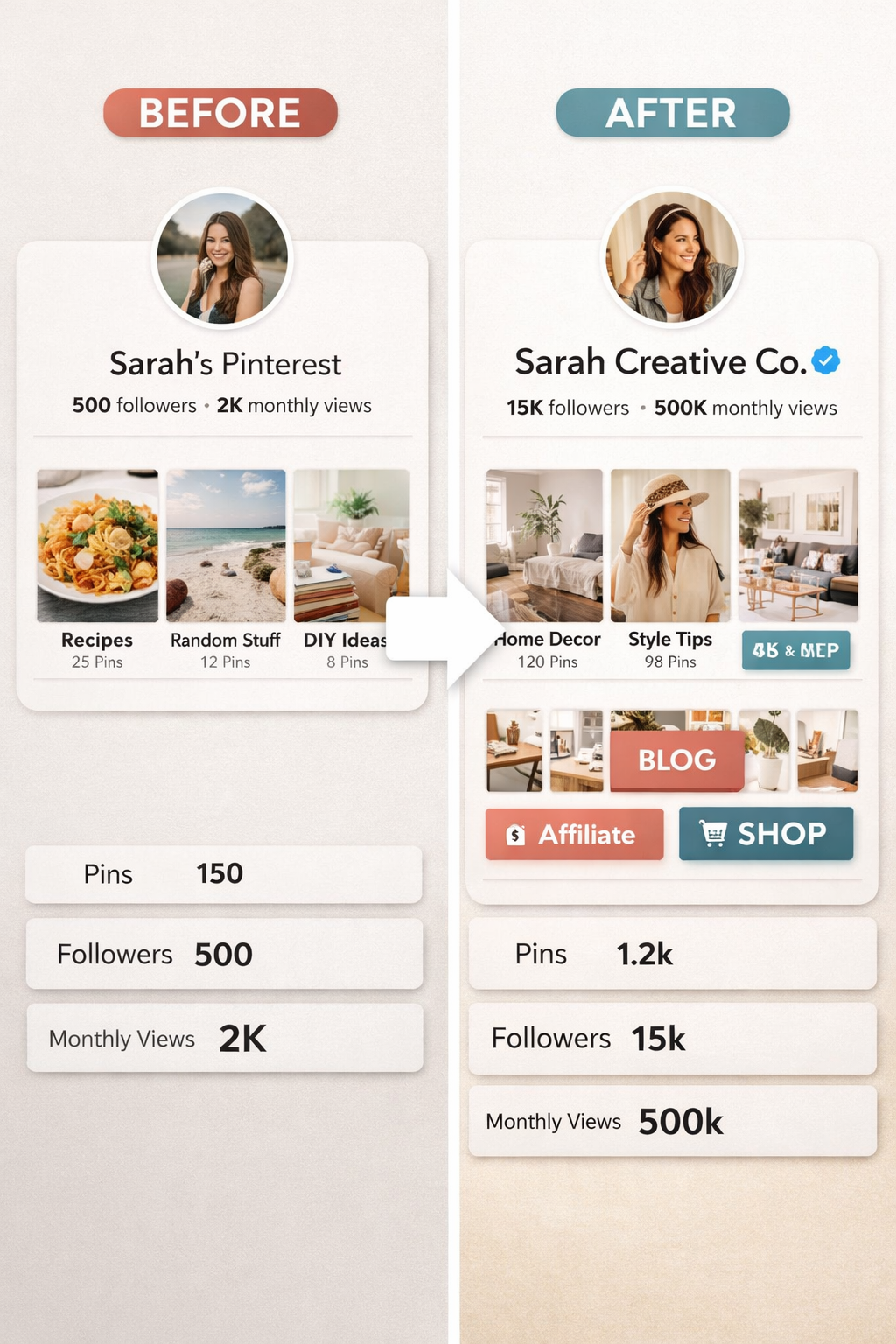
Ready to start your Pinterest money-making journey? Here’s your step-by-step action plan to implement everything we’ve covered:
Week 1: Foundation Setup
Day 1-2: Account Setup
- Convert to Pinterest Business Account (or create new one)
- Complete your profile with keyword-rich description
- Add profile photo and cover image
- Verify your website (if you have one)
- Enable Rich Pins
Day 3-4: Niche Selection and Research
- Choose your specific niche (the more focused, the better)
- Research top competitors in your niche
- Identify 20-30 keywords using Pinterest search
- Analyze what content performs best in your niche
Day 5-7: Board Creation
- Create 5-10 keyword-optimized boards
- Write detailed board descriptions (200-300 characters)
- Design board covers for professional appearance
- Add 10-20 high-quality pins to each board (mix of yours and repins)
Week 2-4: Content Creation and Monetization Setup
Content Development:
- Create your first 20-30 original pins
- Design 3-5 variations for your best content
- Write keyword-optimized titles and descriptions
- Schedule pins using Pinterest scheduler or Tailwind
Monetization Setup:
- Join 2-3 affiliate programs relevant to your niche
- Set up blog (if using traffic method) with ad network application
- Create your first digital product or set up shop (if selling products)
- Develop media kit for future sponsorships
Month 2-3: Optimization and Scaling
- Review analytics weekly and adjust strategy
- Create more content in top-performing categories
- Test different pin designs and formats
- Engage with your niche community
- Start reaching out for collaboration opportunities
Month 4-6: Income Growth
- Launch first paid product or major affiliate campaign
- Pitch brands for sponsored opportunities
- Expand successful content categories
- Consider Pinterest Ads for top-performing content
- Document your results and refine strategy
Pro Tip: Track everything in a simple spreadsheet—pins created, income earned, top performers, and lessons learned. This data becomes invaluable for scaling your income over time.
For those looking to accelerate their results, combining Pinterest strategies with other high-income skills can create multiple revenue streams that compound over time.
Conclusion: Your Pinterest Profit Journey Starts Now
Making money on Pinterest isn’t just possible—it’s one of the most accessible online income opportunities available in 2026. Whether you’re a stay-at-home parent looking for flexible income, a side hustler building toward financial freedom, or an entrepreneur seeking new revenue channels, Pinterest offers proven pathways to profit.
The five methods we’ve covered—affiliate marketing, blog traffic monetization, selling products, digital products, and sponsored content—can each generate substantial income on their own. But the real magic happens when you layer multiple strategies, creating a diversified Pinterest income stream that’s both resilient and scalable.
Remember these key principles as you start your journey:
🎯 Consistency beats perfection – Regular, quality content outperforms sporadic brilliance
🔍 SEO is everything – Pinterest is a search engine; optimize accordingly
📊 Data drives decisions – Let analytics guide your content strategy
💰 Multiple income streams – Don’t rely on a single monetization method
⏰ Patience pays off – Your pins compound in value over time
The creators earning thousands monthly on Pinterest didn’t get there overnight. They committed to consistent effort, learned from their analytics, and continuously refined their approach. Most importantly, they started—and that’s exactly what you need to do today.
Your Next Steps:
- Choose one monetization method from this guide to focus on first
- Set up your Pinterest Business Account this week
- Create your first 10 pins using the optimization strategies we covered
- Schedule 30 minutes daily for Pinterest activities
- Track your progress and adjust based on what works
The opportunity is real, the platform is proven, and the timing is perfect. Your Pinterest profit journey starts with a single pin—so what are you waiting for?
If you’re ready to transform your financial situation through multiple income-generating strategies, explore our guides on making money from home and passive income ideas to complement your Pinterest earnings.
Now go create some pins and start turning your creativity into cash! 💰📌