
Picture this: It’s 3 AM, you’re deep in dreamland, and your bank account just got a little fatter. Sounds like fantasy, right? Well, I’m here to tell you that earning money while you sleep isn’t just possible—it’s happening for millions of people right now in 2026.
I’ll be honest with you. When I first heard about passive income ideas, I was skeptical. Like, really skeptical. The whole concept seemed too good to be true, like one of those “get rich quick” schemes your uncle keeps posting about on Facebook. But after diving deep into the world of passive income and actually implementing some of these strategies myself, I’ve discovered that it’s not magic—it’s just smart money management and strategic planning.
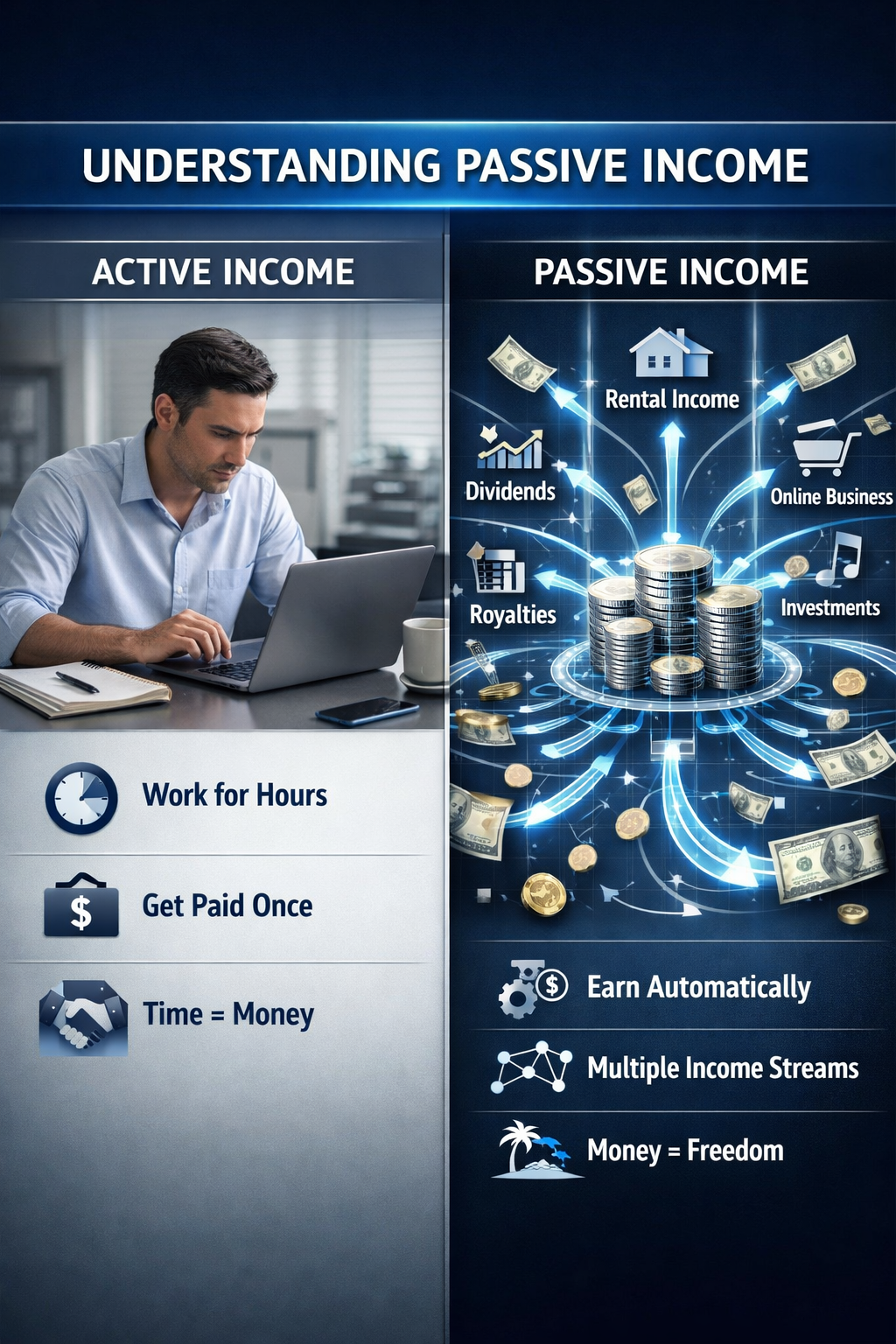
The beauty of passive income is that it breaks the traditional time-for-money exchange. Instead of trading your hours for dollars, you invest time, money, or effort upfront, then watch as those investments generate returns month after month, year after year. And in 2026, the opportunities are more diverse and accessible than ever before.
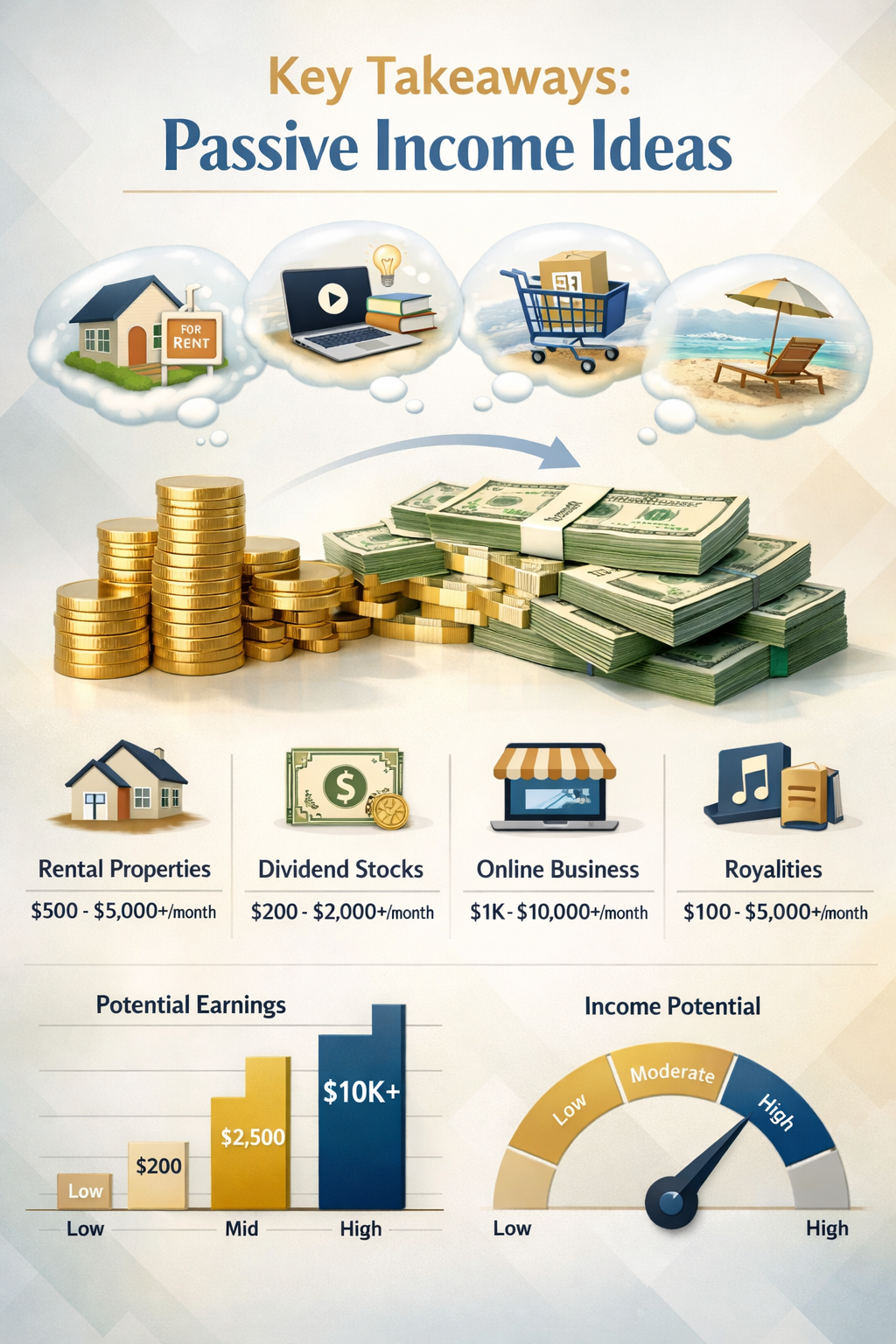
Key Takeaways
💰 Passive income requires upfront effort but pays dividends long-term through automated systems and strategic investments
📈 Diversification is crucial—combining traditional investments (stocks, bonds, REITs) with digital opportunities (courses, affiliate marketing) creates multiple income streams
🏡 Real estate remains powerful whether through direct ownership, REITs, or vacation rentals, offering both cash flow and appreciation
💻 Digital passive income is exploding in 2026, with content creation, online courses, and social media monetization becoming mainstream
🎯 Start small and scale—you don’t need thousands of dollars to begin; many strategies require minimal or zero upfront capital
Understanding What Passive Income Really Means
Let’s get something straight right off the bat: “passive” doesn’t mean “no work.” I learned this the hard way when I thought I could just throw money at something and watch it multiply overnight. True passive income requires strategic setup, ongoing monitoring, and occasional maintenance—but the effort-to-reward ratio is dramatically different from a traditional 9-to-5 job.
According to financial experts, passive income represents earnings derived from sources other than active employment or business activities[3]. Think of it as building a money-making machine. You spend time constructing it, fine-tuning it, and making sure all the parts work together. Once it’s running smoothly, it generates income with minimal daily intervention.
The real power of passive income becomes apparent when you consider the seven streams of income that wealthy individuals typically maintain. Diversifying your income sources isn’t just smart—it’s essential for long-term financial security in 2026’s unpredictable economy.
1. Dividend Stocks and Dividend Funds: The Classic Cash Flow Generator
If you’re looking for passive income ideas that have stood the test of time, dividend stocks are your best friend. I started with dividend investing three years ago, and watching those quarterly payments hit my account never gets old. It’s like getting a bonus check four times a year for simply owning shares in solid companies.
How Dividend Investing Works
When you invest in dividend-paying stocks, you’re buying ownership in companies that share their profits with shareholders. These payments typically arrive quarterly, and the best part? You can choose to reinvest them (hello, compound growth!) or take them as cash flow[1][4].
Dividend funds offer even more simplicity. Instead of researching individual companies, you invest in a fund that holds dozens or hundreds of dividend-paying stocks. This gives you instant diversification and professional management without the headache of picking winners yourself.
Getting Started with Dividends
Here’s what I wish someone had told me when I started:
- Start with dividend aristocrats: These are companies that have increased their dividends for 25+ consecutive years. They’re reliable, stable, and perfect for beginners
- Consider dividend ETFs: Funds like VYM, SCHD, or VIG offer exposure to multiple dividend-payers with a single purchase
- Reinvest early, harvest later: In your accumulation phase, reinvest those dividends. As you near retirement or need income, switch to taking cash payments
- Don’t chase high yields: A 10% dividend yield might seem amazing, but it often signals trouble. Stick with sustainable yields in the 2-5% range
The beauty of dividend investing is its accessibility. You can start with as little as $100 through fractional shares on most platforms in 2026. If you’re wondering how to begin investing with limited capital, check out this guide on investing in stocks for beginners with little money.
| Investment Type | Average Yield | Risk Level | Minimum Investment |
|---|---|---|---|
| Individual Dividend Stocks | 2-4% | Medium | $1 (fractional shares) |
| Dividend ETFs | 2-3.5% | Low-Medium | $1 (fractional shares) |
| Dividend Aristocrat Index | 2.5-3.5% | Low | $50-100 |
2. Bonds and Fixed-Income Securities: The Steady Eddie of Passive Income
While dividend stocks get all the glory, bonds are the unsung heroes of passive income. They’re typically less volatile and offer predictable income flow, making them ideal for beginners or anyone who values stability over excitement[1].
Think of bonds as IOUs from governments or corporations. You lend them money, and they pay you regular interest (called coupon payments) until the bond matures, at which point you get your principal back. Simple, straightforward, and wonderfully boring in the best possible way.
Types of Bonds for Passive Income
Government bonds (like U.S. Treasuries) are backed by the full faith and credit of the government. They’re about as safe as investments get, though the yields are typically lower to reflect that safety.
Corporate bonds offer higher yields because they carry more risk. You’re lending to companies instead of governments, so there’s a chance (however small with investment-grade bonds) that they might default.
Municipal bonds provide tax-free income in many cases, making them particularly attractive if you’re in a higher tax bracket.
Bond funds and ETFs give you diversification across hundreds of bonds with a single investment. In 2026, these have become increasingly popular as interest rates have stabilized, making bonds more attractive than they were in previous years.
“Bonds provide the ballast in your portfolio—the steady, predictable income that keeps you afloat when stock markets get choppy.”
The key with bonds is understanding the inverse relationship between interest rates and bond prices. When rates rise, existing bond prices fall (and vice versa). But if you’re holding bonds for income rather than trading them, this matters less than you might think.
3. Real Estate Investment Trusts (REITs): Property Income Without the Hassle
I love real estate as a wealth-building tool, but I absolutely hate the idea of dealing with clogged toilets at 2 AM or chasing down late rent payments. That’s where Real Estate Investment Trusts (REITs) come in clutch. They give you all the benefits of real estate investing—regular income, diversification, potential appreciation—without any of the landlord headaches[1][2].
What Makes REITs Special
REITs are companies that own, operate, or finance income-producing real estate. By law, they must distribute at least 90% of their taxable income to shareholders as dividends. This makes them phenomenal passive income generators.
You can invest in REITs that focus on:
- 🏢 Office buildings
- 🏬 Shopping centers and retail
- 🏘️ Residential apartments
- 🏥 Healthcare facilities
- 📦 Warehouses and industrial properties
- 🏨 Hotels and resorts
- 📡 Cell towers and data centers
The diversity is incredible, and it allows you to gain exposure to real estate sectors that would be completely inaccessible to individual investors. Want to own a piece of a billion-dollar office tower in Manhattan? There’s a REIT for that.
How to Invest in REITs
Publicly traded REITs are bought and sold on stock exchanges just like regular stocks. They offer liquidity, transparency, and easy access through any brokerage account.
REIT ETFs bundle multiple REITs together, giving you instant diversification across property types and geographic regions. Popular options in 2026 include VNQ (Vanguard Real Estate ETF) and SCHH (Schwab U.S. REIT ETF).
Non-traded REITs aren’t available on public exchanges and typically require higher minimum investments. They can offer higher yields but come with less liquidity and more complexity.
For most people starting out, I recommend sticking with publicly traded REITs or REIT ETFs. The liquidity and transparency are worth more than the potentially higher yields of non-traded alternatives.
4. Digital Products and Online Courses: Turn Your Knowledge Into Passive Cash
Here’s where things get really exciting for 2026. Creating and selling digital products has become one of the most lucrative passive income ideas available to everyday people. I’m talking about online courses, e-books, templates, software tools, stock photos, music—anything digital that can be created once and sold infinitely[1][2][4].
Why Digital Products Are Pure Gold
The economics are mind-blowing. Once you create a digital product, your marginal cost per sale is essentially zero. Sell one copy or one thousand—your profit margin stays at nearly 100%. No inventory, no shipping, no manufacturing costs. Just pure, scalable passive income.
I created my first online course two years ago about budgeting strategies. It took me about 60 hours to research, record, and edit. Since then, it’s generated over $47,000 with minimal maintenance beyond answering occasional student questions and updating content quarterly.
Types of Digital Products That Sell
Online courses remain the heavyweight champion. Platforms like Teachable, Thinkific, and Kajabi make it ridiculously easy to create and sell courses on virtually any topic. If you have expertise in something—anything—there’s an audience willing to pay to learn from you.
E-books require less production effort than courses but typically command lower prices. The sweet spot is creating comprehensive guides (100+ pages) that solve specific problems for your target audience.
Templates and tools are underrated gold mines. Think budget spreadsheets, resume templates, social media graphics, business plan frameworks. People love shortcuts, and they’ll pay for well-designed tools that save them time.
Membership sites combine multiple digital products with ongoing content updates. You create a library of resources and charge monthly or annual subscriptions for access.
Getting Started with Digital Products
- Identify your expertise: What do you know that others want to learn? Don’t overthink this—you don’t need to be the world’s foremost expert, just knowledgeable enough to help beginners
- Validate demand: Before investing weeks into creation, test the market. Run surveys, check keyword search volumes, analyze competitor offerings
- Create quality content: Invest in decent equipment (microphone, camera, editing software) and focus on delivering genuine value
- Choose your platform: Start with established marketplaces (Udemy, Gumroad, Etsy for templates) before building your own site
- Market strategically: Build an email list, leverage social media, consider paid advertising once you’ve validated your product
If you’re looking to develop the skills needed to create valuable digital products, this guide on high income skills to learn at home provides excellent direction.
5. Affiliate Marketing and Content Monetization: Get Paid for Recommendations
Affiliate marketing is how I accidentally discovered passive income. I started a blog about personal finance in 2022, sharing budgeting tips and product recommendations. Six months in, I joined a few affiliate programs, and suddenly I was earning commissions on products I was already recommending anyway[1].
How Affiliate Marketing Works
The concept is beautifully simple: You promote someone else’s product or service through a unique tracking link. When someone clicks your link and makes a purchase, you earn a commission. No product creation, no customer service, no inventory management—just pure referral income.
In 2026, affiliate marketing has exploded beyond traditional blogs. Social media monetization through platforms like Instagram, TikTok, and YouTube has become mainstream, with creators earning substantial passive income through sponsored content and affiliate partnerships[2].
Platforms and Strategies That Work
Amazon Associates remains the gateway drug for most affiliate marketers. The commissions are modest (1-10% depending on category), but the conversion rates are high because everyone already trusts Amazon.
High-ticket affiliate programs offer much larger commissions ($100-$1,000+ per sale) for software, courses, and services. These require more targeted audiences but can be incredibly lucrative.
Recurring commission programs are the holy grail. Promote a subscription service, and you earn commissions every month that your referral remains a customer. This creates truly passive, recurring income.
Content strategies that work in 2026:
- 📝 SEO-optimized blog posts targeting buyer-intent keywords
- 🎥 YouTube product reviews and tutorials
- 📱 Instagram stories and reels with swipe-up links
- 📧 Email newsletters with curated product recommendations
- 🎙️ Podcasts with sponsor reads and affiliate mentions
Building Sustainable Affiliate Income
The key to long-term affiliate success is providing genuine value first. I never promote products I haven’t personally used or thoroughly researched. Your audience’s trust is your most valuable asset—don’t squander it for a quick commission.
Focus on creating evergreen content that continues attracting traffic months or years after publication. My top-earning affiliate posts were published 2-3 years ago and still generate daily commissions with zero additional effort.
For more ways to build income streams from home, explore these ideas to make money from home that complement affiliate marketing perfectly.
6. Rental Properties and Vacation Rentals: Real Estate the Traditional Way

Let’s talk about the OG passive income strategy: rental properties. Yes, I know I just spent a section explaining how REITs let you avoid landlord duties, but hear me out. Direct property ownership, when done right, can generate significantly higher returns than REITs—and in 2026, the tools and services available make it more manageable than ever[2].
Traditional Long-Term Rentals
The classic model: Buy a property, find reliable tenants, collect monthly rent that exceeds your mortgage and expenses. The passive income comes from the monthly cash flow, while you also benefit from property appreciation and mortgage paydown.
Success factors for rental properties:
- 📍 Location, location, location: Focus on areas with strong job growth, good schools, and increasing population
- 💰 Run the numbers ruthlessly: The 1% rule (monthly rent should equal 1% of purchase price) is a good starting point, but dig deeper into all expenses
- 🔧 Budget for maintenance: Set aside 1-2% of property value annually for repairs and updates
- 👥 Screen tenants thoroughly: Good tenants make rental income truly passive; bad tenants make it a nightmare
- 🏢 Consider property management: Paying 8-10% of rent to a management company can make the income genuinely passive
Vacation Rentals: The Airbnb Opportunity
Vacation rentals through platforms like Airbnb and Vrbo have transformed real estate investing. In tourist-heavy areas, short-term rentals can generate 2-3x the income of traditional long-term rentals[2].
I have a friend who bought a small condo near a ski resort in 2024. During peak season, she charges $300-400 per night for a property that would rent for maybe $1,500/month long-term. The math is compelling, even accounting for higher turnover costs and seasonal variability.
Vacation rental considerations:
- 🏖️ Seasonal demand: Understand your market’s peak and off-peak seasons
- 📜 Regulations: Many cities have cracked down on short-term rentals—know the rules before investing
- 🧹 Management intensity: Vacation rentals require more hands-on management (or a good property manager)
- 💵 Higher income potential: Can significantly outperform long-term rentals in the right locations
- 🎯 Niche opportunities: Unique properties (treehouses, tiny homes, luxury estates) command premium rates
Fractional Real Estate and Crowdfunding
Don’t have $50,000+ for a down payment? Fractional property ownership platforms like Arrived, Fundrise, and RealtyMogul let you invest in real estate with as little as $100. You earn proportional rental income and appreciation without any management responsibilities.
These platforms have exploded in popularity in 2026, democratizing real estate investing for people who previously couldn’t access it. The returns are typically lower than direct ownership (6-10% annually), but the passive nature and low barriers to entry make them attractive for beginners.
7. High-Yield Savings Accounts and Money Market Funds: The Ultra-Safe Option
Okay, I know what you’re thinking: “Savings accounts? Really? That’s your big passive income idea?” But hear me out. In 2026, with interest rates stabilized at healthier levels than we saw in the 2010s, high-yield savings accounts and money market funds are actually generating meaningful passive income[1][4].
Why This Matters More Than You Think
While you won’t get rich from savings account interest alone, these vehicles serve crucial roles in your passive income strategy:
Emergency fund income: Your emergency fund should be liquid and safe. Why not earn 4-5% interest on it while it sits there waiting for emergencies that hopefully never come?
Cash flow parking: Between investments or while waiting for better opportunities, park your cash somewhere it’s earning instead of losing value to inflation.
Risk-free baseline: Every portfolio needs a foundation of truly safe, guaranteed returns. This is it.
Best Options for 2026
High-yield savings accounts from online banks like Marcus, Ally, and Discover are offering 4-5% APY with no minimum balance requirements and FDIC insurance up to $250,000.
Money market funds provide similar yields with slightly more flexibility. They’re not FDIC insured but invest in ultra-safe, short-term securities.
Treasury bills and I-bonds offer government-backed returns that often exceed savings accounts, though they require more active management and have holding period restrictions.
Maximizing Your Safe Returns
- 🔄 Rate shop regularly: Banks adjust rates frequently—don’t get complacent
- 💰 Ladder your savings: Spread money across different account types and terms for optimal liquidity and returns
- 📊 Calculate real returns: Remember to account for taxes and inflation when evaluating yields
- 🎯 Use for specific goals: Excellent for short-term savings goals (1-3 years) where market volatility is unacceptable
While these won’t replace your salary, earning $200-500 monthly on your emergency fund and savings is genuinely passive income that requires zero ongoing effort beyond the initial setup.
If you’re working on building up that emergency fund, these smart money saving tips can help you accumulate the capital to start generating passive income.
Creating Your Passive Income Strategy: Putting It All Together
Here’s the truth bomb: You shouldn’t pick just one of these passive income ideas. The real magic happens when you combine multiple streams, creating a diversified passive income portfolio that’s resilient to market changes, economic shifts, and industry disruptions.
My Recommended Approach for Beginners
Phase 1: Foundation (Months 1-6)
- Open a high-yield savings account and build your emergency fund to 3-6 months of expenses
- Start investing in dividend ETFs or index funds through automatic monthly contributions
- Begin learning about one digital income stream (affiliate marketing, online courses, or content creation)
Phase 2: Diversification (Months 7-18)
- Add bond exposure to your portfolio for stability
- Launch your first digital product or affiliate marketing effort
- Consider REIT investments for real estate exposure
- Continue building your investment accounts
Phase 3: Acceleration (Months 19+)
- Scale your successful digital income streams
- Evaluate direct real estate opportunities if you have sufficient capital
- Optimize your portfolio allocation based on performance
- Reinvest passive income to compound your growth
Common Mistakes to Avoid
❌ Expecting immediate results: Most passive income streams take 6-18 months to gain meaningful traction
❌ Putting all eggs in one basket: Diversification isn’t just for stock portfolios—spread your passive income efforts across multiple strategies
❌ Neglecting to reinvest: The compound effect of reinvesting passive income is where real wealth is built
❌ Ignoring taxes: Passive income is still taxable income—plan accordingly and consider tax-advantaged accounts where possible
❌ Giving up too soon: The “passive” part comes after the initial active effort—stick with it through the building phase
For more guidance on avoiding financial pitfalls, check out these money mistakes to avoid that can derail your passive income journey.
The Reality Check: How Much Can You Really Earn?

Let’s get real about expectations. I’ve seen too many people get discouraged because they expected to replace their $75,000 salary with passive income after six months of effort. That’s not how this works.
Realistic First-Year Goals
With consistent effort and smart strategy, here’s what’s achievable in your first year:
Conservative scenario (minimal capital, part-time effort):
- High-yield savings: $200-500/year
- Dividend stocks: $100-300/year
- Affiliate marketing or digital products: $500-2,000/year
- Total: $800-2,800/year
Moderate scenario ($10,000 invested, dedicated effort):
- Investment income (dividends, bonds, REITs): $300-500/year
- Digital products or affiliate marketing: $3,000-8,000/year
- Total: $3,300-8,500/year
Aggressive scenario ($25,000+ invested, significant time commitment):
- Investment income: $750-1,500/year
- Digital income streams: $10,000-25,000/year
- Rental property (if applicable): $3,000-6,000/year
- Total: $13,750-32,500/year
The Compound Effect Over Time
The real power emerges in years 2-5 as your efforts compound. That digital course you created in year one? It might earn $2,000 in year one, then $5,000 in year two (with updates and marketing), then $8,000 in year three with minimal additional effort.
Your dividend portfolio? Reinvest those dividends, add regular contributions, and watch it snowball. A $10,000 investment growing at 8% annually with $200 monthly contributions becomes $24,000 in five years—generating $600-900 in annual passive income.
This is why starting now matters more than starting perfectly. The sooner you plant these seeds, the sooner you’ll harvest the rewards.
Conclusion: Your Path to Earning While You Sleep Starts Today
I won’t lie to you—building meaningful passive income takes work, patience, and strategic thinking. But in 2026, the barriers to entry have never been lower, the tools have never been better, and the opportunities have never been more diverse.
The passive income ideas I’ve shared aren’t theoretical concepts or get-rich-quick schemes. They’re proven strategies that real people (including myself) are using right now to generate income while they sleep, spend time with family, or pursue passion projects.
Your action plan for the next 30 days:
- Choose one investment-based strategy (dividend stocks, bonds, or REITs) and open an account to start building your portfolio
- Pick one digital income stream that aligns with your skills and interests—commit to launching it within 90 days
- Optimize your savings by moving your emergency fund to a high-yield account
- Educate yourself continuously through books, courses, and communities focused on passive income
- Track your progress monthly and adjust your strategy based on what’s working
Remember, every wealthy person I’ve studied has multiple income streams. They don’t rely on a single paycheck or a single investment. They build diversified passive income portfolios that provide security, freedom, and options.
The question isn’t whether passive income is possible—it absolutely is. The question is: Will you take action today, or will you still be thinking about it a year from now?
For more comprehensive passive income strategies, explore our detailed guide on passive income ideas that work in 2026 and discover smart passive income ideas to start with no money.
Your future self—the one sleeping peacefully while money flows into your accounts—will thank you for starting today. 💰😴