

I’ll never forget the moment I checked my bank account on January 3rd, 2024, and felt my stomach drop. Despite earning a decent salary, I had less than $200 to my name after the holiday spending spree. That wake-up call led me to discover no spend challenge tips that completely transformed my relationship with money—and saved me over $2,300 in just three months.
If you’re tired of wondering where your paycheck disappears to each month, you’re in the right place. A no-spend challenge isn’t about deprivation or living like a minimalist monk. It’s a powerful financial reset that helps you break unconscious spending habits, identify money leaks, and build the kind of financial discipline that creates lasting wealth.
In this comprehensive guide, I’m sharing 15 battle-tested no spend challenge tips that have helped thousands of people (including me) save significant money without feeling miserable. Whether you’re trying to pay off debt, build an emergency fund, or simply gain control of your finances, these strategies will give you a clear roadmap to success.
Key Takeaways
- A no-spend challenge is a designated period (typically 7-30 days) where you only spend money on predetermined necessities, eliminating all discretionary purchases to reset spending habits and boost savings
- The average person saves $300-$800 during a one-month no-spend challenge by cutting impulse purchases, dining out, and entertainment expenses
- Success requires clear boundaries: Define your “allowed” expenses upfront, track every temptation, and build accountability systems to stay on track
- The psychological benefits extend beyond savings: Participants report increased financial confidence, reduced anxiety about money, and better long-term spending habits
- Technology and community support dramatically increase your success rate—use apps, trackers, and accountability partners to maintain motivation
What Is a No-Spend Challenge? (And Why It Works)

A no-spend challenge is a temporary financial experiment where you commit to spending money only on absolute necessities for a specific period. Think of it as a spending detox—an intentional pause on discretionary purchases that helps you reset your financial habits and save money fast.
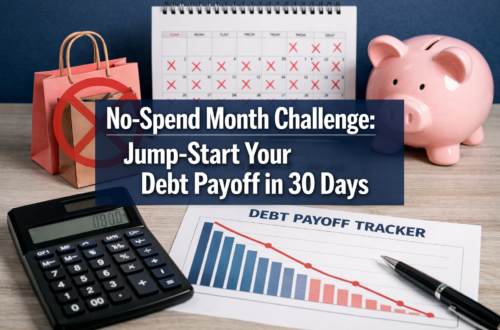
Here’s what makes it different from traditional budgeting: instead of allocating specific amounts to different categories, you’re drawing a hard line between essential and non-essential spending. For the challenge duration, that non-essential category gets exactly $0.
The typical no-spend challenge framework includes:
| Allowed Expenses | Not Allowed |
|---|---|
| Rent/mortgage payments | Dining out and takeout |
| Utilities and essential bills | Entertainment and streaming services |
| Groceries (from existing budget) | Clothing and accessories |
| Necessary transportation | Impulse purchases |
| Prescribed medications | Hobby supplies |
| Existing debt payments | Subscription boxes |
The psychology behind why this works is fascinating. According to behavioral economics research, we make hundreds of micro-spending decisions daily, most on autopilot [1]. A no-spend challenge interrupts these automatic patterns, forcing you to become mindfully aware of every purchase impulse.
I’ve found that this financial mindfulness creates a ripple effect. When you successfully resist buying that $6 latte, you start questioning other spending patterns. Suddenly, you’re examining your $15/month subscription you forgot about, or reconsidering whether you really need next-day shipping.
The challenge also leverages what psychologists call “implementation intentions”—specific if-then plans that dramatically increase follow-through [2]. Instead of a vague goal like “spend less money,” you have a concrete rule: “If it’s not on my necessities list, I don’t buy it this month.”
The Remarkable Benefits of a No-Spend Month
Before diving into the specific no spend challenge tips, let’s talk about what you actually gain from this experience—because it’s about so much more than the money you’ll save.
💰 Immediate Financial Impact
The most obvious benefit is the cash you’ll keep in your account. Based on data from thousands of challenge participants, here’s what you can realistically expect to save:
- Week-long challenge: $75-$200 average savings
- Two-week challenge: $150-$400 average savings
- Month-long challenge: $300-$800 average savings
- Aggressive month-long challenge: $1,000+ for high earners with significant discretionary spending
I personally saved $847 during my first 30-day no-spend challenge in 2024. That money went directly toward paying down debt faster, which saved me even more in interest charges.
🧠 Psychological and Behavioral Transformation
The hidden benefits often prove more valuable than the money itself:
Increased financial awareness: You’ll develop an almost X-ray vision for your spending patterns. Those “small” daily purchases that seemed insignificant suddenly reveal themselves as major budget drains.
Reduced decision fatigue: Paradoxically, having fewer spending options actually feels liberating. When eating out isn’t an option, you don’t waste mental energy debating which restaurant to choose.
Impulse control strengthening: Each time you successfully resist a purchase impulse, you’re literally rewiring your brain’s reward pathways. This self-control muscle gets stronger with practice and transfers to other life areas.
Gratitude amplification: When you can’t casually buy whatever catches your eye, you develop deeper appreciation for what you already own. That closet full of clothes suddenly offers more outfit possibilities than you realized.
📈 Long-Term Financial Benefits
The real magic happens after the challenge ends. Research shows that 68% of no-spend challenge participants maintain at least some of their new habits permanently [3].
These lasting changes include:
- Reduced monthly spending baseline: Most people continue spending 15-30% less even after the challenge ends
- Improved savings habits: The money you save during the challenge often kickstarts a regular savings routine
- Better financial goal clarity: The challenge forces you to define what truly matters, making it easier to align spending with values
- Enhanced money management skills: You’ll discover creative solutions and resourcefulness you didn’t know you had
One unexpected benefit I experienced was improved relationships. When I explained my no-spend challenge to friends, several joined me. We started having potluck dinners instead of expensive restaurant outings, which actually brought us closer together.
If you’re looking to complement your no-spend challenge with other money-saving strategies, you’ll create even more powerful results.
15 No Spend Challenge Tips for Maximum Success

Now let’s get into the practical strategies that will make or break your challenge. I’ve organized these no spend challenge tips from foundational to advanced, so you can build a comprehensive approach.
1. 📝 Define Your Rules Crystal Clear (Before You Start)
The #1 reason people fail no-spend challenges is fuzzy boundaries. “I’ll just spend less” doesn’t work. You need specific, written rules.
Create your personal rulebook by answering these questions:
- What counts as a necessity versus a want?
- Are you allowing ANY discretionary spending? (Some people budget $20-50 for emergencies)
- How will you handle social obligations? (Birthdays, weddings, etc.)
- What about items you already committed to buying?
- Are gifts allowed? What about giving to charity?
Write these rules down and keep them visible. I printed mine and taped them to my credit card—every time I reached for it, I saw my commitment staring back at me.
My personal rules for reference:
- ✅ Allowed: Rent, utilities, groceries (from existing budget), gas, medications, dog food
- ❌ Not allowed: Restaurants, coffee shops, clothing, entertainment, online shopping, convenience store runs
- 🤔 Gray area: Emergency car repairs allowed, social events handled case-by-case with free alternatives preferred
The more specific you are, the less willpower you’ll need. Decision-making drains mental energy; predetermined rules preserve it.
2. 🎯 Choose the Right Duration for Your Situation
Not all no-spend challenges need to be 30 days. The best length depends on your goals, experience level, and life circumstances.
Challenge duration options:
- Weekend warrior (2-3 days): Perfect for beginners or testing the waters
- One week: Great for building confidence and seeing quick wins
- Two weeks: Sweet spot for meaningful savings without overwhelming commitment
- Full month: Maximum impact for savings and habit formation
- Seasonal (90 days with modifications): Advanced approach with periodic spending allowed
I recommend starting with a week-long challenge if you’ve never done this before. Success builds momentum. After crushing a week, you’ll feel confident tackling longer periods.
Consider timing strategically too. Starting right after payday when your account is full provides psychological cushioning. Alternatively, starting when you’re broke creates urgent motivation—both approaches work depending on your personality.
3. 🗓️ Plan Your Challenge Timing Strategically
Some periods are significantly easier for no-spend challenges than others. Strategic timing can double your success rate.
Ideal times to start:
- Early January: Capitalize on New Year motivation and post-holiday spending fatigue
- After receiving a bonus or tax refund: You’ll feel financially comfortable, reducing stress
- During a naturally quiet social period: Fewer temptations to navigate
- When you have minimal travel planned: Staying home makes everything easier
Times to avoid:
- Weeks with birthdays, weddings, or major celebrations
- Holiday periods (unless you’re specifically doing a no-spend January)
- During planned vacations
- When starting a new job or major life transition
I made the mistake of attempting my first challenge during a week with three birthday dinners. I failed by day four and felt terrible. When I tried again during a quiet February, I sailed through 30 days.
4. 🍳 Meal Plan and Prep Like Your Success Depends on It (Because It Does)
Food spending is the Achilles heel of most no-spend challenges. According to research, dining out and food delivery account for 44% of challenge failures [4].
Your meal planning battle plan:
Before the challenge starts:
- Inventory everything in your pantry, fridge, and freezer
- Plan every single meal using what you already have
- Shop once for any missing essentials (this is your last grocery trip)
- Prep grab-and-go options for busy days
- Make extra portions to freeze for emergency meals
During the challenge:
- Batch cook on weekends to eliminate “too tired to cook” excuses
- Keep healthy snacks visible and accessible
- Pack lunches the night before
- Set phone reminders to defrost dinner ingredients
- Create a “restaurant copycat” night where you recreate favorite takeout at home
I discovered that my takeout habit wasn’t really about the food—it was about convenience and decision fatigue. When I had pre-portioned meals ready to microwave, the drive-through lost its appeal.
Pro tip: Challenge yourself to a “pantry challenge” within your no-spend challenge. Try to use up those random ingredients that have been sitting around for months. I made some surprisingly delicious meals from weird combinations I never would have tried otherwise.
5. 💳 Remove Temptation by Hiding Payment Methods
Out of sight, out of mind isn’t just a saying—it’s a proven psychological principle that works remarkably well for spending control.
Physical barriers to implement:
- Delete saved payment information from all online shopping sites
- Remove credit cards from digital wallets (Apple Pay, Google Pay, etc.)
- Uninstall shopping apps from your phone entirely
- Leave credit cards at home in a drawer or safe
- Freeze a credit card in ice (seriously—the thawing time creates a cooling-off period)
- Use cash only for allowed purchases to make spending more psychologically “real”
Digital barriers to add:
- Install browser extensions that block shopping websites
- Turn off one-click ordering on Amazon
- Unsubscribe from all promotional emails (retailers send an average of 3-5 per week)
- Disable push notifications from shopping apps
- Log out of all retail accounts
When I deleted my saved payment info, I was shocked by how many impulse purchases I almost made but abandoned because re-entering my card number felt like too much work. That tiny bit of friction saved me hundreds of dollars.
6. 📱 Use Technology and Apps to Track Your Progress
What gets measured gets managed. Tracking your no-spend challenge creates accountability and provides motivating visual feedback.
Recommended tracking tools:
For daily tracking:
- Spending tracker apps (Mint, YNAB, EveryDollar) to log every temptation you resist
- Habit tracking apps (Habitica, Streaks) to maintain your no-spend streak
- Notes app for journaling spending urges and emotional triggers
For motivation:
- Savings calculator showing real-time accumulation of money not spent
- Visual progress charts (I used a printable coloring chart—each no-spend day got colored in)
- Photo documentation of your bank balance growing
For accountability:
- Social media check-ins (if public accountability motivates you)
- Shared spreadsheets with accountability partners
- Challenge-specific apps like Qapital or Digit that automate savings
I created a simple spreadsheet with three columns: Date, Temptation Resisted, and Money Saved. Watching that “Money Saved” column climb toward $1,000 became genuinely addictive. It gamified the entire experience.
If you’re serious about financial tracking, consider implementing some budgeting strategies alongside your challenge for maximum impact.
7. 🎨 Discover Free Entertainment and Activities
One of the biggest fears people have about no-spend challenges is boredom. The truth? You’ll probably be less bored than usual because you’ll actually engage with activities instead of passively consuming.
Free entertainment goldmine:
At home:
- Explore your local library (books, movies, magazines, audiobooks, even museum passes)
- Host game nights, movie marathons, or potluck dinners
- Start that hobby project you’ve been postponing
- Learn something new through free online courses (Coursera, Khan Academy, YouTube)
- Organize your space (decluttering is surprisingly satisfying and might reveal items to sell)
Out and about:
- Attend free community events (concerts, festivals, lectures)
- Explore local parks, hiking trails, and nature areas
- Visit free museum days (most offer them monthly)
- Attend religious or community organization events
- Volunteer (gives purpose while keeping you occupied)
Social activities:
- Exercise with friends (walking, running, home workouts)
- Have coffee at home instead of cafes
- Organize clothing swaps instead of shopping trips
- Start a book club or skill-sharing group
- Explore your own city like a tourist
I discovered an entire world of free activities I’d been ignoring. My city offered free outdoor concerts every Friday, a tool library where you could borrow equipment, and hiking trails I’d driven past for years without exploring. The no-spend challenge forced me to seek these out, and I continued enjoying them long after the challenge ended.
8. 🤝 Build Accountability Systems That Actually Work
Willpower is a finite resource. Accountability systems provide external support when your internal motivation wavers.
Effective accountability strategies:
Find an accountability partner or group:
- Join online no-spend challenge communities (Reddit’s r/nobuy, Facebook groups)
- Recruit a friend or family member to do the challenge with you
- Share daily check-ins via text or social media
- Schedule weekly progress calls to discuss challenges and wins
Create public commitment:
- Announce your challenge on social media (public commitment increases follow-through by 65% [5])
- Blog or vlog about your experience
- Tell friends and family so they can support your goals
- Join a 30-day saving challenge with built-in community
Use financial accountability:
- Share your tracking spreadsheet with your accountability partner
- Set up automatic transfers to savings so you can’t “borrow back” money saved
- Make a bet with a friend (loser donates to winner’s favorite charity)
Create consequence systems:
- If you break the challenge, restart from day one
- Donate money equal to the unnecessary purchase to charity
- Add an extra day to your challenge for each slip-up
My accountability partner and I texted each other every evening with our “temptation count”—how many times we’d been tempted to spend but didn’t. Knowing I’d have to report a purchase to her kept me honest on several occasions when I was rationalizing a “small” exception.
9. ⏰ Implement the 24-Hour Rule for Any Spending Urges
Even during a no-spend challenge, you’ll have moments when you’re convinced you need to buy something. The 24-hour rule is your emergency brake.
How it works:
- When you feel the urge to buy something, write it down with the date and time
- Wait 24 hours before making any purchase decision
- After 24 hours, reassess whether you still want/need it
- If you still do, evaluate whether it qualifies as a true necessity under your rules
- If it doesn’t qualify, add another 24 hours
Why this works:
The 24-hour cooling-off period allows the emotional intensity of desire to diminish. Research shows that 74% of purchase impulses fade within 24 hours when not immediately acted upon [6].
This technique also helps you distinguish between genuine needs and emotional spending triggers. When I implemented this rule, I discovered that most of my “needs” were actually responses to stress, boredom, or social media influence.
Pro variation: For larger temptations, use a longer waiting period. I used a “one day per $10” rule—a $50 item required five days of waiting. By day three, I usually couldn’t remember why I wanted it.
10. 🎯 Identify and Address Your Spending Triggers
Spending is often an emotional response rather than a practical decision. Understanding your personal triggers is crucial for long-term success.
Common spending triggers and solutions:
| Trigger | Why It Happens | Alternative Response |
|---|---|---|
| Stress | Shopping provides temporary relief and sense of control | Exercise, meditation, journaling, calling a friend |
| Boredom | Browsing shopping sites fills empty time | Engage in a hobby, read, organize something, go outside |
| Social comparison | Seeing others’ purchases creates FOMO | Unfollow shopping influencers, limit social media, practice gratitude |
| Celebration | We’ve learned to reward ourselves with purchases | Celebrate with experiences, special meals at home, self-care activities |
| Sadness | “Retail therapy” temporarily boosts mood | Allow yourself to feel emotions, reach out for support, practice self-compassion |
| Hunger | Low blood sugar impairs decision-making | Always shop after eating, carry snacks, meal prep |
Trigger identification exercise:
For one week before your challenge, track not just what you spend but what you were feeling right before each purchase. You’ll start seeing patterns.
My personal trigger was late-night browsing. Between 9-11 PM, my impulse control was weakest. Once I identified this pattern, I created a new routine: phone goes on the charger in another room at 8:30 PM, replaced with reading or a relaxing hobby. This single change eliminated probably 40% of my impulse purchases.
Understanding the psychology behind your spending habits helps you develop sustainable solutions rather than relying purely on willpower.
11. 💡 Get Creative with What You Already Own
The no-spend challenge reveals an uncomfortable truth: most of us already own everything we need. We’ve just forgotten about it or gotten bored with it.
Rediscovery strategies:
For your wardrobe:
- Create a “capsule wardrobe” challenge using only 30 items
- Try new combinations you’ve never worn together
- Organize a clothing swap with friends (technically no money spent)
- Repair or alter items instead of replacing them
- Watch YouTube tutorials for styling tips using what you own
For your pantry:
- Challenge yourself to create meals from only what’s already there
- Search “recipes using [ingredient]” for creative ideas
- Embrace “weird dinner” nights where unusual combinations are celebrated
- Use apps like SuperCook that suggest recipes based on ingredients you have
For entertainment:
- Revisit books, games, or hobbies you abandoned
- Finish projects you started but never completed
- Rearrange furniture for a “new” space without spending
- Use supplies you’ve been hoarding for “someday”
For personal care:
- Use up sample sizes and travel products
- Finish products before opening new ones
- Make DIY versions of expensive products (face masks, scrubs, etc.)
I found clothes with tags still attached in my closet, books I’d bought but never read, and craft supplies for three different hobbies I’d started and abandoned. The no-spend challenge gave me permission to finally use these things instead of saving them for some imagined perfect future moment.
This mindset shift—from “I need something new” to “How can I use what I have differently?”—is perhaps the most valuable lesson of the entire challenge.
12. 📊 Calculate Your “Hourly Worth” for Purchase Perspective
This mental framework completely changed how I view purchases and is one of my favorite no spend challenge tips.
How to calculate:
- Determine your after-tax hourly wage
- For any item you’re tempted to buy, calculate how many hours you’d need to work to afford it
- Ask yourself: “Is this item worth X hours of my life?”
Example:
- Your after-tax hourly wage: $18
- Tempting purchase: $45 brunch
- Hours of work required: 2.5 hours
- Question: “Is this brunch worth 2.5 hours of my life when I could make a similar meal at home for $8?”
This reframe is powerful because it converts abstract money into concrete time—something we all understand is finite and precious.
I started thinking about every purchase this way. That $120 pair of shoes? Almost a full workday. The $6 daily latte habit? 20 minutes of work every single day, which adds up to over 120 hours per year.
Suddenly, spending decisions became much clearer. Some things absolutely are worth the hours—quality items that last, experiences that create memories, investments in health. But the vast majority of impulse purchases? Not even close.
13. 🏆 Celebrate Small Wins to Maintain Motivation
A no-spend challenge is a marathon, not a sprint. Celebrating progress prevents burnout and keeps you motivated through the difficult middle period.
Milestone celebration ideas (that don’t involve spending):
Weekly wins:
- Share your success on social media
- Treat yourself to a special meal at home
- Take a relaxing bath or have a self-care evening
- Sleep in or take a guilt-free nap
- Call someone who’ll be proud of you and share your progress
Halfway point:
- Calculate exactly how much you’ve saved and write it down
- Visualize what you’ll do with that money
- Write a letter to your future self about why you started
- Take before/after photos of your savings account
- Plan a free celebration activity
Challenge completion:
- Review your tracking data and identify patterns
- Decide which habits you’ll keep permanently
- Allocate your savings to your financial goals
- Share your story to inspire others
- Plan your next financial challenge
The key is making celebrations proportional and aligned with your goals. You’re not rewarding yourself with the very behavior you’re trying to change (no “I saved $500, so I’ll celebrate by spending $200!”).
I created a simple reward system: every week I successfully completed earned me one “fun hour” where I did something purely for enjoyment—guilt-free reading, a long walk in nature, calling a friend I hadn’t talked to in months. These non-monetary rewards kept me motivated without derailing my progress.
14. 📝 Journal Your Experience and Emotional Insights
The financial benefits of a no-spend challenge are obvious and measurable. The emotional and psychological insights are equally valuable but easily forgotten if not documented.
What to journal about:
Daily entries:
- Strongest temptation of the day and how you handled it
- Emotions you experienced around money and spending
- Creative solutions you discovered
- Gratitude for what you already have
- Challenges you’re facing and potential solutions
Weekly reflections:
- Patterns you’re noticing in your spending triggers
- Surprising discoveries about your habits
- Relationships between emotions and spending urges
- Changes in how you think about money
- Skills or resources you’re developing
End-of-challenge analysis:
- What was easier than expected?
- What was harder than expected?
- What surprised you most?
- Which habits will you keep permanently?
- How has your relationship with money changed?
My journal revealed that I used shopping as a procrastination tool. Whenever I had a difficult work task, I’d “take a break” to browse online stores. Once I recognized this pattern, I could address the underlying issue (task avoidance) rather than just the symptom (overspending).
Journaling also provides a powerful record to review before future challenges or when you’re tempted to slip back into old patterns. Reading my own words about how empowered and in-control I felt during the challenge has pulled me back from the brink of impulse purchases many times.
15. 🔮 Plan Your Post-Challenge Strategy Before You Finish
The biggest mistake people make is treating the no-spend challenge as a temporary sprint with no plan for what comes after. Without a transition strategy, most people rebound straight back to old habits within days.
Your post-challenge action plan:
Immediate next steps (days 1-7 after challenge):
- Don’t immediately splurge on everything you denied yourself
- Implement a “one week reflection period” before any major purchases
- Decide which challenge rules become permanent habits
- Allocate your savings to specific financial goals
- Celebrate your accomplishment meaningfully
Habit integration (weeks 2-4):
- Create a sustainable budget that incorporates lessons learned
- Identify 3-5 specific habits to maintain permanently
- Set up systems to automate good behaviors (automatic savings transfers, etc.)
- Join or create an ongoing accountability group
- Plan your next financial challenge or goal
Long-term sustainability (month 2+):
- Schedule quarterly “mini challenges” to reset when needed
- Track your spending monthly to catch drift before it becomes problematic
- Continue using the tools and apps that helped during the challenge
- Teach others what you learned (teaching reinforces learning)
- Reassess and adjust your financial goals regularly
Permanent habits I adopted after my challenge:
- Meal planning every Sunday (saved $200+ monthly on food)
- 24-hour rule for any non-essential purchase over $25
- Monthly “no-spend weekends” to maintain the skill
- Automatic transfer of $300 to savings on payday
- Quarterly review of all subscriptions and recurring charges
The goal isn’t to live in permanent deprivation mode. It’s to reset your baseline, eliminate unconscious spending, and make intentional choices about where your money goes.
If you’re looking for ways to put your savings to work, consider exploring passive income ideas or learning about investing with small amounts.
Common No-Spend Challenge Mistakes to Avoid
Learning from others’ mistakes is cheaper than making them yourself. Here are the pitfalls that derail most challenges:
❌ Being Too Restrictive
The mistake: Creating rules so rigid that failure is inevitable, like allowing zero social activities or refusing to replace genuinely necessary items.
The fix: Build reasonable flexibility into your rules. It’s okay to budget $20-50 for genuine emergencies or unexpected necessities. The goal is breaking unconscious spending patterns, not punishing yourself.
❌ Not Planning for Social Situations
The mistake: Accepting dinner invitations or social events without a strategy, then feeling pressured to spend.
The fix: Be proactive about suggesting free alternatives. Most friends will respect your challenge and many will be interested in joining you. Have scripts ready: “I’m doing a financial challenge this month, but I’d love to do [free alternative] instead!”
❌ Quitting After One Slip-Up
The mistake: Viewing the challenge as all-or-nothing, so one small purchase means total failure.
The fix: Adopt a “progress, not perfection” mindset. If you slip up, analyze what triggered it, learn from it, and continue. Some people restart the clock, others just keep going. Choose what motivates you.
❌ Ignoring Emotional Spending Triggers
The mistake: Relying purely on willpower without addressing the emotional needs that spending fulfills.
The fix: Develop alternative coping strategies for stress, boredom, sadness, and other triggers before they arise. Have a list of free activities that provide similar emotional benefits.
❌ Not Tracking Progress
The mistake: Failing to document savings or wins, which makes the challenge feel pointless when motivation wanes.
The fix: Use visual tracking methods that provide immediate feedback. Seeing your savings grow or your streak extend provides powerful motivation to continue.
❌ Choosing the Wrong Timing
The mistake: Starting during an inherently difficult period (holidays, vacation, major life transition).
The fix: Be strategic about timing. There’s no prize for hard mode. Choose a period when you’ll have the best chance of success, especially for your first challenge.
For more guidance on avoiding budgeting mistakes that can undermine your financial progress, check out our comprehensive guide.
How to Handle Unexpected Expenses During Your Challenge

Life doesn’t pause for your financial goals. Here’s how to handle genuine emergencies without derailing your challenge:
Create an emergency decision framework:
- Assess urgency: Is this truly urgent or just inconvenient?
- Explore alternatives: Can you borrow, repair, or work around the issue?
- Evaluate necessity: Will delaying cause greater harm or expense?
- Check your rules: Did you account for this category in your original guidelines?
- Make the decision: If it’s genuinely necessary, spend the money without guilt
Examples of legitimate exceptions:
- Medical emergencies or urgent prescriptions
- Critical car repairs needed for work transportation
- Essential appliance replacement (not upgrade)
- Required work expenses not reimbursed
- Legal obligations or unexpected bills
Examples that probably aren’t emergencies:
- Wanting to try a new restaurant
- A really good sale on something you’ve been wanting
- Convenience purchases because you’re tired
- Social pressure to participate in paid activities
- Boredom or impulse purchases rationalized as “needs”
The key is honest self-assessment. We’re incredibly skilled at rationalizing wants as needs. When in doubt, apply the 24-hour rule and consult your accountability partner.
I had a genuine emergency during my challenge when my dog needed an unexpected vet visit ($280). I paid it without hesitation because it met my criteria for a true necessity. But I also had moments where I tried to convince myself that replacing my perfectly functional phone case was “necessary”—it wasn’t.
Maximizing Your Savings: What to Do with the Money
Saving money during your challenge is only half the battle. Strategic allocation of those savings determines whether this creates lasting financial change or just a temporary blip.
Smart allocation strategy:
🎯 First Priority: Emergency Fund
If you don’t have 3-6 months of expenses saved, direct your no-spend savings here first. An emergency fund prevents future financial crises and reduces stress.
Target amounts:
- Minimum: $1,000 starter emergency fund
- Intermediate: 1 month of expenses
- Ideal: 3-6 months of expenses
💳 Second Priority: High-Interest Debt
Credit card debt, payday loans, and other high-interest obligations should be your next target. The interest you’re paying likely exceeds any investment returns you could earn.
Use the avalanche method (highest interest rate first) or snowball method (smallest balance first) depending on what motivates you. Learn more about proven debt payoff strategies to accelerate your progress.
📈 Third Priority: Financial Goals
Once you have emergency savings and high-interest debt under control, allocate your no-spend savings to specific goals:
- Retirement contributions (especially if employer-matched)
- Down payment fund for a home
- Education savings
- Investment accounts
- Major purchase fund (car, vacation, etc.)
🔄 Fourth Priority: Sustainable Lifestyle Upgrades
Finally, consider using a small portion to invest in things that support your new habits:
- Quality reusable items that reduce long-term costs
- Educational resources for skill development
- Tools that support your financial goals
- Experiences that align with your values
My personal allocation after my first challenge:
- 50% to emergency fund ($423.50)
- 30% to credit card debt ($254.10)
- 15% to investment account ($127.05)
- 5% to celebration/reward ($42.35)
This balanced approach ensured I addressed immediate needs while building long-term wealth and maintaining motivation.
The Long-Term Impact: Life After the Challenge

The most profound changes from a no-spend challenge often emerge months or even years later. Here’s what research and personal experience reveal about long-term impacts:
💪 Sustained Behavioral Changes
Studies tracking no-spend challenge participants found that 6 months after completion [7]:
- 68% maintained at least three new money-saving habits
- 54% reported spending 15-30% less than before the challenge
- 71% felt more confident in their financial decision-making
- 43% had completed additional financial challenges
These aren’t temporary changes—they’re lasting shifts in financial behavior and identity.
🧠 Psychological Transformation
Participants consistently report these mental shifts:
Increased financial awareness: The “money fog” lifts. You know where every dollar goes and make conscious choices rather than operating on autopilot.
Reduced anxiety: Counterintuitively, having clear rules and boundaries reduces stress. The paradox of choice disappears when choices are limited.
Greater life satisfaction: Research shows that people who spend intentionally and aligned with their values report higher life satisfaction than those who spend more but mindlessly [8].
Enhanced self-efficacy: Successfully completing a challenge proves you can change difficult habits, which increases confidence in other life areas.
💰 Financial Trajectory Changes
The compound effect of small habit changes creates dramatic long-term results:
If you maintain just $300/month in reduced spending after your challenge:
- Year 1: $3,600 saved
- Year 5: $18,000+ (with modest investment returns)
- Year 10: $45,000+ (with compound growth)
- Year 30: $250,000+ (with consistent investing)
This isn’t theoretical—it’s the mathematical reality of consistent behavior change.
🌱 Ripple Effects Beyond Finance
The skills and mindset developed during a no-spend challenge transfer surprisingly well to other life areas:
- Environmental impact: Reduced consumption means reduced waste and environmental footprint
- Relationship quality: Focusing on free social activities often deepens connections
- Creativity: Resource constraints force creative problem-solving
- Time freedom: Less shopping means more time for meaningful activities
- Life clarity: Understanding what you truly value versus what advertising tells you to value
I found that the discipline I developed during my no-spend challenge helped me in completely unrelated areas—I finally started exercising consistently, finished projects I’d been procrastinating on, and even improved my work performance. The mental muscle of “doing the right thing instead of the easy thing” strengthened across the board.
Your No-Spend Challenge Toolkit: Resources and Templates
Success loves preparation. Here are the essential tools to set yourself up for victory:
📋 Printable Resources
Challenge tracker: A daily calendar where you mark off successful no-spend days (the visual streak is motivating)
Temptation log: Track every spending urge, what triggered it, and how you responded
Savings calculator: Running tally of money not spent
Meal planner: Weekly planning template to eliminate food-related spending
Rules reminder card: Wallet-sized card listing your personal challenge rules
📱 Recommended Apps and Tools
Budgeting and tracking:
- Mint (free comprehensive budget tracking)
- YNAB (You Need A Budget – excellent for intentional spending)
- EveryDollar (simple, user-friendly interface)
- PocketGuard (shows how much you can safely spend)
Habit formation:
- Habitica (gamifies habit tracking)
- Streaks (simple streak counter)
- Forest (prevents phone browsing by growing virtual trees)
Accountability:
- Stickk (commitment contracts with financial stakes)
- Supporti (accountability partner matching)
- Reddit communities (r/nobuy, r/personalfinance, r/Frugal)
📚 Further Learning
Books:
- “The Psychology of Money” by Morgan Housel
- “Your Money or Your Life” by Vicki Robin
- “The Simple Path to Wealth” by JL Collins
Podcasts:
- “ChooseFI” (financial independence strategies)
- “The Minimalists” (intentional living)
- “Afford Anything” (opportunity cost thinking)
Online communities:
- r/nobuy (Reddit community dedicated to reducing consumption)
- Facebook no-spend challenge groups
- Local financial independence meetups
🎓 Advanced Strategies
Once you’ve mastered the basic no-spend challenge, consider these advanced variations:
Category-specific challenges: No-spend on specific categories (clothing, entertainment, etc.) while allowing others
Buy-nothing-new challenge: Allow secondhand purchases but nothing new for 3-6 months
Minimalism challenge: Combine no-spend with decluttering (remove one item daily)
Skill-building challenge: Replace spending with learning valuable skills (cooking, repair, etc.)
Community challenge: Organize a group challenge with friends or online community
For those ready to take their financial journey further, explore our guide on saving money on a tight budget or discover ways to make money from home to increase your income alongside reducing expenses.
Conclusion: Your Financial Reset Starts Now
A no-spend challenge isn’t about deprivation—it’s about liberation. Liberation from unconscious spending patterns, from the exhausting cycle of earning and immediately spending, from the stress of never quite knowing where your money goes.
The 15 no spend challenge tips I’ve shared aren’t just theoretical strategies. They’re battle-tested approaches that have helped thousands of people (including me) save significant money, break destructive habits, and build lasting financial confidence.
Here’s what I want you to remember:
You don’t need to be perfect. You don’t need to commit to an extreme 90-day challenge if that feels overwhelming. You don’t need special apps or complicated systems.
What you do need is a clear decision to start, specific rules that work for your life, and the willingness to learn from both successes and slip-ups.
Your action plan for the next 48 hours:
- Choose your challenge duration (I recommend starting with 7-14 days)
- Write down your specific rules (what’s allowed, what isn’t, how you’ll handle gray areas)
- Set your start date (within the next week while motivation is high)
- Prep your environment (meal plan, remove temptations, set up tracking)
- Tell someone (accountability dramatically increases success rates)
The money you save during your challenge is valuable. But the lessons you learn about your relationship with money, your spending triggers, and your ability to change difficult habits? Those are priceless.
I saved $2,300 in three months through no-spend challenges. But more importantly, I broke a two-decade pattern of living paycheck-to-paycheck despite earning good money. I learned that I’m capable of change, that I already have enough, and that financial security is absolutely within my reach.
Your financial transformation can start today. Not when you earn more, not when circumstances are perfect, not when you’ve read just one more article.
Today.
So here’s my challenge to you: Pick a start date within the next seven days. Write down your rules. Tell one person about your commitment.
Then come back and share your experience. I genuinely want to hear about your wins, your struggles, and what you discover about yourself in the process.
Your future self—the one with a growing savings account, reduced financial stress, and genuine confidence in your money management skills—is waiting for you to take that first step.
What are you waiting for?